
Small Apartment Entryway Ideas That Actually Work (No Drilling Required)
The first time I moved into my studio apartment, I dropped my keys, mail, and gym bag in a pile by the door every single day for three months.
There was no closet, no bench, not even a hook — just eighteen inches of hallway between the door and my kitchen counter.
I told myself I’d “figure it out eventually.” Eventually turned into me tripping over my own shoes one too many times.
So I started small: one hook, one basket, one rug. Within a weekend, that awkward gap by my door felt like an actual room.
If you’re staring at your own no-entryway entryway right now, I promise — you don’t need square footage. You need a plan.
Table of Contents
- Top 5 Products That Solve Small Entryway Problems
- Idea 1: Create a Landing Zone With a Slim Console Table
- Idea 2: Build a Vertical Hook Wall for Renters
- Idea 3: Use a Storage Bench to Add Seating and Hidden Storage
- Idea 4: Turn a Blank Wall Corner Into a Mini Mudroom
- Idea 5: Use an Over-the-Door Organizer for Instant Hidden Storage
- Idea 6: Add a Rug to Visually Define the Space
- Idea 7: Light the Space With Stick-On LED Lights
- How to Choose the Right Ideas for Your Space
- FAQs About Small Apartment Entryways
Top 5 Products That Solve Small Entryway Problems
- Command Large Picture Hanging Strips (14 pairs) – These damage-free adhesive strips hold coats, bags, and even small shelves without leaving a mark when you move out.
- Homleke 2-Tier Storage Bench with Shoe Rack – This slim bench gives you a place to sit, tuck away shoes, and stash extra items, all in one compact footprint.
- Over-the-Door 24-Pocket Organizer – This clever organizer turns the back of any door into instant storage for keys, sunglasses, masks, and mail in under a minute of setup.
- Freestanding Coat Rack with Umbrella Stand – This no-assembly-required rack gives renters vertical hanging space without ever touching the wall.
- Peel-and-Stick LED Puck Lights with Remote – These battery-powered lights add a warm glow to dark corners or hallways using nothing but adhesive backing.
Idea 1: Create a Landing Zone With a Slim Console Table
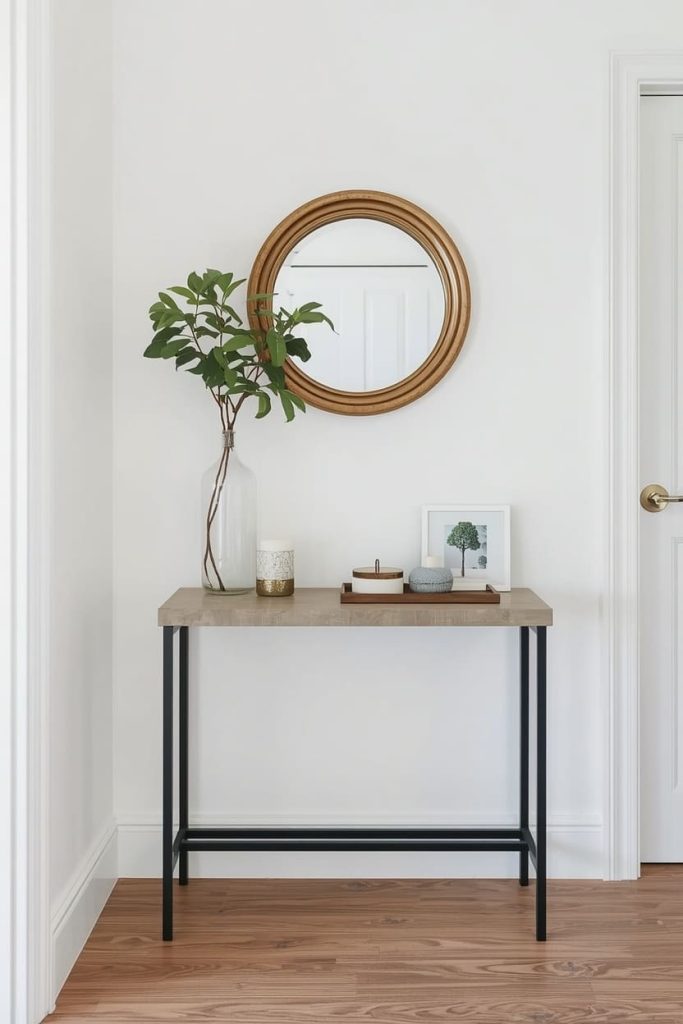
If you have even 24 inches of wall space, a slim console table changes everything. Look for one under 10 inches deep so it doesn’t eat into your walkway. Budget tier: $50–$120.
How to do it:
- Measure your space before buying — you want at least a few inches of clearance for foot traffic.
- Choose a table with a shelf or drawer underneath for hidden storage.
- Style the top with a small tray for keys, a candle, and one framed photo — keep it to three items max so it doesn’t become a catch-all.
- Use Command strips to anchor a small mirror above it if you want extra light and depth.
This gives you a “drop zone” the second you walk in, which is the single biggest habit-changer for keeping small apartments tidy.
Idea 2: Build a Vertical Hook Wall for Renters
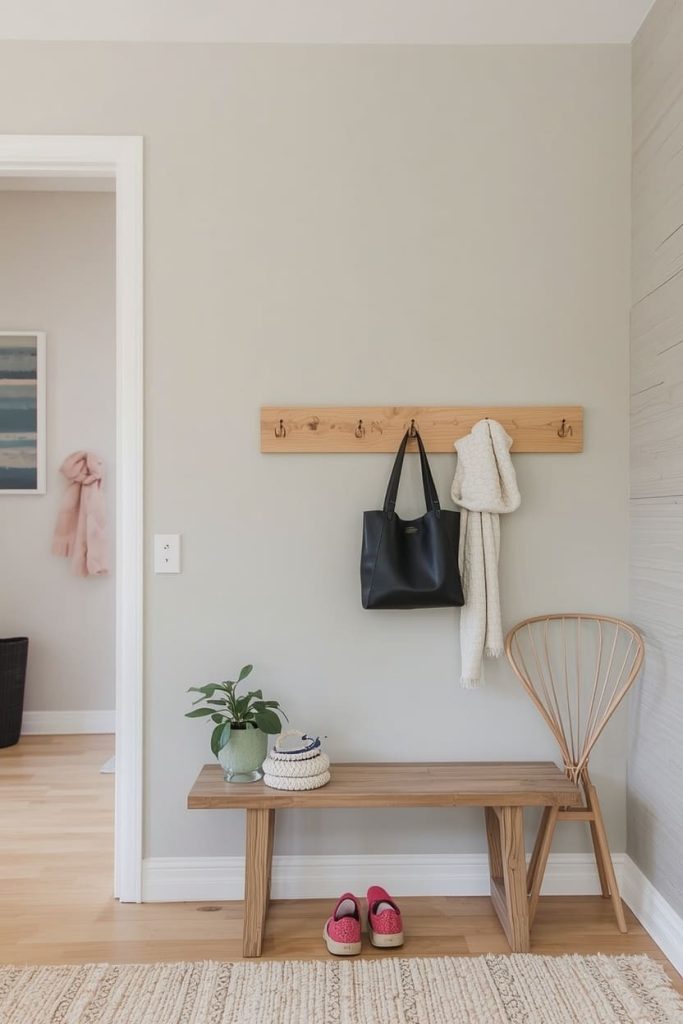
No entryway closet? No problem. A hook wall solves 80% of clutter with zero furniture. Budget tier: under $30.
How to do it:
- Buy a set of heavy-duty adhesive hooks rated for at least 5 lbs each.
- Map out your wall — space hooks 6–8 inches apart at varying heights (one row for bags, one lower for kids’ items or a leash).
- Stick them to a clean, dry wall and let them cure for at least an hour before hanging anything heavy.
- Rotate seasonally — hooks for scarves and umbrellas in winter, tote bags and hats in summer.
Because these are removable, you can reposition or take them down completely at move-out with no wall damage.
Idea 3: Use a Storage Bench to Add Seating and Hidden Storage
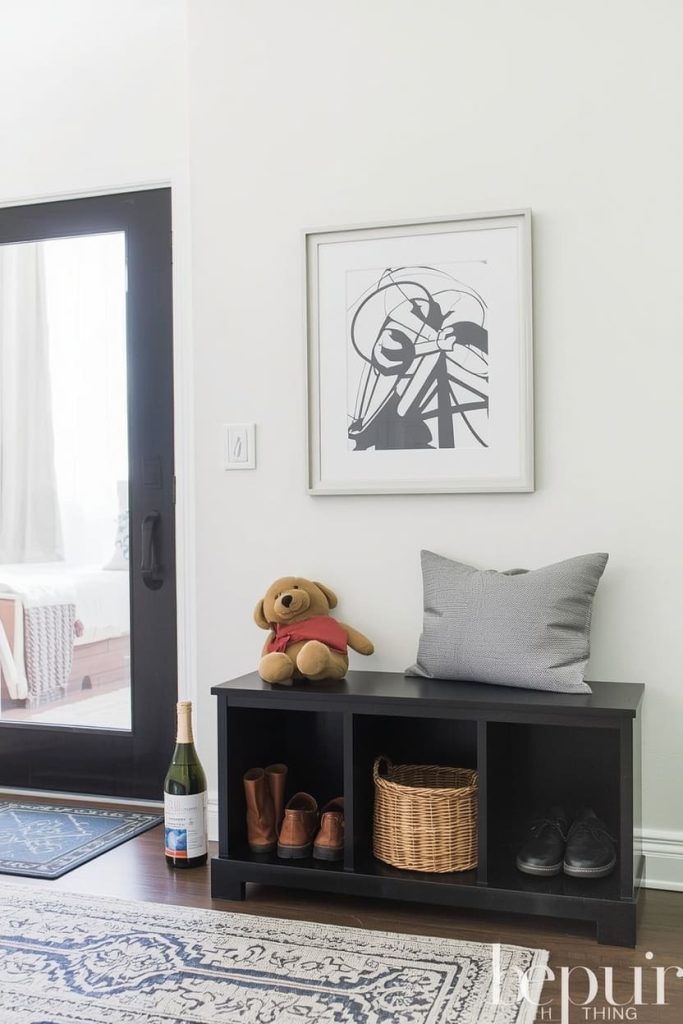
If your entryway is really just the first few feet of your living room, a storage bench multitasks as furniture and organization. Budget tier: $60–$150.
How to do it:
- Measure your space and pick a bench under 36 inches wide if you’re tight on room.
- Choose one with a lift-top or cubby storage so shoes and bags disappear from view.
- Place it against the nearest open wall, even if that’s technically your living room — proximity to the door is what matters, not a dedicated room.
- Add a small basket on top for gloves, masks, or dog leashes so the surface stays useful, not cluttered.
This is one of the best entryway ideas for small apartments because it solves seating, storage, and style in a single piece.
Idea 4: Turn a Blank Wall Corner Into a Mini Mudroom
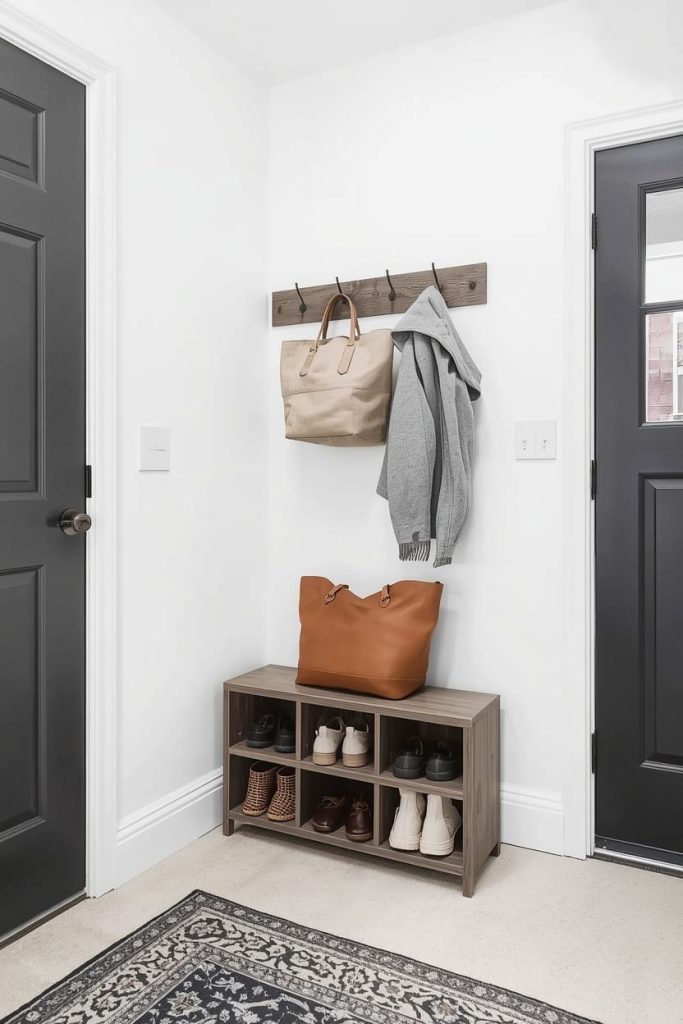
Even a 2-foot-by-2-foot corner can function like a mudroom with the right layout. Budget tier: $40–$90.
How to do it:
- Pick the emptiest corner near your entry, even if it’s not directly by the door.
- Add a slim shoe rack or stackable shoe bin flush against the wall.
- Mount a few adhesive hooks above it for coats and bags.
- Lay down a small, durable rug to visually separate this “zone” from the rest of the room — this is what tricks the eye into reading it as its own space.
The visual boundary (rug + hooks + shoe rack) is what makes a corner feel like an intentional entryway instead of a random pile of stuff.
Idea 5: Use an Over-the-Door Organizer for Instant Hidden Storage
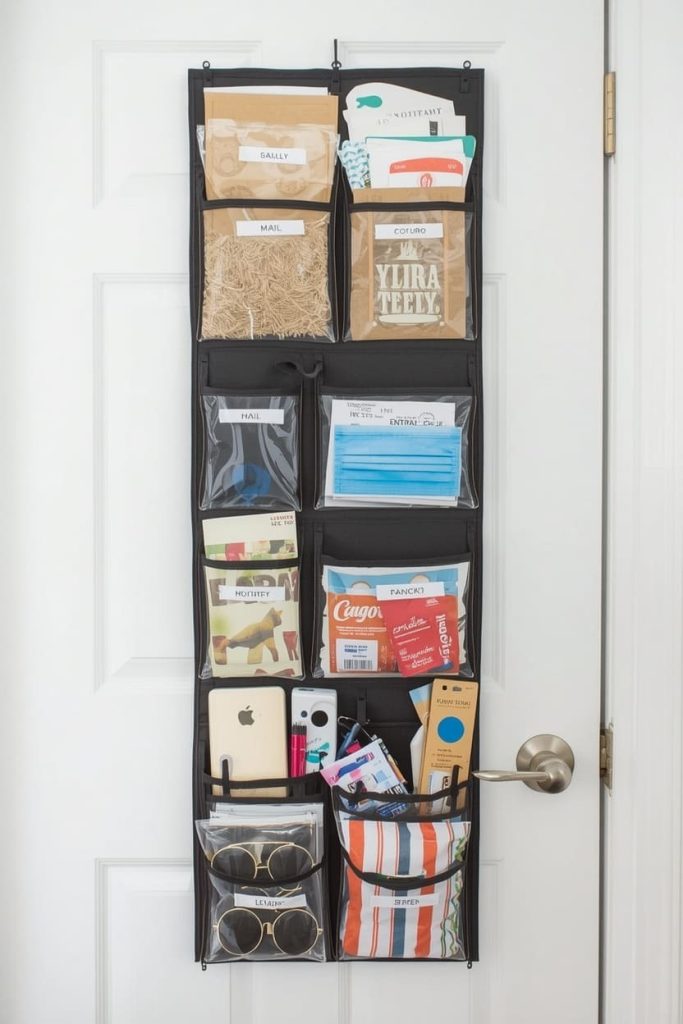
This is the fastest fix on this list if you have zero wall space to spare. Budget tier: under $25.
How to do it:
- Choose an over-the-door organizer with clear or labeled pockets so you’re not digging.
- Hang it on the inside of your front door or a nearby coat closet door.
- Designate pockets: one for mail, one for keys, one for sunglasses, one for masks or pet supplies.
- Do a weekly 2-minute reset — empty the mail pocket and toss anything that doesn’t belong.
Because it hangs on the door itself, this idea works even in the tiniest studios with literally no spare wall.
Idea 6: Add a Rug to Visually Define the Space
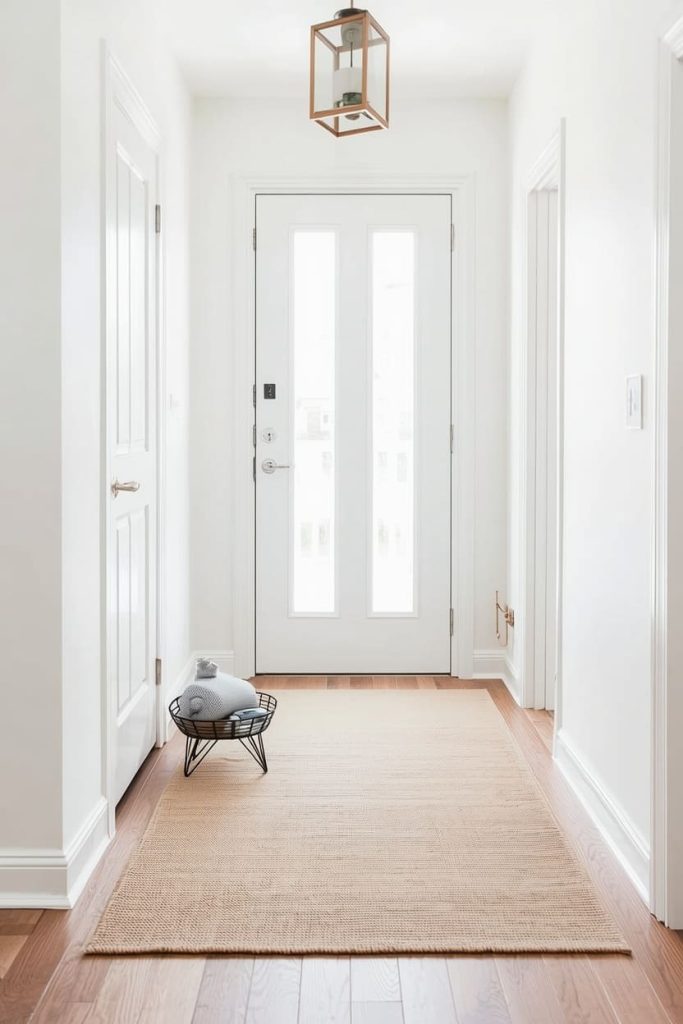
This is the cheapest, most overlooked idea on the list, and it makes the biggest visual difference. Budget tier: $20–$60.
How to do it:
- Measure the width of your entry area, even if it’s just a few feet of hallway.
- Choose a rug in a durable, low-pile material (jute or a flat weave) so it holds up to foot traffic and shoes.
- Place it directly in front of your door, extending a few feet into the room.
- Add a rug pad underneath — this protects hardwood floors and satisfies most lease agreements about no-slip mats.
A rug tells your eye “this is a different zone” even when there’s no wall or door separating it from the rest of your apartment.
Idea 7: Light the Space With Stick-On LED Lights
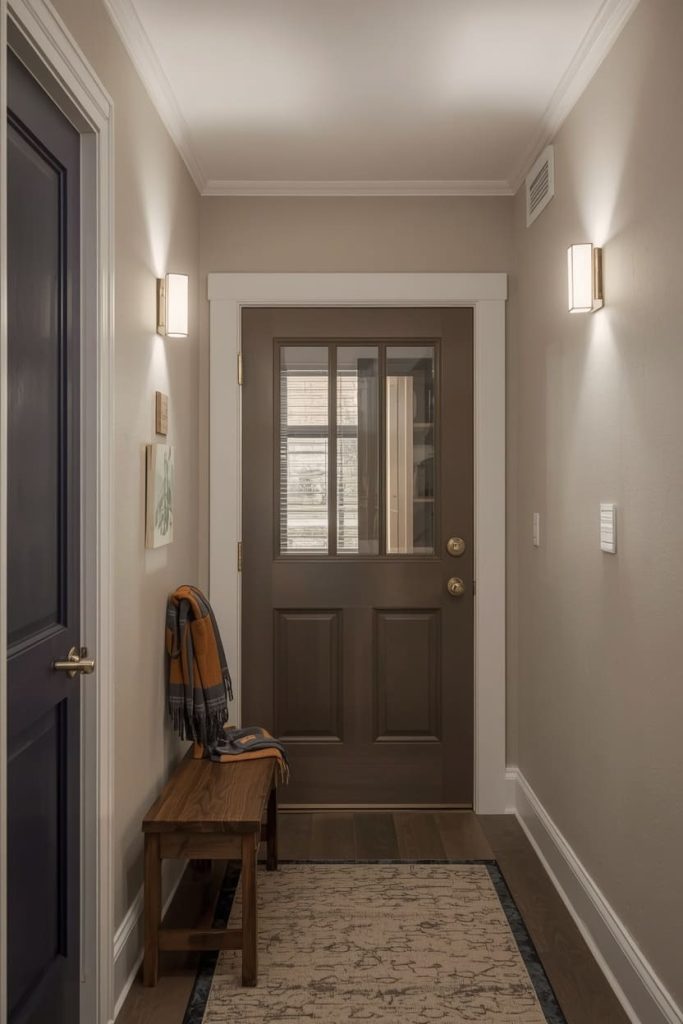
Most small entryways are dim because they’re tucked in a hallway or corner away from windows. Budget tier: $25–$45.
How to do it:
- Buy battery-powered, peel-and-stick LED pucks or a plug-in sconce if you have a nearby outlet.
- Place one above your console table or hook wall, and one lower near a bench or shoe rack.
- Use warm white bulbs (2700K–3000K) rather than cool white — it makes the space feel cozy instead of clinical.
- Test the placement with painter’s tape for a day before committing to the adhesive backing.
Good lighting is the difference between an entryway that looks like an afterthought and one that looks styled — and it’s one of the cheapest upgrades on this entire list.
How to Choose the Right Ideas for Your Space
Not every idea here will fit every apartment, and that’s okay. If you have a hallway, prioritize the hook wall and rug. If you have a corner, go for the mini mudroom setup. If you have literally nothing — just a door — the over-the-door organizer and stick-on lights are your best starting point. Pick two or three ideas rather than trying all seven at once. Small spaces respond better to a few well-placed pieces than to a lot of half-finished projects.
FAQs About Small Apartment Entryways
What if I don’t have an entryway at all?
You don’t need a physical room to create an entryway — you need a defined zone. Use a rug, a hook wall, or an over-the-door organizer to mark the first few feet inside your door as a distinct space, even if it blends into your living room or kitchen.
How do I add storage without drilling holes?
Command strips and adhesive hooks are rated to hold several pounds each and remove cleanly from most painted walls. Freestanding furniture like benches, coat racks, and shoe racks are also great no-drill options since they don’t touch the wall at all.
What’s the most budget-friendly entryway upgrade?
A rug and a set of adhesive hooks together usually cost under $50 and make the biggest visual and functional difference for the price. Start there before investing in furniture.
Will renter-friendly hooks actually hold heavy coats or bags?
Yes, as long as you check the weight rating before buying — most heavy-duty adhesive strips hold 5–15 lbs per hook. Let the adhesive cure for the recommended time (usually an hour) before hanging anything on it.
Can I do this in a studio apartment with no separate entry space?
Absolutely. Treat the first few feet inside your door as the entryway, even if it overlaps with your living space. A rug, a slim console table, or a corner shoe rack can all define that zone without needing an actual separate room.
How often should I clean out entryway storage?
A quick weekly reset — emptying the mail pocket, tidying shoes, and putting stray items back where they belong — keeps small entryways from becoming a catch-all. It takes less than five minutes and makes a noticeable difference every time you walk in.
Your entryway doesn’t need square footage to work hard for you — it just needs a few intentional choices. Start with one idea this weekend, and I promise the rest will start feeling doable too.

Emily Harper is a kitchen decor expert and interior designer with a passion for creating stylish, functional spaces. As a busy mom, she understands the importance of a kitchen that works for both family life and design. With 6 years of experience, Emily specializes in transforming kitchens into inviting, practical spaces. She’s known for her ability to blend trends with everyday needs, helping families create kitchens that feel like the heart of the home.