
Apartment Entryway Ideas With No Closet (Yes, You Can Still Have “Hidden” Storage)
When I moved into my first apartment, the front door opened straight into my living room — no closet, no mudroom, not even a nook.
I stood there on move-in day holding a box of winter coats with genuinely nowhere to put them.
For weeks, everything just piled on a chair by the door. Then I discovered something: you don’t need an actual closet to get a closet’s function.
A few clever, concealed-storage pieces later, my coats, shoes, and bags all had homes again — and none of it required a door frame or a drill.
If you’re standing in your own closet-less entry wondering where everything goes, here’s exactly how I solved it.
Table of Contents
- Top 5 Products for Closet-Free Entryways
- Idea 1: Bring in a Freestanding Wardrobe to Replace the Missing Closet
- Idea 2: Use a Hall Tree to Combine Hanging, Seating, and Shoe Storage
- Idea 3: Add a Storage Bench With Doors Instead of Open Cubbies
- Idea 4: Use a Lidded Ottoman for Soft Items and Everyday Overflow
- Idea 5: Set Up a Multi-Zone System Instead of One Catch-All Spot
- Idea 6: Rotate Seasonal Items Using Under-Bed or Vacuum Storage
- Idea 7: Add an Over-the-Door Organizer for Small, Everyday Items
- How to Choose the Right System for Your Space
- FAQs About Entryways With No Closet
Top 5 Products for Closet-Free Entryways
- 4-in-1 Hall Tree with Coat Rack, Bench, and Shoe Storage – This all-in-one unit gives you hanging space, a seat, and enclosed shoe storage in a single freestanding piece.
- Farmhouse Storage Bench with Barn Doors – This bench hides shoes and bulky items behind closed doors while doubling as a spot to sit and put shoes on.
- Freestanding Wardrobe Armoire with Hanging Rod – This tall cabinet recreates an actual closet with a hanging rod and shelves, perfect for coats and out-of-season clothing.
- Lidded Storage Ottoman with Hinged Top – This soft-topped ottoman conceals hats, gloves, and scarves while giving you an extra place to sit while lacing up shoes.
- Over-the-Door Storage Organizer with Fabric Bins – This organizer hangs on any door and hides small items like keys, sunglasses, and pet leashes behind soft fabric pockets instead of open pockets.
Idea 1: Bring in a Freestanding Wardrobe to Replace the Missing Closet
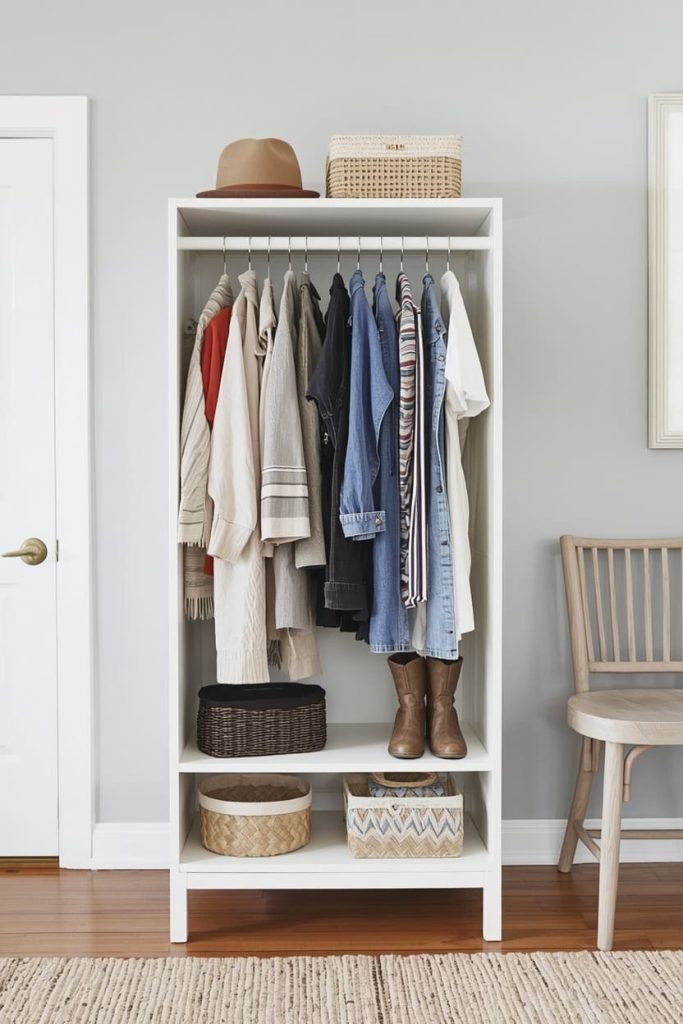
If your budget allows for one bigger investment, this is the closest thing to actually having a closet. Budget tier: $150–$300.
How to do it:
- Measure your entry wall — most wardrobes need 30–36 inches of width and about 20 inches of depth.
- Choose a wardrobe with a hanging rod plus at least one shelf, so coats and folded items both have a spot.
- If renting, use furniture anti-tip straps that attach to the wardrobe itself rather than drilling into the wall (many now come with adhesive-mount options).
- Assign zones inside: rod for coats, top shelf for hats/scarves, bottom for shoes or boots.
This single piece solves almost the entire “no closet” problem in one go, and it closes completely, so nothing is visible from the front door.
Idea 2: Use a Hall Tree to Combine Hanging, Seating, and Shoe Storage
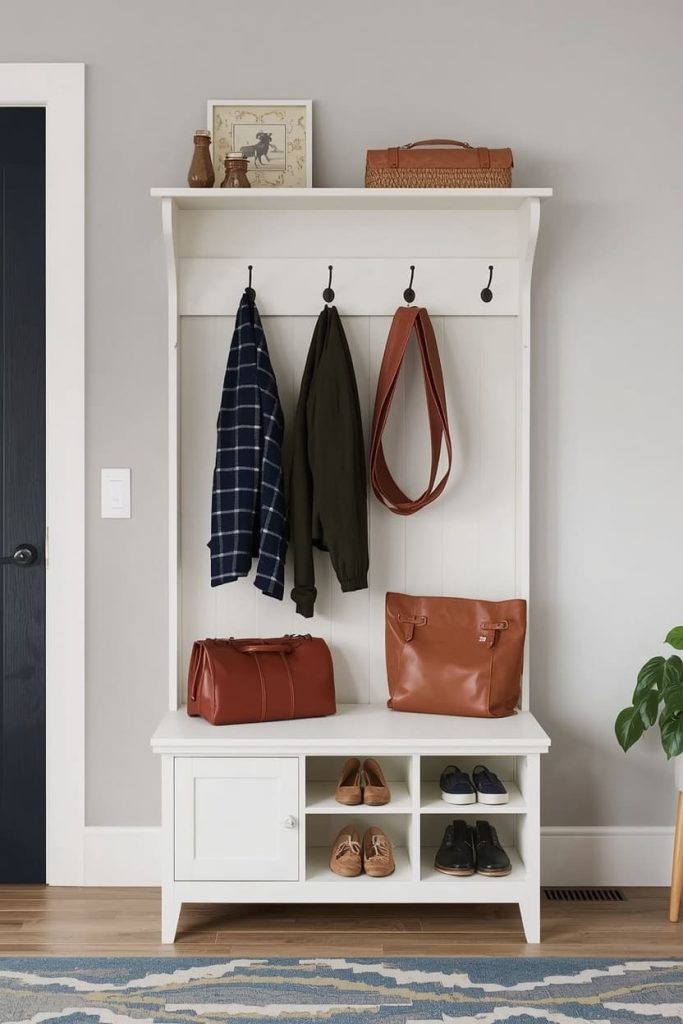
A hall tree is built specifically for closet-less entries — it’s basically a closet’s functions spread across one freestanding piece. Budget tier: $100–$200.
How to do it:
- Pick a hall tree with a bench seat, hooks or a rod above, and an enclosed or cubby-style shoe section below.
- Place it against the nearest wall to your door, even if that’s technically part of your living room.
- Assign each hook to a household member or category (guest hook, dog leash hook, everyday bag hook).
- Use the bench seat’s storage compartment for out-of-sight items like gloves or a first-aid kit.
Because it’s freestanding, this works in rentals and owned homes equally, and it gives you almost every “closet job” in a single footprint.
Idea 3: Add a Storage Bench With Doors Instead of Open Cubbies
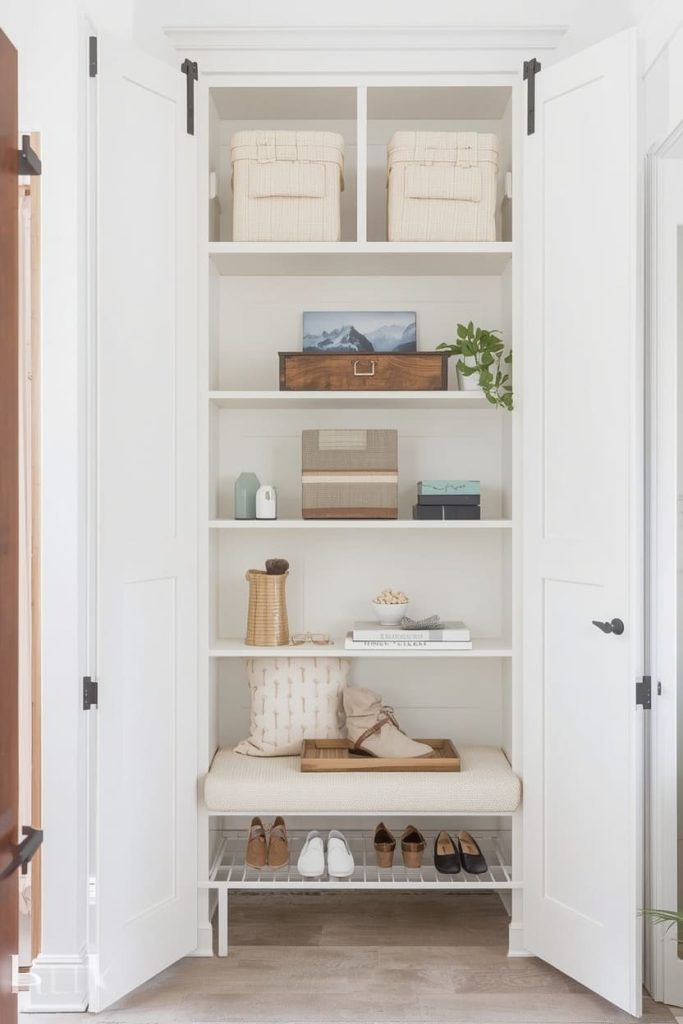
If you want concealment more than display, a bench with doors (rather than open shoe cubbies) hides clutter completely. Budget tier: $80–$180.
How to do it:
- Choose a bench with barn doors, cabinet doors, or a flip-top lid rather than open shelving.
- Measure your space to make sure the bench doesn’t block foot traffic — most are 30–48 inches wide.
- Use the inside for daily shoes and the top surface for a tray with keys and mail.
- Add a cushion on top if it doesn’t already have one, so it functions as seating too.
This is the best pick for anyone who wants their entryway to look tidy at a glance, since everything actually lives behind a closed door.
Idea 4: Use a Lidded Ottoman for Soft Items and Everyday Overflow
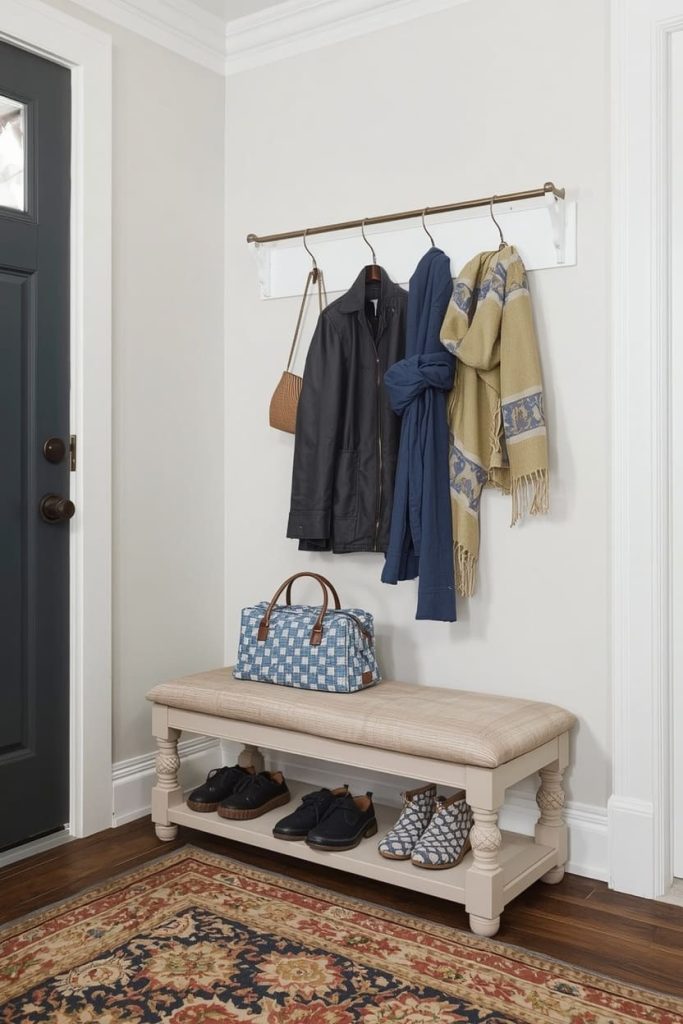
Not every closet-less entry has room for a full bench or wardrobe. An ottoman with storage is the compact alternative. Budget tier: $40–$90.
How to do it:
- Choose an ottoman with a hinged lid rather than a decorative-only design.
- Place it near the door or tuck it against the nearest wall if space is tight.
- Use it for soft, seasonal items — gloves, scarves, hats — that don’t need a full hanging space.
- Double it as a seat for putting on shoes, which is especially useful if you don’t have room for a full bench.
Because it’s small and soft-sided, this works even in the tightest closet-less entries where a wardrobe or hall tree won’t fit.
Idea 5: Set Up a Multi-Zone System Instead of One Catch-All Spot
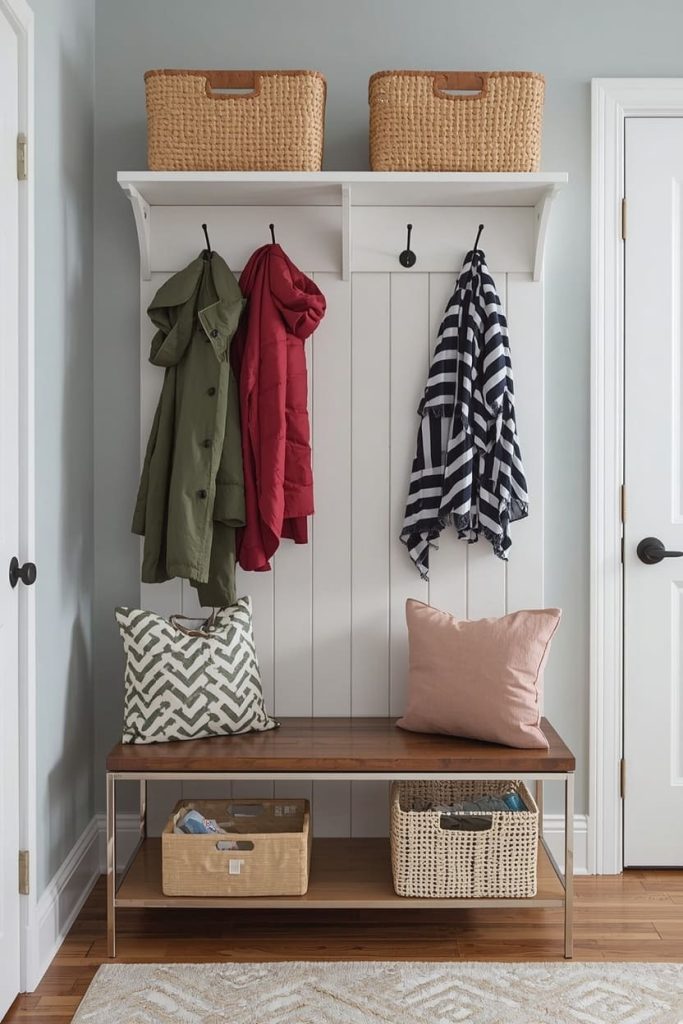
Since there’s no single closet doing every job, splitting storage into zones works better than trying to cram everything into one piece. Budget tier: $60–$150 total.
How to do it:
- Assign three zones: a coat zone (wardrobe, hooks, or hall tree), a shoe zone (bench or bin), and an everyday zone (tray or small organizer for keys/mail).
- Place each zone based on what’s actually available — coats can go on wall hooks even if there’s no room for a bench nearby.
- Label or mentally assign each zone so household members know exactly where things belong.
- Do a quick weekly reset, returning stray items to their zone rather than letting one area become a dumping ground for everything.
This approach mimics what a closet actually does — separates categories of items — without needing one single enclosed space to do it.
Idea 6: Rotate Seasonal Items Using Under-Bed or Vacuum Storage
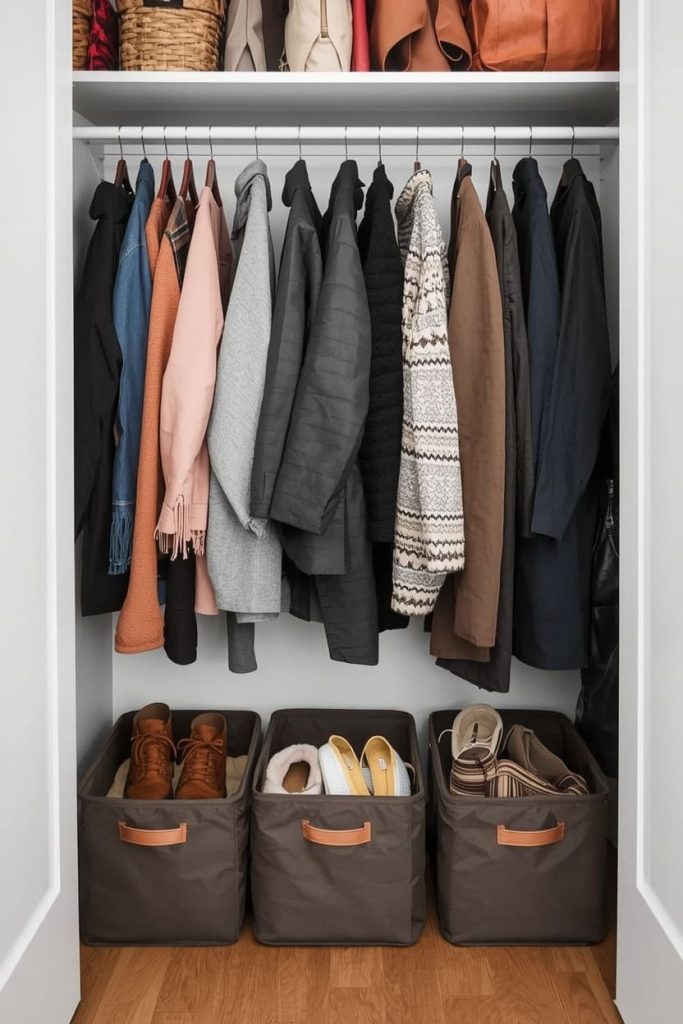
Without a closet, off-season coats and boots have nowhere obvious to go. This idea solves that without permanent furniture. Budget tier: $20–$50.
How to do it:
- Buy vacuum storage bags or a flat under-bed storage bin sized for your bed frame’s clearance.
- At the start of each season, swap out-of-season coats and boots from your entryway storage into the bin.
- Store the bin under your bed or on a closet shelf elsewhere in the apartment (even a bedroom closet works, since it’s no longer entryway-specific).
- Keep only the current season’s 2–3 coats and pairs of shoes in your entryway storage, so it never overflows.
This idea is what actually keeps your entryway system from getting overwhelmed — most “no closet” storage fails not from lack of furniture, but from trying to store every season at once.
Idea 7: Add an Over-the-Door Organizer for Small, Everyday Items
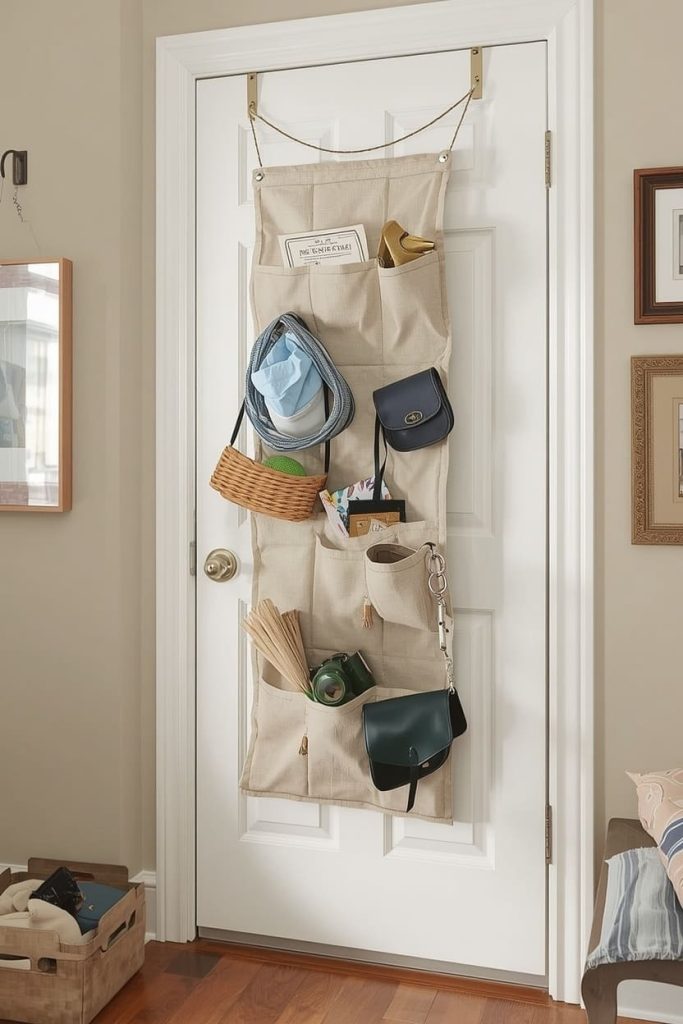
For the smallest items — keys, sunglasses, masks, pet supplies — a wardrobe or bench is overkill. This solves the “everyday clutter” layer. Budget tier: $20–$35.
How to do it:
- Choose an over-the-door organizer with enclosed fabric pockets rather than open mesh, so it looks tidy even when full.
- Hang it on the inside of your front door or a nearby closet door elsewhere in the apartment.
- Assign each pocket a category: keys, sunglasses, dog leash, mail.
- Do a 2-minute daily habit of putting items back in their pocket the moment you walk in, rather than setting them down “just for now.”
Because it hangs on a door you already have, this is the easiest zero-footprint addition to any no-closet entryway.
How to Choose the Right System for Your Space
If you can only make one investment, start with a wardrobe or hall tree — they do the most work in a single piece. If your budget or space is tighter, build a multi-zone system instead: hooks for coats, a small bench or bin for shoes, and an over-the-door organizer for everyday items. Whatever you choose, the seasonal rotation habit (Idea 6) is what keeps any of these systems from becoming overwhelmed six months in.
FAQs About Entryways With No Closet
Where do I store winter coats if I don’t have a closet?
A freestanding wardrobe or hall tree with a hanging rod is the closest replacement for a real closet. If space is tight, wall-mounted hooks combined with seasonal rotation (moving off-season coats to under-bed storage) work just as well.
What’s the best closet alternative for renters?
Freestanding furniture is ideal since it requires no drilling — a hall tree, wardrobe, or storage bench can all be moved in and out without touching the walls. Adhesive hooks and over-the-door organizers are good supplemental options for renters with strict lease terms.
How do I hide clutter without a door to close?
Choose furniture with its own doors or lids — cabinets, barn-door benches, and lidded ottomans all conceal contents the same way a closet door would. This matters more for this audience than open shelving, which tends to look cluttered without an actual door.
Can a wardrobe really replace a coat closet?
Yes, especially models with a hanging rod plus at least one shelf — they hold coats, folded items, and even shoes in one enclosed unit. Just be sure to measure your entry space first, since wardrobes need more depth than a bench or hooks.
How do I manage seasonal items without a closet?
Vacuum storage bags or flat under-bed bins let you rotate coats and shoes by season, so your entryway storage only ever holds what you’re currently using. This single habit prevents most “no closet” storage systems from becoming overwhelmed.
What if I don’t have room for a bench or wardrobe at all?
Start with wall-mounted hooks and an over-the-door organizer — both add zero floor footprint and can handle coats, bags, and small everyday items. You can always add a bench or wardrobe later once you know what your daily habits actually require.
Not having a coat closet isn’t a design flaw you have to live with — it’s just a missing piece you get to choose yourself. Start with one zone this week, and the rest of your entryway will start falling into place around it.

Emily Harper is a kitchen decor expert and interior designer with a passion for creating stylish, functional spaces. As a busy mom, she understands the importance of a kitchen that works for both family life and design. With 6 years of experience, Emily specializes in transforming kitchens into inviting, practical spaces. She’s known for her ability to blend trends with everyday needs, helping families create kitchens that feel like the heart of the home.