
Apartment Entryway Storage Ideas That Actually Keep the Clutter Away
For almost a year, my entryway was a mess I pretended not to see — shoes in a pile, mail stacked on the counter, bags dropped wherever they landed.
I kept buying “one more basket” hoping it would fix everything, but nothing stuck until I stopped looking for one solution and built a small system instead: one spot for shoes, one for mail, one for bags.
That’s it.
The clutter didn’t disappear because I found the perfect product — it disappeared because everything finally had a home.
If your entryway has become the drop zone for your whole apartment, here’s exactly how to build a system that sticks.
Table of Contents
- Top 5 Products for Entryway Storage Systems
- Idea 1: Build a Shoe Landing Zone With a Bench or Rack
- Idea 2: Create a Command Center for Mail and Keys
- Idea 3: Hang a Wall-Mounted Coat and Bag Rack
- Idea 4: Use Stackable Bins for Small Item Storage
- Idea 5: Add an Over-the-Door Organizer for Daily Essentials
- Idea 6: Set Up a Seasonal Rotation System
- Idea 7: Add a Drop Tray or Catch-All Dish for Daily Loose Items
- How to Build Your Full Entryway System
- FAQs About Apartment Entryway Storage
Top 5 Products for Entryway Storage Systems
- Shoe Storage Bench with Cubbies – This bench gives you seating plus enclosed shoe storage, so pairs don’t pile up by the door.
- Wall-Mounted Key and Mail Organizer with Hooks – This wall unit sorts incoming mail and hangs keys in one glance-and-grab spot.
- Stackable Storage Bins with Lids – These bins corral seasonal items like gloves and scarves while stacking vertically to save floor space.
- Over-the-Door Organizer with Pockets – This organizer hangs on any door and holds small daily items like sunglasses, masks, and dog leashes.
- Wall-Mounted Coat Hook Rack (5–6 Hooks) – This hook rack gives every coat and bag its own spot without needing a closet or floor space.
Idea 1: Build a Shoe Landing Zone With a Bench or Rack
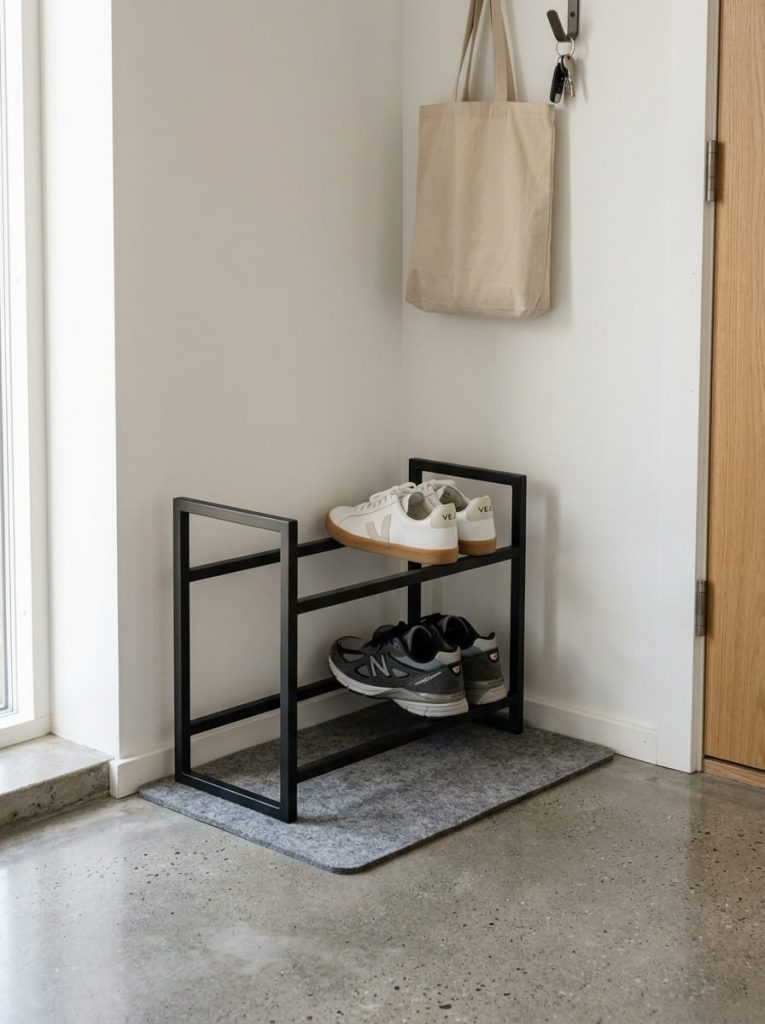
Shoes are usually the first thing to pile up by any front door, so this is the best place to start. Budget tier: $40–$120.
How to do it:
- Measure your space — a bench works if you have at least 24–36 inches of wall, while a slim shoe rack fits tighter corners.
- Choose enclosed storage (cubbies or doors) if you want a tidy look, or open slots if speed matters more than appearance.
- Set a “shoes off here” rule so everyone in the household uses the same spot consistently.
- Add a small tray or mat underneath to catch dirt and protect flooring, especially in rentals.
This single zone solves the most visible clutter problem in most entryways almost overnight.
Idea 2: Create a Command Center for Mail and Keys
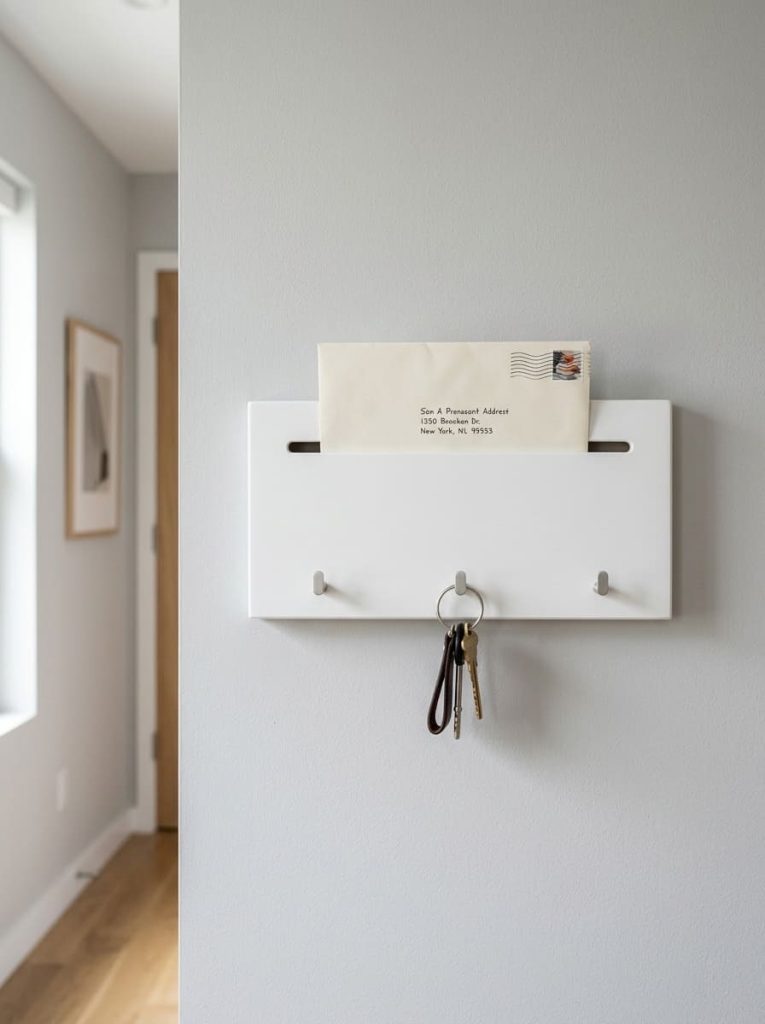
Mail and keys are small items, but they cause outsized chaos when they don’t have a designated spot. Budget tier: $20–$50.
How to do it:
- Choose a wall-mounted organizer with at least one mail slot and several key hooks.
- Mount it using Command strips if renting, or screws into a stud if you own your space.
- Sort mail immediately when you walk in — recycle right away, and only let “needs action” mail sit in the slot.
- Assign one hook per household member for keys so nobody digs through a pile in the morning.
This idea takes less than 20 minutes to set up and solves one of the most common daily frustrations in any entryway.
Idea 3: Hang a Wall-Mounted Coat and Bag Rack
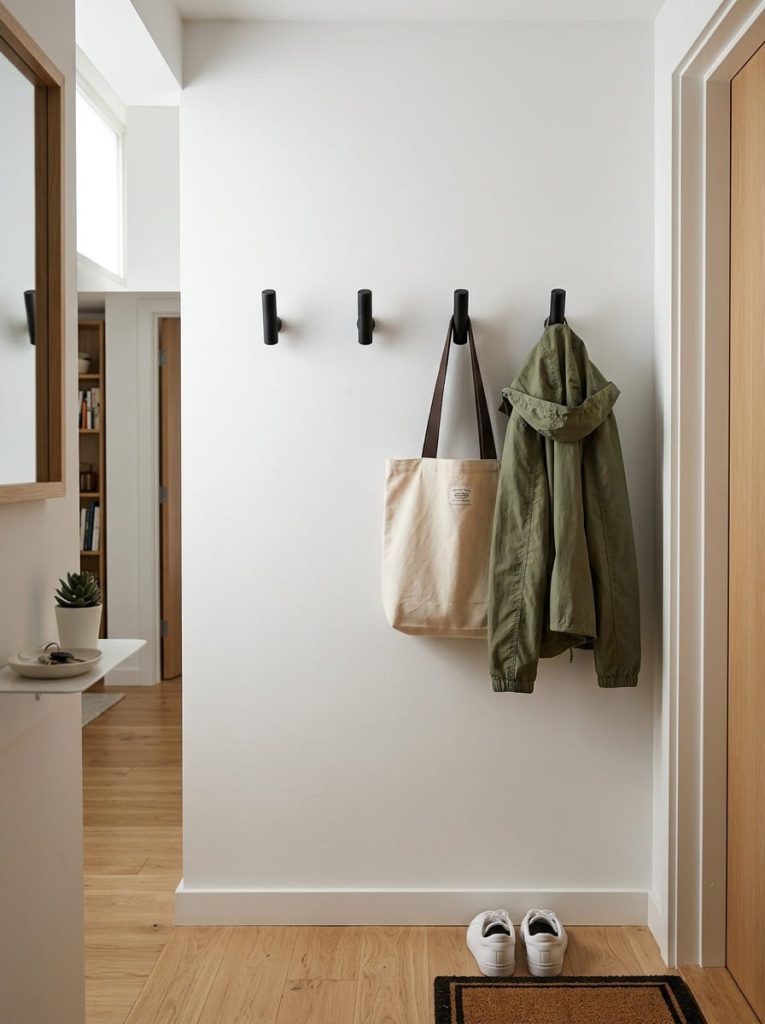
If coats and bags are landing on chairs or doorknobs, a dedicated rack solves it without needing any floor space. Budget tier: $20–$45.
How to do it:
- Choose a hook rack with at least one hook per household member, plus one or two extras for guests.
- Mount at a height where coats won’t drag on the floor — usually 60–66 inches for adult coats.
- Use adhesive strips rated for the weight of coats and bags (most hold 5–10 lbs per hook) if you’re renting.
- Keep only current-season coats on the rack; move off-season ones elsewhere (see Idea 6) so it never overflows.
Because it mounts flush to the wall, this works in even the tightest hallway or corner entryway.
Idea 4: Use Stackable Bins for Small Item Storage
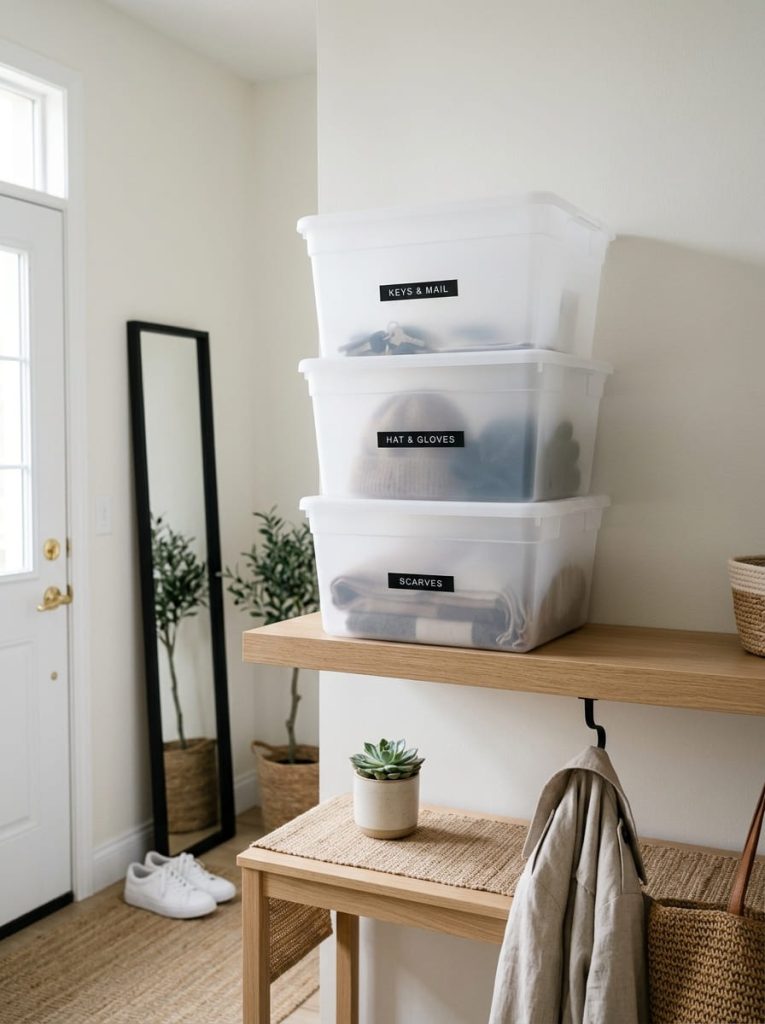
Gloves, scarves, sunscreen, umbrellas — these small items rarely have a home and end up scattered everywhere. Bins solve that. Budget tier: $25–$60.
How to do it:
- Choose stackable bins with lids so they can go on a shelf, in a cabinet, or under a bench without looking messy.
- Label each bin by category (gloves, sunscreen, dog supplies, umbrellas) so everyone in the household knows where things go back.
- Stack no more than 2–3 bins high for stability and easy access to the top-used items.
- Do a seasonal swap — bring the current season’s bin to eye level and move others higher or to a closet elsewhere in the home.
This is one of the simplest additions on this list, and it solves the “everything else” category that doesn’t fit neatly into shoes or coats.
Idea 5: Add an Over-the-Door Organizer for Daily Essentials
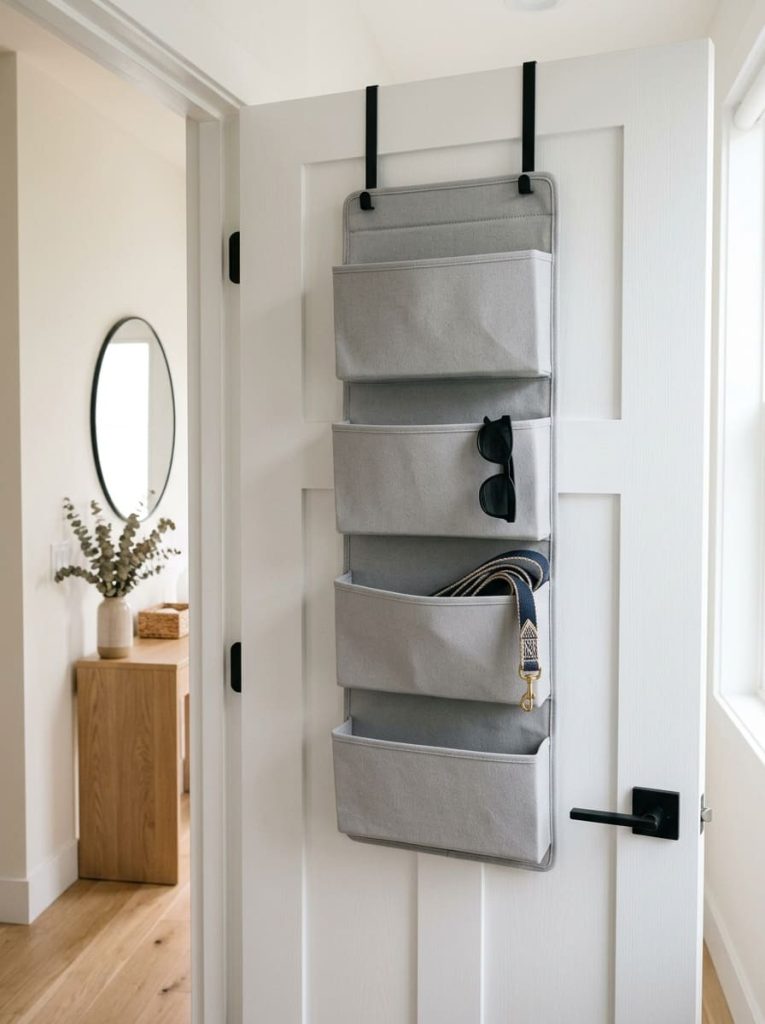
For the smallest, most-used items — sunglasses, masks, pet leashes — a door organizer keeps them accessible without cluttering a surface. Budget tier: $18–$30.
How to do it:
- Choose an organizer with pockets or a small basket, sized to fit your front door or a nearby closet door.
- Hang it using the included over-the-door hooks — no tools or drilling required.
- Assign each pocket a specific item category so it’s a grab-and-go system, not another catch-all.
- Do a quick weekly check to remove anything that’s drifted out of its assigned pocket.
Because it uses a door you already have, this is the easiest zero-footprint idea on the whole list.
Idea 6: Set Up a Seasonal Rotation System
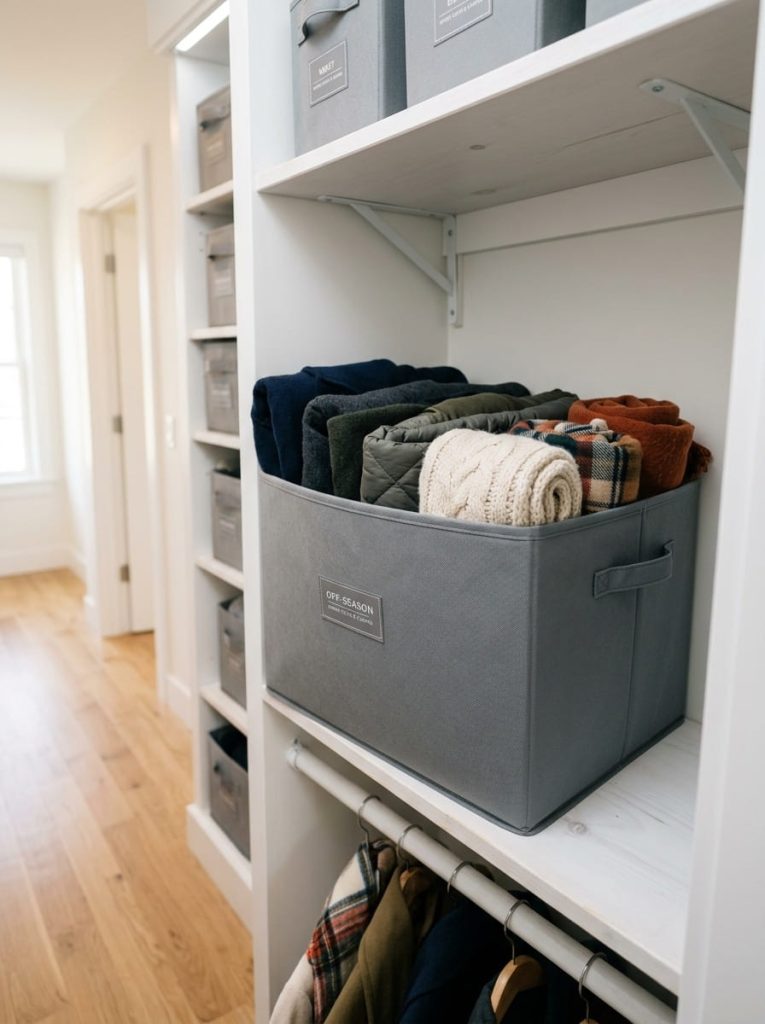
Most entryway storage fails not from lack of space, but from trying to store every season’s items at once. Budget tier: $15–$40.
How to do it:
- Choose one bin or bag specifically for off-season items (winter boots and coats in summer, sandals and sun hats in winter).
- At the start of each season, swap out what’s in your entryway storage for what’s actually in use.
- Store the off-season bin elsewhere in your home — under a bed, in a hall closet, or on a high shelf.
- Keep only 2–3 weeks’ worth of “in rotation” items in your entryway at any time, so it never overflows.
This habit is what actually keeps every other idea on this list working long-term, since it prevents your entryway system from getting buried under things you’re not currently using.
Idea 7: Add a Drop Tray or Catch-All Dish for Daily Loose Items
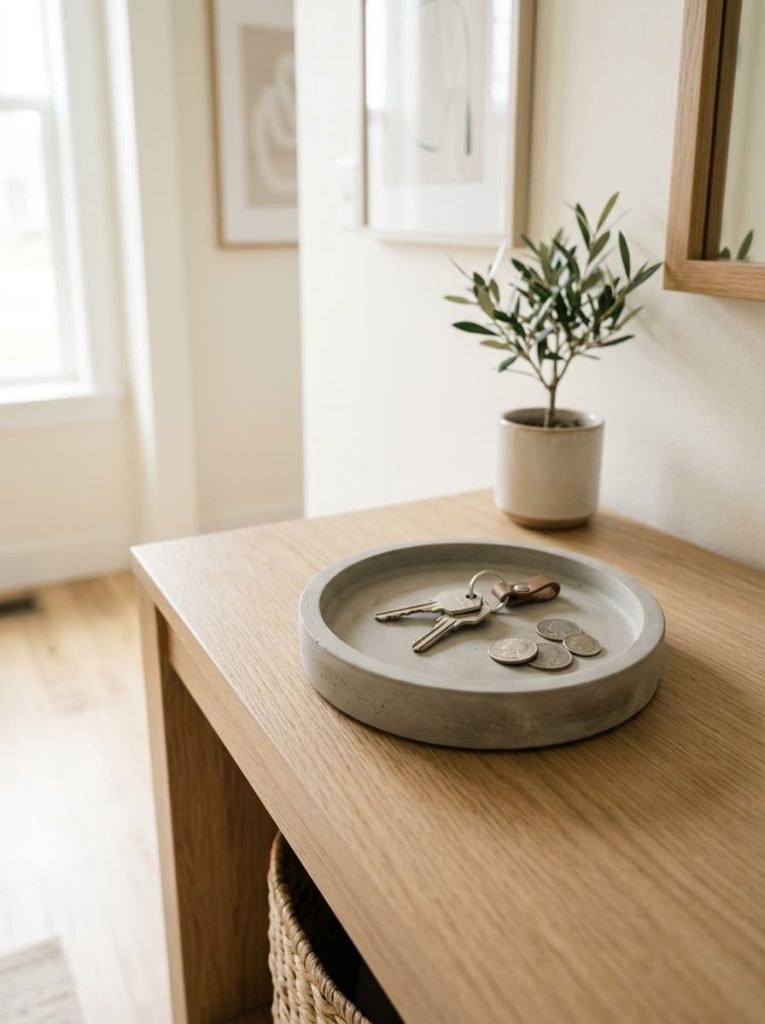
Every household has a few items that don’t fit a category — spare change, hair ties, a random receipt. A small tray gives them a home instead of letting them scatter across every surface. Budget tier: $10–$25.
How to do it:
- Choose a small tray or shallow dish that fits on your bench, console, or shelf near the door.
- Place it in the most obvious “landing spot” — wherever you naturally set things down without thinking.
- Empty it weekly, returning items to their real home or tossing what’s no longer needed.
- Resist the urge to let it grow into a bigger pile — a tray works because it stays small and visible, not because it hides clutter.
This tiny addition solves the “everything that doesn’t fit anywhere else” problem that trips up even well-organized entryways.
How to Build Your Full Entryway System
Instead of buying one product and hoping it solves everything, tackle each category separately: shoes, coats/bags, mail/keys, small items, and seasonal storage. Start with whichever pile is currently the biggest source of frustration — for most people, that’s shoes or mail — and add the rest over the following weeks. A full system doesn’t need to be built in a weekend; it just needs every category to eventually have its own designated spot.
FAQs About Apartment Entryway Storage
What’s the best way to organize shoes by the front door?
A bench or rack with enclosed cubbies keeps shoes contained and off the floor, and setting a simple household rule (shoes go here, not by the couch) does the rest. If you don’t have room for a full bench, even a slim shoe rack or a boot tray works as a starting point.
How do I stop mail and keys from piling up?
A wall-mounted organizer with a mail slot and key hooks gives both items a single, obvious home the moment you walk in. The real fix is pairing it with a habit — sorting and recycling mail immediately instead of letting it sit.
What storage works for a family entryway vs. a single-person apartment?
Families generally need multiple hooks (one per person), a larger bench, and bigger bins, while single-person apartments can often get by with a compact rack, one bin, and a small tray. The categories stay the same either way — shoes, coats, mail/keys, seasonal items — just scaled to household size.
Do I need to buy furniture, or can small organizers work just as well?
It depends on your space and budget — furniture like a bench or wardrobe solves more categories at once, while smaller products (hooks, bins, organizers) work well if you’re renting or short on space. Most successful entryways actually combine both: one furniture piece plus a few small organizers.
How often should I reset my entryway storage?
A quick weekly reset (putting stray shoes back, clearing the mail slot, emptying the catch-all tray) keeps any system from sliding back into clutter. A deeper seasonal reset every few months is a good time to rotate out-of-season items and reassess what’s actually being used.
What’s the biggest mistake people make with entryway storage?
Trying to solve everything with one product, rather than splitting storage into categories like shoes, coats, and mail. Systems that separate categories — even simple ones — tend to hold up far better than a single basket meant to catch everything.
An organized entryway isn’t about buying the perfect product — it’s about giving every category of clutter its own small, dedicated spot. Pick one idea from this list to start, and let the rest build itself out from there.

Emily Harper is a kitchen decor expert and interior designer with a passion for creating stylish, functional spaces. As a busy mom, she understands the importance of a kitchen that works for both family life and design. With 6 years of experience, Emily specializes in transforming kitchens into inviting, practical spaces. She’s known for her ability to blend trends with everyday needs, helping families create kitchens that feel like the heart of the home.