Vintage Farmhouse Kitchen Ideas: 7 Ways to Bring Old-World Charm Home
My grandmother’s kitchen hutch sat in a barn for six years after she passed. Nobody wanted to deal with it. The paint was chipping. One hinge was rusted shut.
Last spring I finally hauled it into my own kitchen, just to see. I didn’t refinish it. I didn’t strip the paint. I just cleaned it, filled it with her old blue-and-white dishware, and stepped back.
It stopped me in my tracks. That piece taught me something about vintage farmhouse style. It’s not about buying old-looking things. It’s about keeping what already carries a story.
You probably have a piece like that somewhere, waiting for a kitchen that finally does it justice. Here’s how to build one around it.
Top 5 Products to Get This Look
- Farmhouse Enamelware Canister Set — Chipped-edge enamel canisters bring instant vintage texture to any open counter or shelf.
- Antique Brass Cabinet Knobs — Warm brass hardware with a slightly aged patina swaps out plain builder knobs for something that looks collected, not bought.
- Gingham Café Curtains — Soft gingham cotton curtains soften a kitchen window without looking staged or new.
- Vintage-Style Glass Pendant Light — A ribbed milk glass pendant gives you old-world lighting without any real wiring risk.
- Ironstone Pitcher Set — Classic white ironstone pitchers double as vases, utensil holders, or simple counter styling with zero effort.
A Chippy White Hutch for Displaying Heirloom Dishware
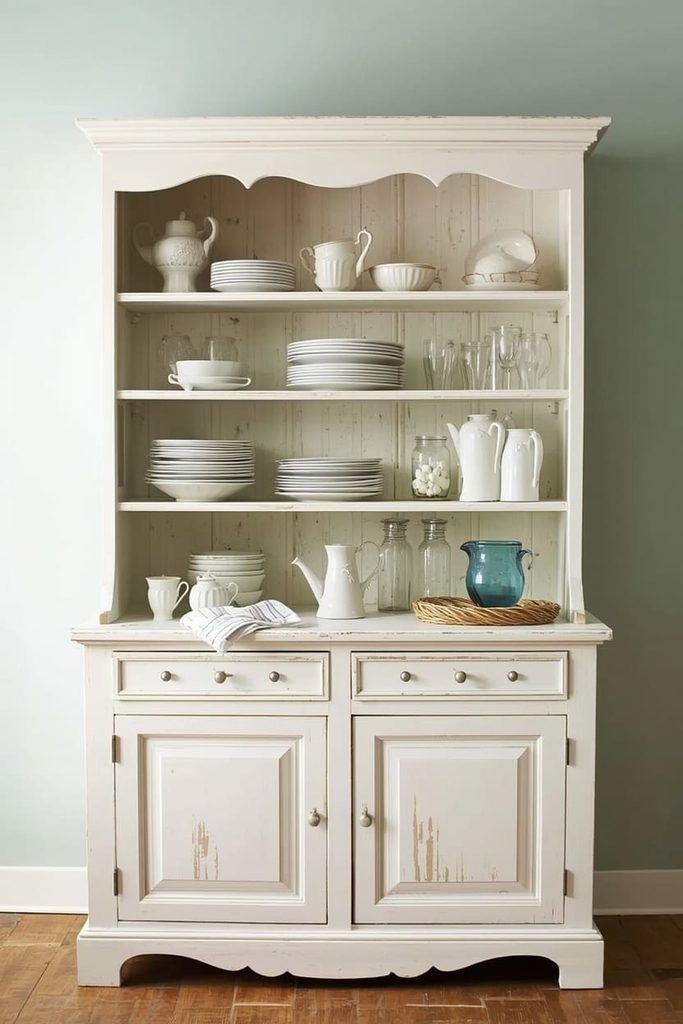
Find an old wood hutch, painted or unpainted, and let it anchor one wall of your kitchen as open storage for dishes that actually mean something to you.
Don’t strip the paint if it’s already chipping. That texture is the whole point. If you’re starting from a plain piece, use chalk paint in a soft white or cream, then sand the edges by hand after it dries to fake decades of wear.
Fill the shelves with mismatched china, glass jars, or old tins instead of matching sets. The imperfection is what makes it read as vintage instead of staged.
Open Shelving Built From Salvaged Barn Wood
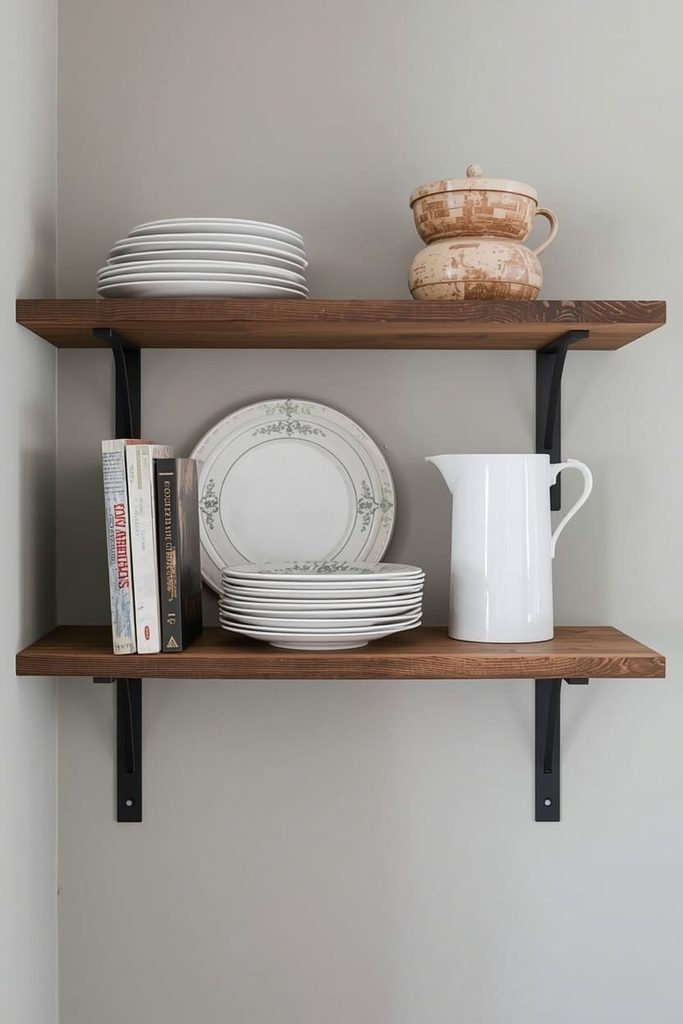
Replace one run of upper cabinets with simple wood shelves cut from reclaimed barn wood or aged pine.
Look for wood with visible nail holes, weathering, or old paint remnants still clinging to the grain. A local salvage yard or reclaimed lumber supplier is your best source, though old fence boards work in a pinch.
Mount the shelves on simple iron brackets, then style them loosely with stacked plates, a pitcher, and one or two cookbooks. Leave gaps. Vintage shelving should never look fully arranged.
A Farmhouse Sink With Vintage Bridge Faucet
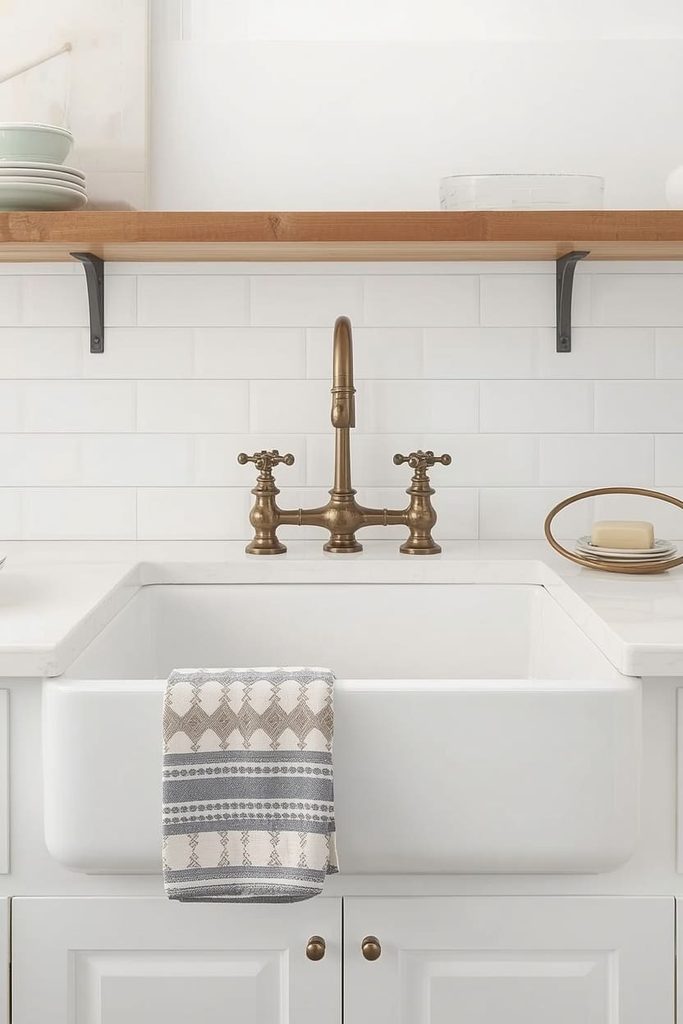
Choose a deep white apron-front sink, then pair it with a bridge-style faucet in an aged brass or oil-rubbed bronze finish instead of anything chrome or brushed steel.
The apron sink gives you the classic farmhouse silhouette on its own, but the faucet finish is what pushes it into vintage territory. Look for faucets with cross handles or porcelain levers, since those small details read as older hardware even when the fixture is brand new.
Flank the sink with an open shelf holding a bar of soap in a ceramic dish and a folded linen towel for the full effect.
Beadboard Cabinetry Painted in a Soft Heritage Color
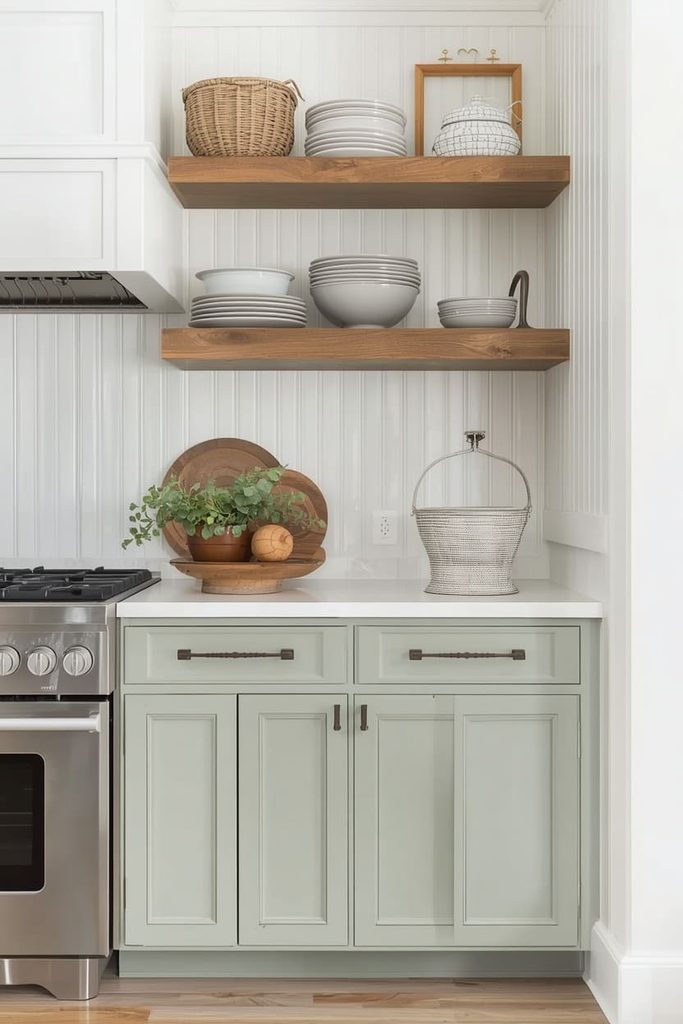
Install or reface your lower cabinets with simple beadboard panel doors, then paint them in a muted vintage color like sage green, soft blue, or buttery cream instead of stark white.
Beadboard alone gives cabinets that classic farmhouse texture, but the color choice does the heavy lifting for the vintage feel. Stay away from bright or saturated tones. You want something that looks like it could have faded slightly over fifty years.
Pair the cabinets with the antique brass hardware from the product list above, and avoid sleek modern pulls entirely. They’ll fight the whole look.
A Collection of Mismatched Vintage Textiles
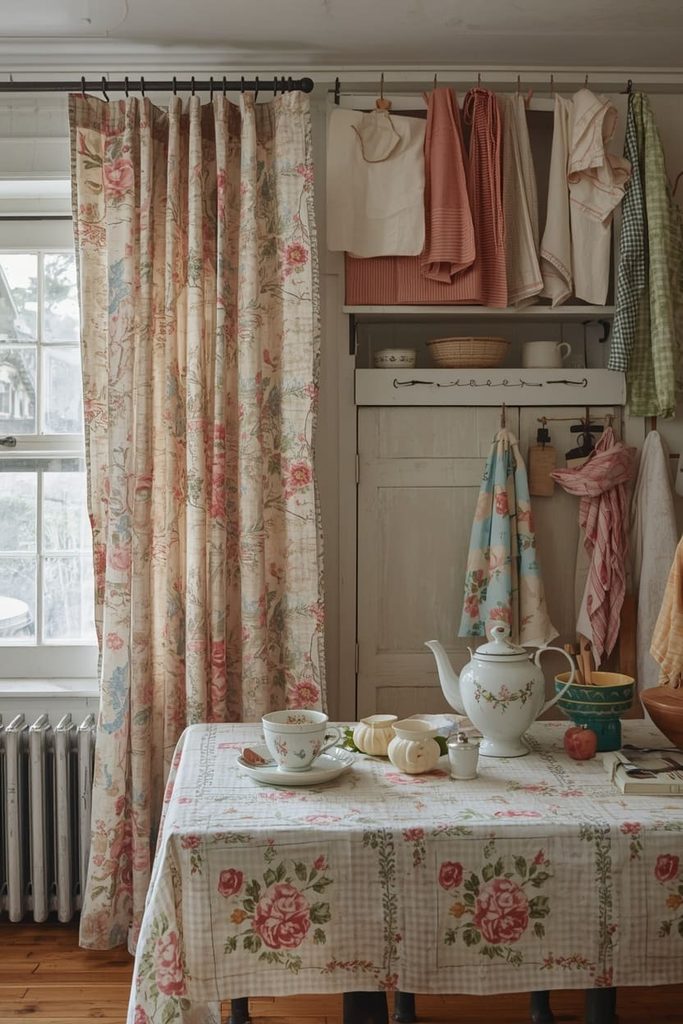
Layer in a few vintage or vintage-style textiles around the kitchen, including a tablecloth, tea towels, and simple café curtains, all in soft florals, ginghams, or faded stripes.
Estate sales, thrift stores, and even old family linens are the best sources here, since true vintage fabric has a softness that new cotton takes years to develop. If you can’t find originals, look for reproduction prints in muted, slightly dusty colors rather than crisp modern patterns.
Rotate a few pieces seasonally so the kitchen feels tended rather than frozen in place. This is one of the cheapest ways to shift the whole mood of a room.
Open Pantry Shelving With Glass Jar Storage
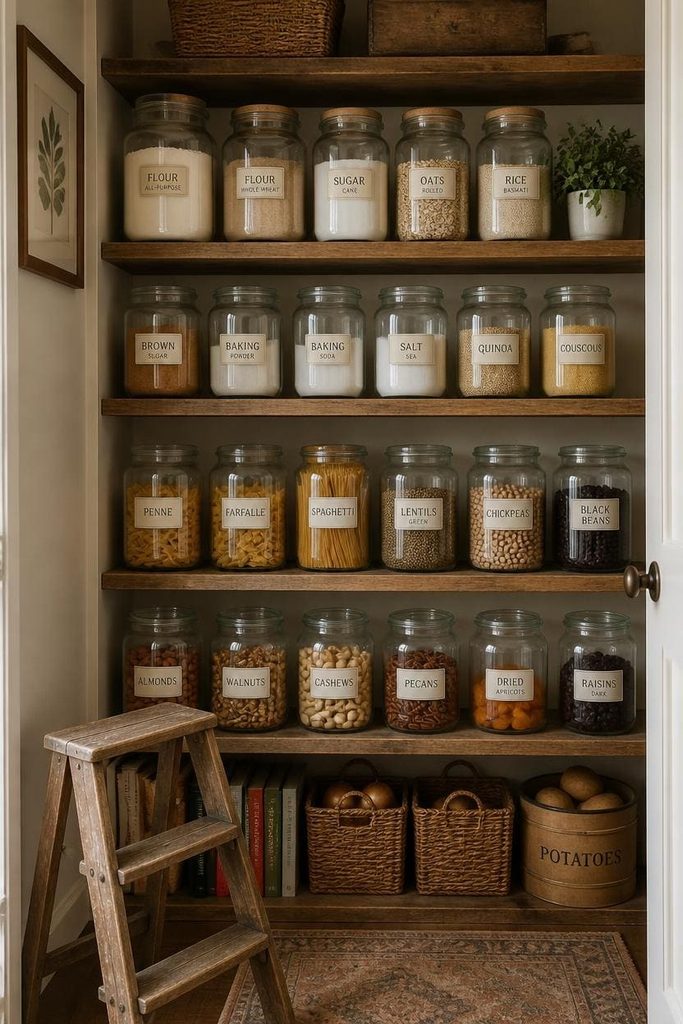
Convert a closet or unused corner into an open pantry, then store dry goods in glass jars with simple metal or cork lids instead of leaving everything in plastic packaging.
Label the jars by hand or with simple printed labels in a plain serif font, nothing overly designed. Group similar items together, flour near flour, grains near grains, so the shelf reads as organized rather than cluttered.
Add a step stool with a worn wood finish nearby if your pantry runs tall. This idea does double duty, since it functions as real storage while also becoming a visual centerpiece guests notice immediately.
A Freestanding Farm Table Instead of a Built-In Island
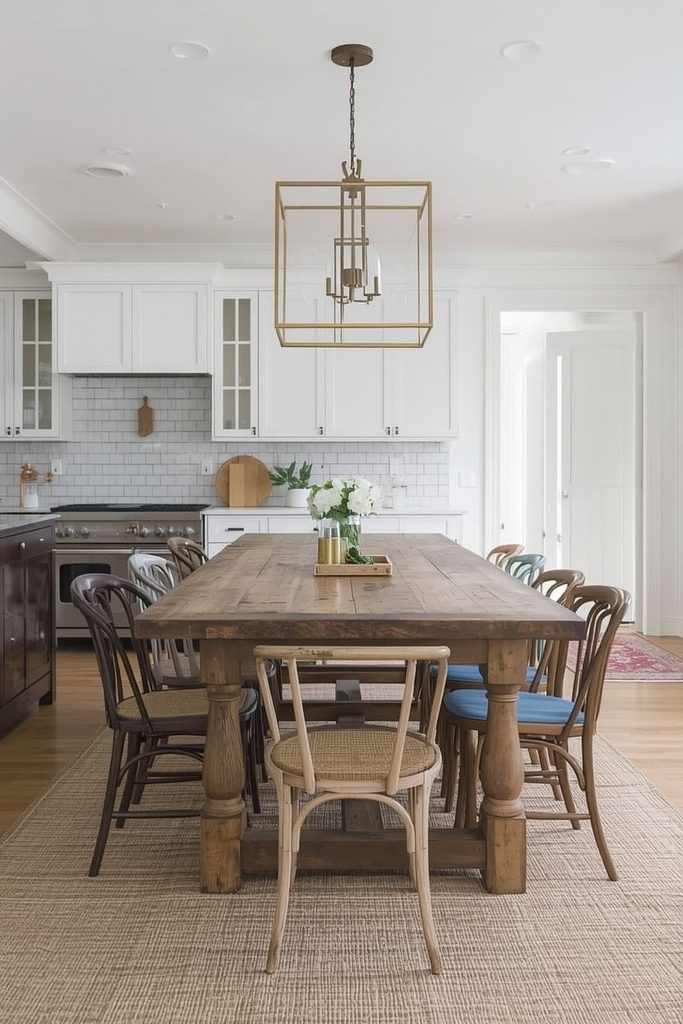
Skip a built-in island entirely and use a freestanding wood farm table as your prep and gathering space instead.
An old table with visible scars, water rings, or slightly uneven legs works better here than anything new and polished. Estate sales and local auction houses are worth checking regularly, since large farm tables show up more often than you’d expect and usually sell for less than a comparable new piece.
Surround it with a mix of chairs rather than a matching set, ideally in different finishes or styles. That mismatch is what makes the whole space feel gathered over time instead of purchased in one trip.
Frequently Asked Questions
How is vintage farmhouse different from regular farmhouse style?
Regular farmhouse style often leans on new materials made to look rustic, like factory-distressed wood or mass-produced shiplap. Vintage farmhouse relies on pieces with real age and history, whether that’s an inherited hutch, salvaged wood, or true antique hardware, so the texture and imperfections are genuine rather than manufactured.
Where should I look for authentic vintage pieces?
Estate sales, local auctions, and antique malls tend to have the best selection and lowest prices, especially if you visit regularly rather than searching once. Facebook Marketplace and local thrift stores can also turn up strong finds, though you’ll need to check more often since inventory turns over quickly.
Can I get this look if I only own new furniture and fixtures?
Yes, though you’ll want to focus on paint, hardware, and textiles first, since those are the fastest ways to soften anything that looks too new. A coat of chalk paint, aged brass knobs, and a few vintage-style textiles can shift the feel of a kitchen significantly, even before you source any true antique pieces.
What paint colors work best for a vintage farmhouse kitchen?
Muted, slightly dusty tones work best, including soft sage, buttery cream, faded blue, and warm off-white. Avoid anything with a stark, cool undertone, since those colors tend to read as modern farmhouse rather than vintage, even with the right furniture around them.
How do I keep vintage farmhouse from looking cluttered or dated?
Edit constantly. Vintage farmhouse works best when each piece has room to breathe, so resist the urge to fill every shelf or surface. Rotate smaller items seasonally, keep your color palette consistent throughout the room, and let a few strong pieces, like that hutch or farm table, carry most of the visual weight.
That hutch still sits against my kitchen wall today. The paint hasn’t changed. I never did fix that rusted hinge. Some things work better left alone, and I think that’s the real lesson behind vintage farmhouse style. You’re not building something perfect. You’re building something that feels like it’s always been there, even on the day you finish. Start with one piece that means something to you, and let the rest of the kitchen grow around it.

Emily Harper is a kitchen decor expert and interior designer with a passion for creating stylish, functional spaces. As a busy mom, she understands the importance of a kitchen that works for both family life and design. With 6 years of experience, Emily specializes in transforming kitchens into inviting, practical spaces. She’s known for her ability to blend trends with everyday needs, helping families create kitchens that feel like the heart of the home.