7 Country Farmhouse Kitchen Ideas You Can Actually Finish This Year
My grandmother’s kitchen had a chipped enamel sink and a wood floor worn soft in front of the stove. I didn’t know it then, but that kitchen shaped everything I wanted in my own home.
When I bought my first old farmhouse, I tried to copy her kitchen exactly. That was a mistake. You can’t recreate a memory, but you can build something that feels just as warm.
Here are five products I’d start with, then seven ideas you can finish room by room.
Top 5 Products for Your Country Farmhouse Kitchen
- Kraus Workstation Apron-Front Sink Accessories — A cutting board and drying rack set that clips right onto your farmhouse sink and makes it work harder for you.
- Franklin Brass Black Cabinet Pulls — Matte black hardware swaps out in a weekend and gives even builder-grade cabinets an old-farmhouse feel.
- Kichler Barrington Pendant Light (Vintage Bronze) — A caged, vintage-style pendant over your island looks like it’s been there since 1920, even if it shipped yesterday.
- Ball Mason Jar Storage Set with Wood Lids — Classic glass jars with wood lids keep pantry staples visible and add instant farmhouse texture to open shelves.
- Sonder Los Angeles Wood Cutting Board Risers — Simple wood risers stack your boards upright and turn a cluttered counter corner into a styled little display.

Install an Apron-Front Sink Without Replacing Your Whole Countertop
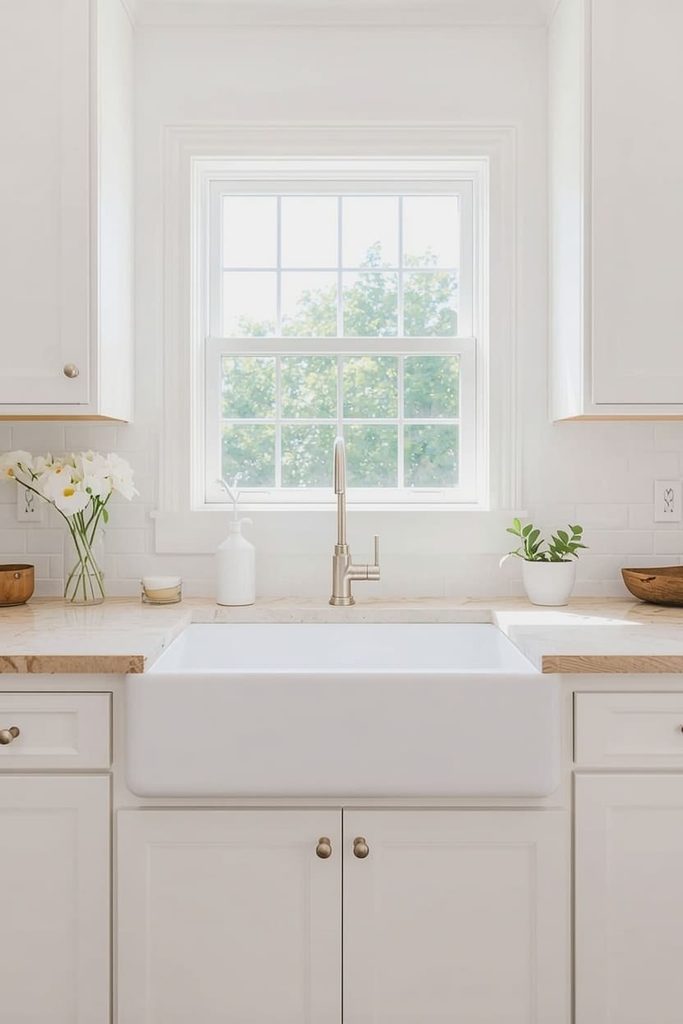
Buy a retrofit apron-front sink kit sized to fit your existing base cabinet opening, and install it without tearing out your current countertop. Full sink replacements usually mean a full counter replacement too, but retrofit kits are built to avoid that.
Measure your cabinet opening carefully before you buy, since apron sinks come in a range of depths and widths. Choose a fireclay or cast iron sink in white or cream to keep that classic farmhouse look. A plumber can usually handle the swap in a single day if your existing plumbing lines up close to the new sink’s drain position.
Budget $600 to $1,500 for the sink itself, plus $300 to $600 for installation if you’re hiring it out. This is a moderate project for a confident DIYer with plumbing experience, but most homeowners bring in a plumber for this one.
The apron front itself is what sells the whole look. It’s the detail people associate most with an authentic old farmhouse kitchen, even in a home built decades after the style first became popular.
Expose or Fake a Wood Beam Across Your Kitchen Ceiling
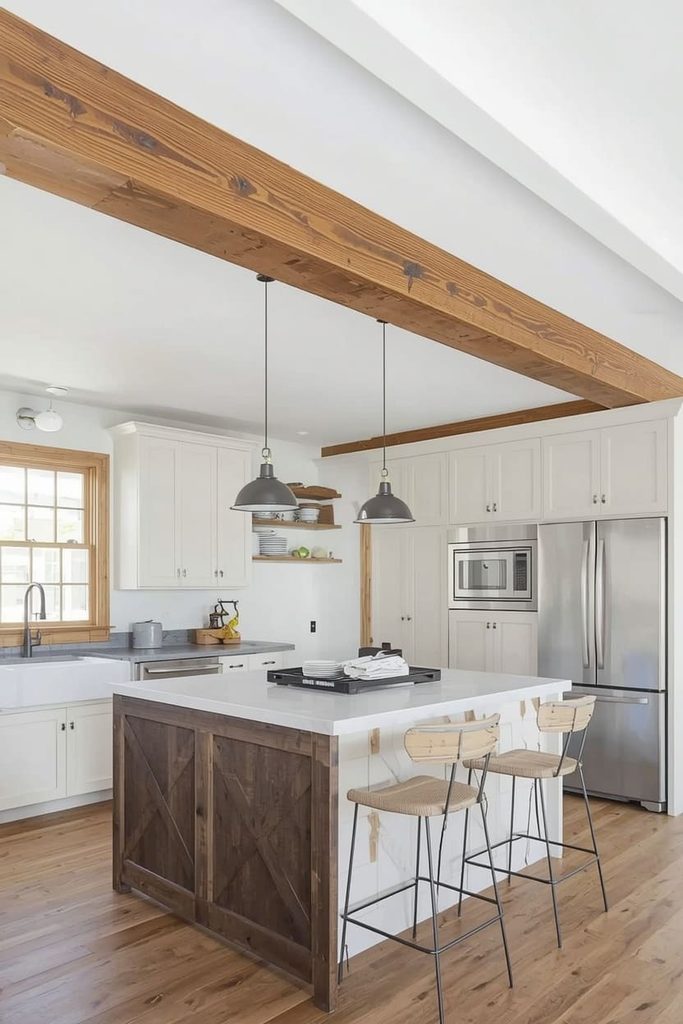
If your kitchen has a structural beam hidden behind drywall, strip the drywall away and expose it. If it doesn’t, install a faux wood beam across the ceiling instead. Either way, a beam adds the kind of architectural weight that makes a kitchen feel like it belongs to an old farmhouse.
Check with a contractor before removing any drywall, since some beams are load-bearing and need to stay covered for safety reasons. If you’re adding a faux beam, choose a lightweight polyurethane or hollow wood-look beam that mounts directly into ceiling joists. Stain or paint it to match your cabinets or contrast against a white ceiling for more drama.
This project runs $150 to $500 for a faux beam kit, or higher if you’re paying a contractor to expose and finish a real structural one. Installation typically takes a full day for a faux beam, longer if you’re dealing with real structural work and inspections.
A beam changes the proportions of the whole room. It draws the eye up and gives your kitchen a sense of history, even if the beam itself is brand new.
Build Open Shelving from Reclaimed Barn Wood
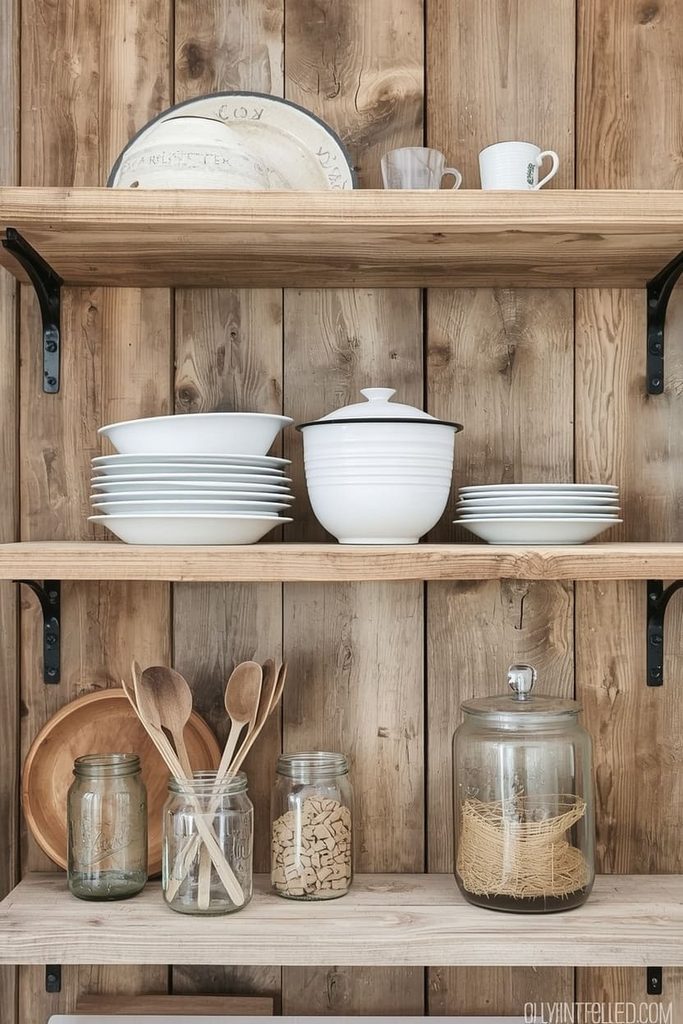
Remove one or two upper cabinets and replace them with open shelves built from reclaimed barn wood or wood with a distressed, weathered finish. This works especially well if you’re already living in an old farmhouse with a barn or outbuilding you can pull material from.
Source reclaimed wood from a local salvage yard, an old barn on your own property, or a supplier that specializes in reclaimed lumber. Sand the boards just enough to remove splinters, but keep the weathered color and texture intact. Mount them with black iron shelf brackets for a sturdy, rustic look that matches the wood.
Style your shelves with mason jars, stacked ironstone plates, and a few enamelware pieces for that lived-in farmhouse feel. This project costs $100 to $400 depending on whether you’re sourcing wood for free or buying it, and takes a solid weekend from start to finish.
Reclaimed wood carries its own story. Every knot and nail hole adds a texture and history you simply can’t buy new, which is exactly why this detail resonates with people drawn to farmhouse style in the first place.
Paint Your Kitchen Walls a Warm Cream Instead of Bright White
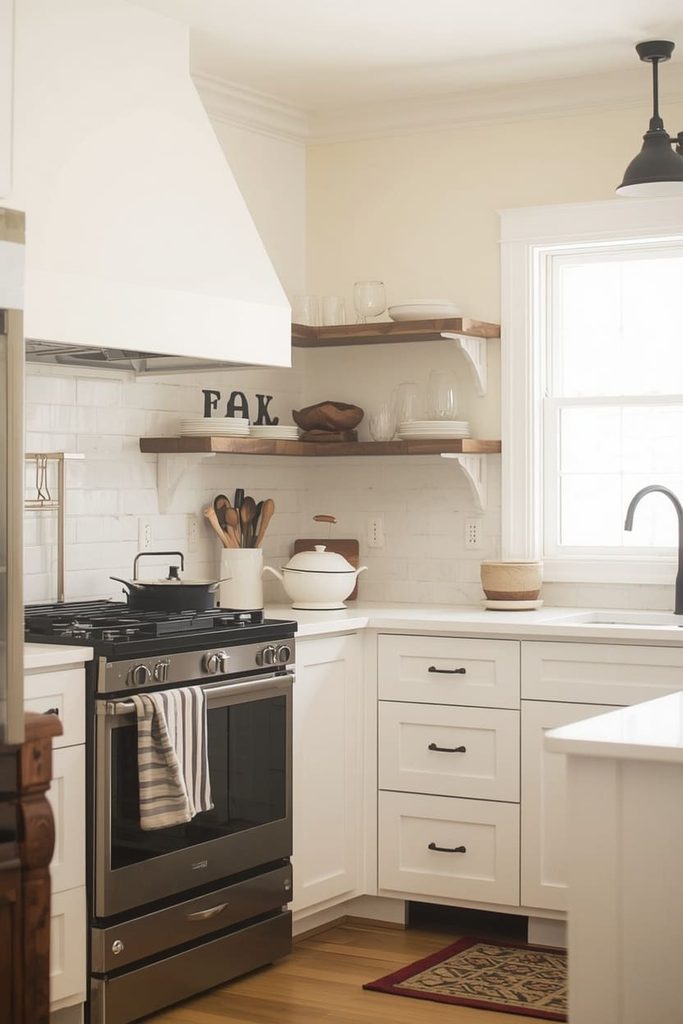
Choose a warm cream or off-white paint color for your kitchen walls instead of a stark, cool-toned white. Warm creams read as cozy and lived-in, while bright white can feel closer to a modern or clinical kitchen than a country farmhouse one.
Look at colors like Benjamin Moore Swiss Coffee, Sherwin-Williams Creamy, or Farrow and Ball Wimborne White. Test a few samples on your actual wall, since lighting changes how warm or cool a color reads throughout the day. Pair your cream walls with darker wood tones and black hardware for contrast.
This is one of the most budget-friendly changes on this list. A gallon of quality paint runs $40 to $70, and most kitchens only need one or two gallons total.
Painting your own kitchen takes a weekend for most people, including prep, primer, and two coats. Hiring a painter typically costs $300 to $800 depending on your kitchen size and wall condition.
Add Vintage-Style Lighting Instead of Modern Recessed Cans
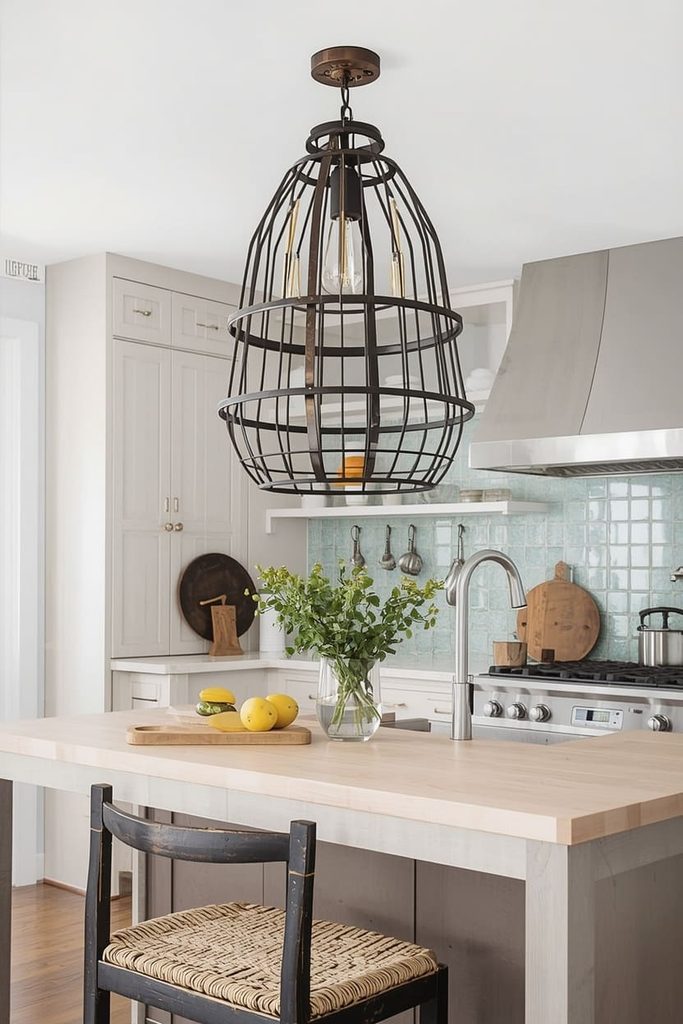
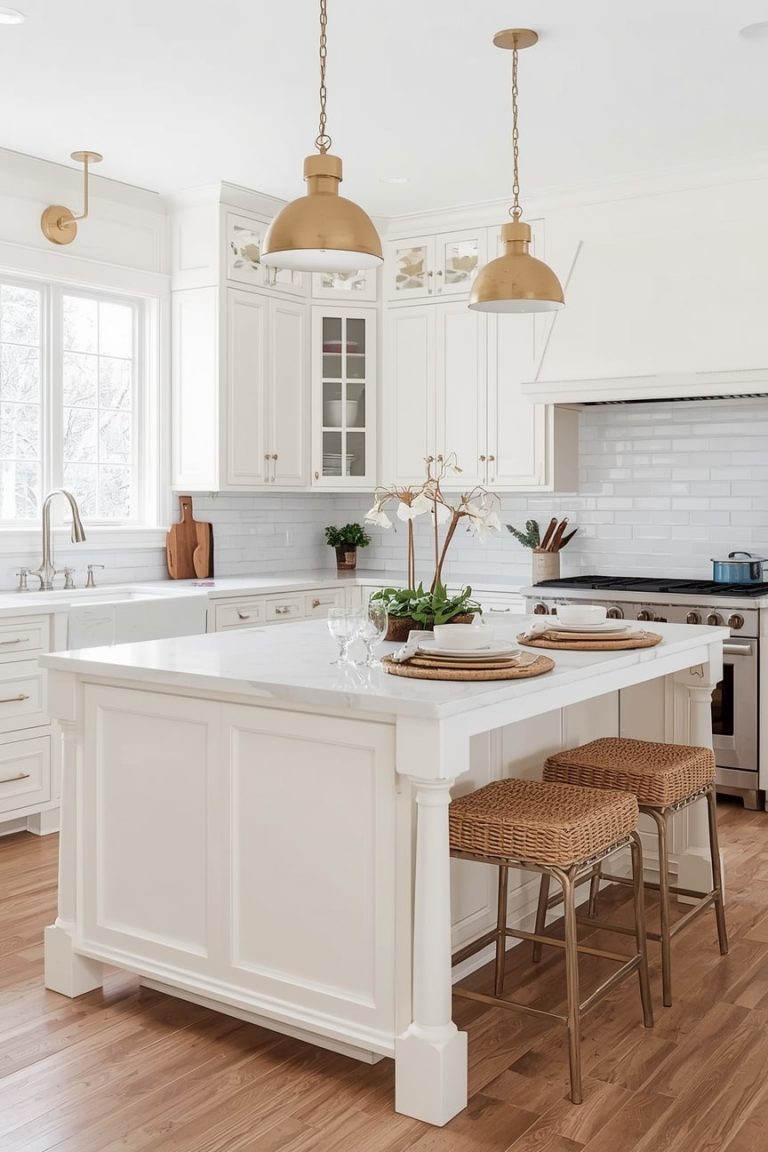
Swap your modern recessed lighting or a plain flush-mount fixture for a vintage-inspired pendant, chandelier, or caged fixture. Lighting sits at eye level more than almost any other design element, which makes it one of the fastest ways to shift the whole feel of your kitchen.
Look for fixtures with an aged bronze, black iron, or antique brass finish, and consider a caged or exposed-bulb design for extra character. Install one large statement fixture over your island or table, and consider two smaller matching pendants if you have a long island to cover. Most homeowners can swap a fixture themselves in an hour or two if the existing wiring is already in place.
Budget $80 to $300 per fixture depending on size and finish. If you need an electrician to add or move wiring, add another $150 to $300 to your budget.
Good lighting does double duty. It sets the mood in the evening and photographs beautifully during the day, which matters if this kitchen is going straight onto your Pinterest board.
Replace Laminate Countertops with Butcher Block
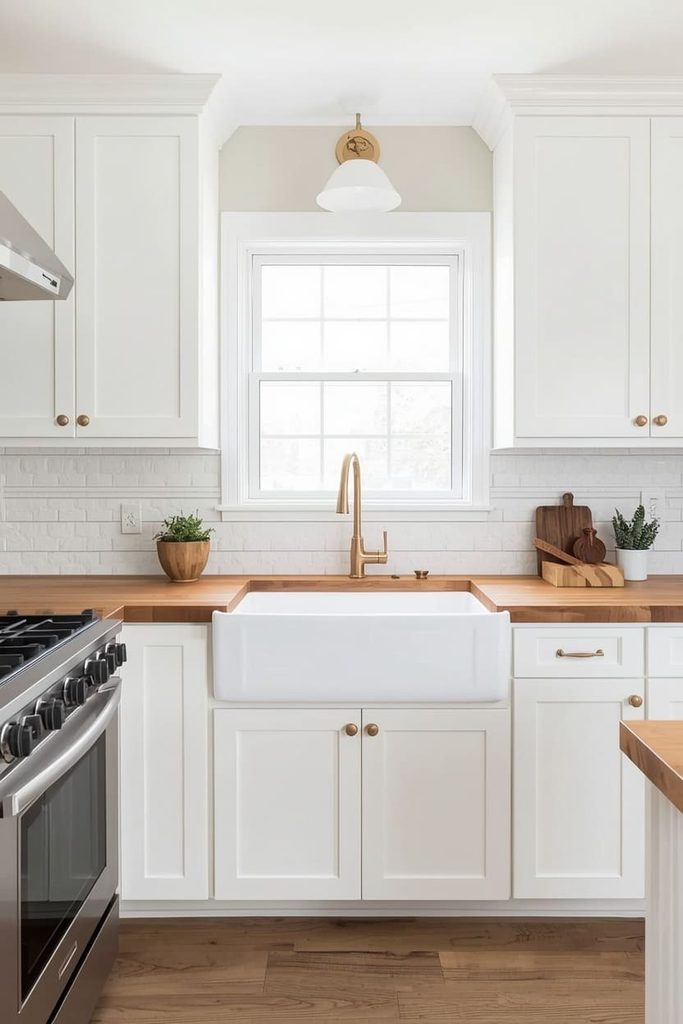
Remove your existing laminate countertops and install butcher block in a warm wood tone like maple, walnut, or acacia. Wood countertops bring a level of warmth that stone and laminate simply can’t match, and they’re one of the clearest signals of an authentic country farmhouse kitchen.
Order pre-cut butcher block slabs sized to your counter dimensions, or have a local lumber yard cut custom pieces for you. Seal the wood thoroughly with food-safe mineral oil or a butcher block conditioner, and plan to reseal it every few months to protect against water damage near your sink.
This project costs $300 to $900 for materials on an average kitchen, depending on the wood species you choose. If you’re comfortable with basic tools, installation is a weekend project. Hiring a countertop installer typically adds another $300 to $600 to your total.
Butcher block ages beautifully when it’s properly maintained. Small scratches and water marks actually add character over time instead of looking worn out, which fits right into the farmhouse philosophy of embracing a little imperfection.
Hang Vintage or Vintage-Style Enamelware and Cast Iron on the Wall
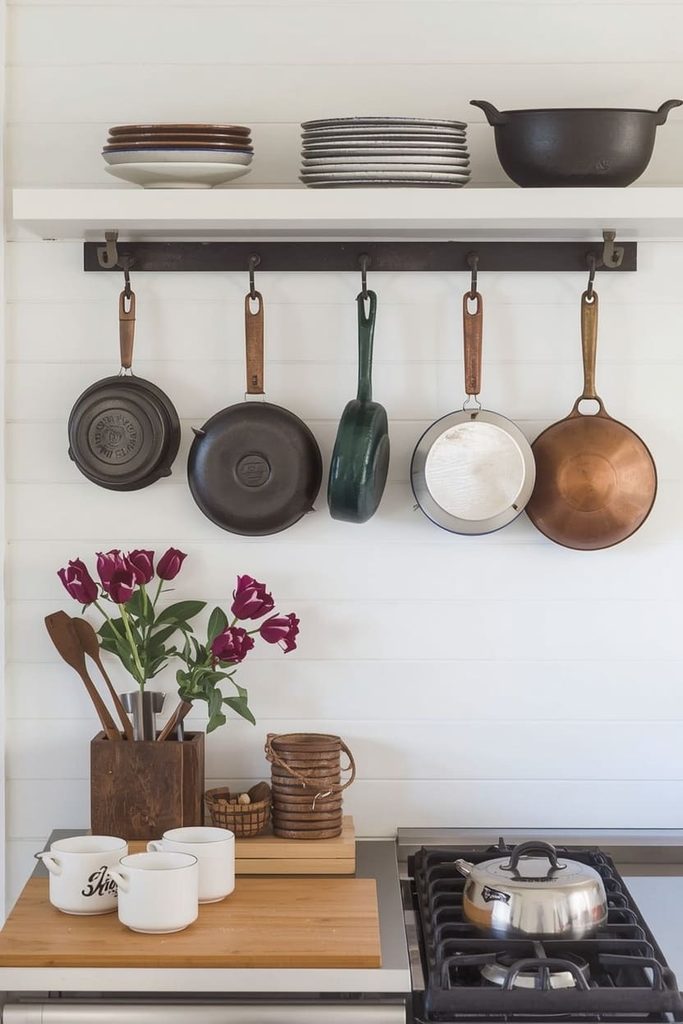
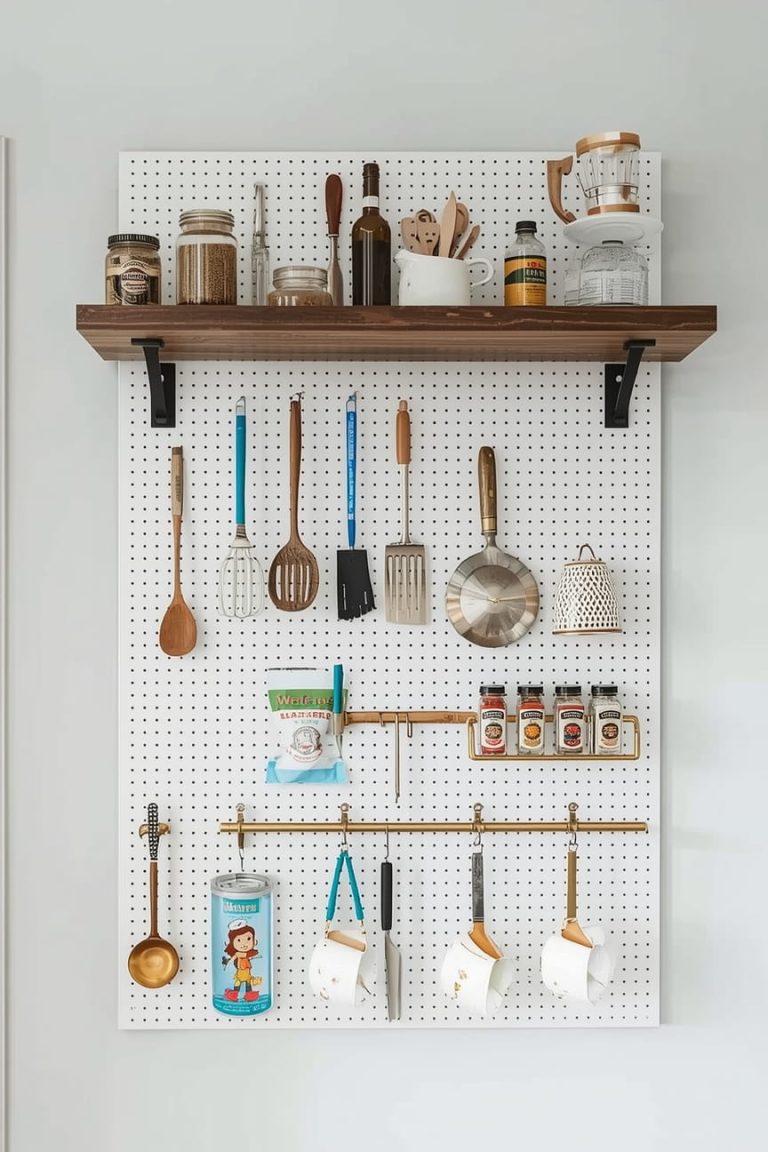
Mount a small display of vintage or vintage-style enamelware, cast iron pans, or copper pots on an open kitchen wall. Functional decor is a hallmark of real farmhouse kitchens, where tools were often displayed because there wasn’t a cabinet to hide them in.
Look for cast iron skillets, enamelware bowls, or copper pans at antique stores, estate sales, or from reproduction brands if you’d rather buy new. Install a simple pot rail or a few individual hooks along an open wall, ideally near your stove where the pieces still get used. Mix a few different finishes, like black cast iron next to weathered copper, so the display doesn’t look too matched or staged.
This project costs as little as $30 to $50 if you already own a few pieces and just need hooks or a rail. A full collection of vintage or reproduction pieces can run $100 to $300 depending on how much you want to display.
This is a one-afternoon project with almost no skill required. It’s also one of the easiest ways to add personality to a kitchen without touching a single wall or cabinet.
Frequently Asked Questions
How much does a full country farmhouse kitchen remodel cost?
A full remodel typically ranges from $15,000 to $45,000 depending on your kitchen size, whether you’re changing the layout, and how much of the original structure needs repair. If you’re working with a tighter budget, focus on paint, lighting, hardware, and open shelving first, since those changes alone can transform a kitchen for under $2,000.
Can I get this look in a small kitchen?
Yes, and small kitchens often suit farmhouse style well since the aesthetic already leans cozy rather than sprawling. Stick to warm neutral colors, use open shelving instead of heavy upper cabinets, and choose one or two statement pieces, like a pendant light or a single reclaimed wood shelf, instead of trying to fit every idea into a small space.
What paint colors work best for a country farmhouse kitchen?
Warm creams and off-whites work best as your base, since they read cozier than stark white. Pair them with black or aged bronze hardware and warm wood tones for contrast, and consider a soft sage green or muted blue on lower cabinets if you want a touch of color without straying from the palette.
How do I keep farmhouse style from looking dated?
Mix in a few current elements, like matte black fixtures or simple modern hardware, so the room doesn’t read as a full theme from a single decade. Lean on real materials, like solid wood and stone, rather than heavy shiplap or overly literal farmhouse motifs, since natural materials tend to age better than trend-driven decor.
What if I’m working with an actual old farmhouse and not just styling a new kitchen?
Start with a contractor assessment of your structure, wiring, and plumbing before you touch any cosmetic details, since older homes often need updates you can’t see from the surface. Once the bones are sound, lean into original details like exposed beams, old wood floors, or an existing farmhouse sink instead of covering them up, since those original elements are exactly what newer homes try to recreate.
Can renters achieve this look without permanent changes?
Several ideas on this list work well for renters. Removable wallpaper that mimics wood paneling, a temporary pendant light swap you can revert at move-out, open shelving that clips onto walls without drilling, and a vintage enamelware display all create real farmhouse character without permanent changes.
Pick one idea from this list that fits your current budget and timeline, and commit to finishing it before starting the next. That’s how country farmhouse kitchens come together in real homes, not all seven ideas at once, but one finished detail after another until the whole room feels like it’s always been there.

Emily Harper is a kitchen decor expert and interior designer with a passion for creating stylish, functional spaces. As a busy mom, she understands the importance of a kitchen that works for both family life and design. With 6 years of experience, Emily specializes in transforming kitchens into inviting, practical spaces. She’s known for her ability to blend trends with everyday needs, helping families create kitchens that feel like the heart of the home.