
Apartment Entryway Ideas With a Shoe Cabinet That Actually Look Good
The first time a friend came over to my new apartment, I watched her eyes land on the pile of sneakers, boots, and flip-flops scattered by my front door before she even said hello.
That was the moment I realized my entryway was the first — and sometimes only — impression people got of my whole space.
I couldn’t drill into the walls or knock anything down, but I could find a shoe cabinet that actually fit my tiny footprint and made the space feel finished.
After testing more options than I’d like to admit, here are the ideas and products that turned my rental entryway into something I’m actually proud of.
Table of Contents
- My Top 5 Shoe Cabinets for Apartment Entryways
- How to Choose the Right Size Shoe Cabinet for a Small Apartment Entryway
- Place a Slim Cabinet With a Mirror to Make Your Entry Feel Bigger
- Style a Console-Style Shoe Cabinet as Your Entry Table
- Choose a Cabinet-Bench Combo for Multi-Functional Small Spaces
- Use a Cabinet With Doors Instead of Open Shelving for a Cleaner Look
- Add a Slim Rolling Shoe Cabinet for Ultimate Rental Flexibility
- Rental-Friendly Styling Tips That Won't Cost You Your Deposit
- How to Keep a Shoe Cabinet From Looking Cluttered or Messy
- FAQs About Apartment Entryway Shoe Cabinets
- Final Thoughts
My Top 5 Shoe Cabinets for Apartment Entryways
These are the cabinets I either own myself or would buy in a heartbeat for a small rental entryway — all freestanding, no tools or wall damage required.
- DEVAISE Shoe Cabinet with Flip Drawers — A narrow, tall cabinet with flip-down drawers that stores 12+ pairs in a footprint barely wider than a doormat.
- Furinno 3-Tier Shoe Cabinet with Doors — An affordable, lightweight option with sliding doors that fully conceals shoes while blending into almost any rental decor.
- HOMFA Shoe Cabinet with Mirror Door — A cabinet with a built-in mirror, so you get storage and a last-look mirror in one piece of furniture.
- SIMPLIHOME Amherst Entryway Shoe Cabinet — A solid wood-style cabinet with a console top, perfect for renters who want their entry to look like real furniture, not plastic storage.
- Giantex Shoe Storage Cabinet with Cushioned Bench Top — Combines a closed shoe cabinet with a padded seat on top, ideal for tiny apartments where every piece needs to multitask.
How to Choose the Right Size Shoe Cabinet for a Small Apartment Entryway
Before I bought my first cabinet, I made the mistake of eyeballing the space instead of measuring it — and ended up with a piece that blocked my closet door. Don’t do what I did.
Start by measuring the width of the wall or nook where you want the cabinet to sit, then measure the depth available without blocking foot traffic or door swings (aim to leave at least 24–30 inches of clear walking space). Most apartment-friendly shoe cabinets range from 12–16 inches deep, which is slim enough for most entry hallways. Also check the height if you’re placing anything above it, like a mirror or artwork — you want at least a few inches of breathing room so it doesn’t feel cramped. Write these three numbers down before you shop, and you’ll save yourself a return shipment.
Place a Slim Cabinet With a Mirror to Make Your Entry Feel Bigger
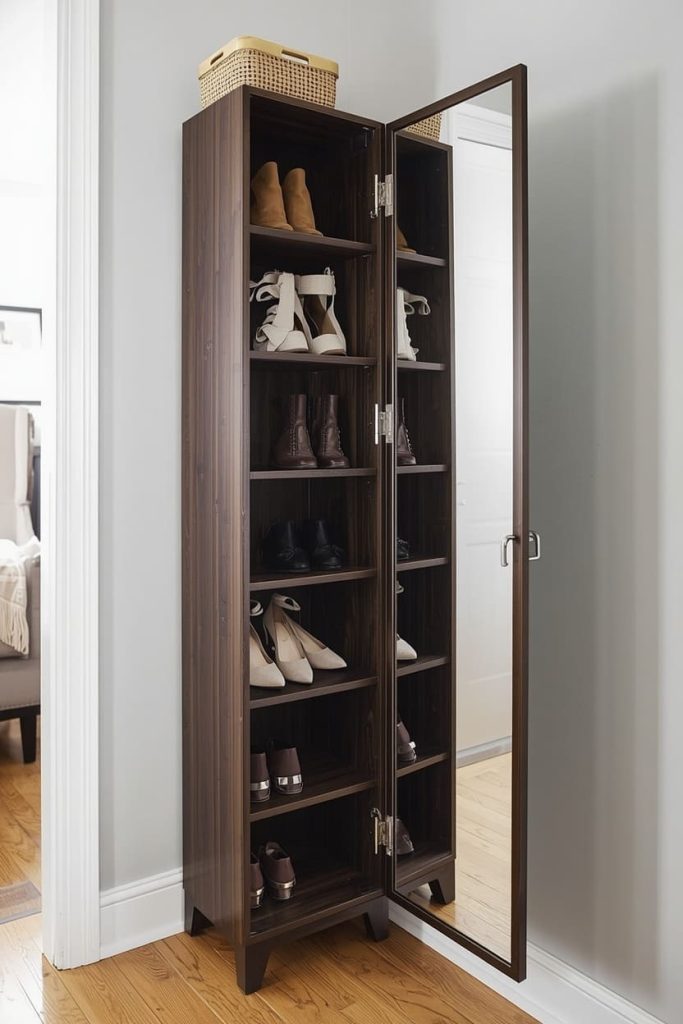
This was the single best decision I made in my apartment. A mirrored shoe cabinet does triple duty: it hides your shoes, gives you a last outfit-check before you leave, and visually doubles the size of a tight entryway.
What you’ll need: A narrow shoe cabinet with an attached or door-mounted mirror, and a wall spot at least 20 inches wide.
Steps:
- Measure your available wall space and confirm the cabinet’s depth won’t interfere with your front door swing.
- Position the cabinet directly across from or beside your entry door so the mirror catches natural light.
- Load shoes inside by household member or by frequency of use, keeping your most-worn pairs on the most accessible shelf.
- Add a small tray or dish on top for keys and sunglasses so the mirror surface doesn’t get cluttered.
Tip: Angle the cabinet slightly if your entry is oddly shaped — even a few degrees can make a mirror catch more light and make the space feel larger.
Style a Console-Style Shoe Cabinet as Your Entry Table
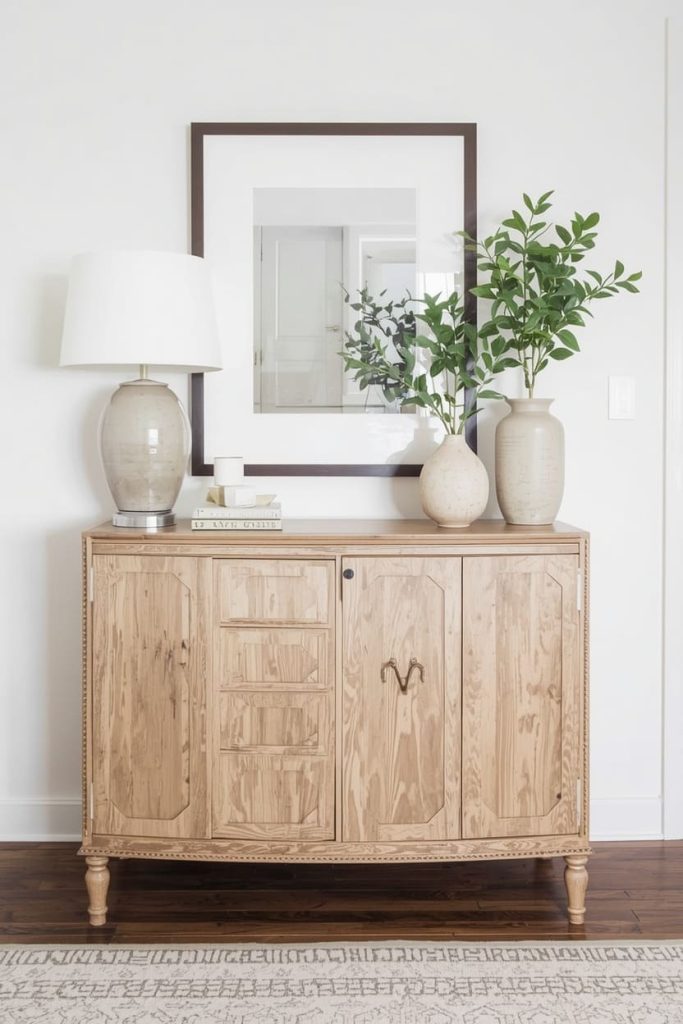
If you want your entryway to look like an intentional design choice rather than “the place we shove our shoes,” a console-style cabinet is the way to go. These pieces look like real furniture first, storage second.
What you’ll need: A console-style shoe cabinet with a flat top surface, plus 2–3 decor pieces (a small lamp, a catchall dish, a framed photo).
Steps:
- Place the cabinet against your longest available wall for the most stable, balanced look.
- Style the top with an odd number of items — I always go with three, varying in height, for visual interest.
- Keep the top clear of daily clutter like mail or bags; use a drawer inside the cabinet (if it has one) for those instead.
- Add a small rug underneath to anchor the piece and define the entryway as its own “zone.”
Tip: Choose a cabinet finish that contrasts slightly with your flooring — a light wood cabinet on dark floors (or vice versa) makes the piece stand out as a design feature instead of blending in.
Choose a Cabinet-Bench Combo for Multi-Functional Small Spaces
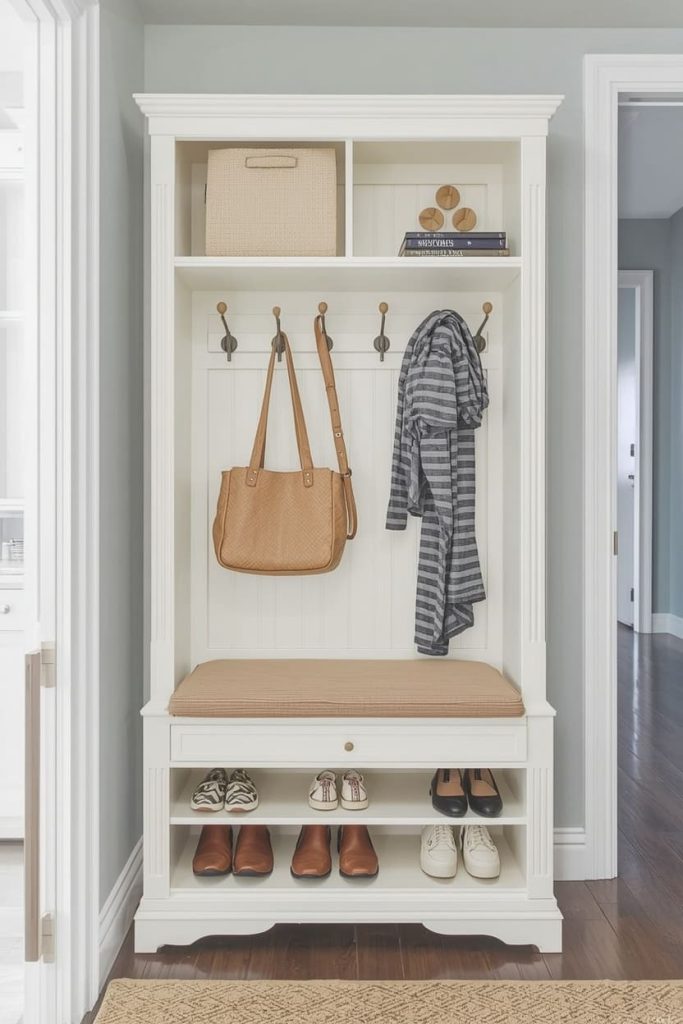
In my current apartment, I don’t have room for both a shoe cabinet and a bench, so I found a piece that’s both. If your entry is under 4 feet wide, this is probably your best option.
What you’ll need: A shoe cabinet with a cushioned or flat bench top, sized to fit your available width.
Steps:
- Measure your space to ensure at least 14–16 inches of depth for comfortable seating.
- Place the cabinet against the wall closest to your door so you can sit while putting shoes on.
- Store daily shoes inside, and use any exterior hooks (many combo pieces include them) for bags or jackets.
- Add a cushion or small pillow on top if the bench surface is hard, both for comfort and a softer look.
Tip: Look for a bench-cabinet with a lift-up seat instead of front doors if your space is extra narrow — it needs less clearance to access.
Use a Cabinet With Doors Instead of Open Shelving for a Cleaner Look
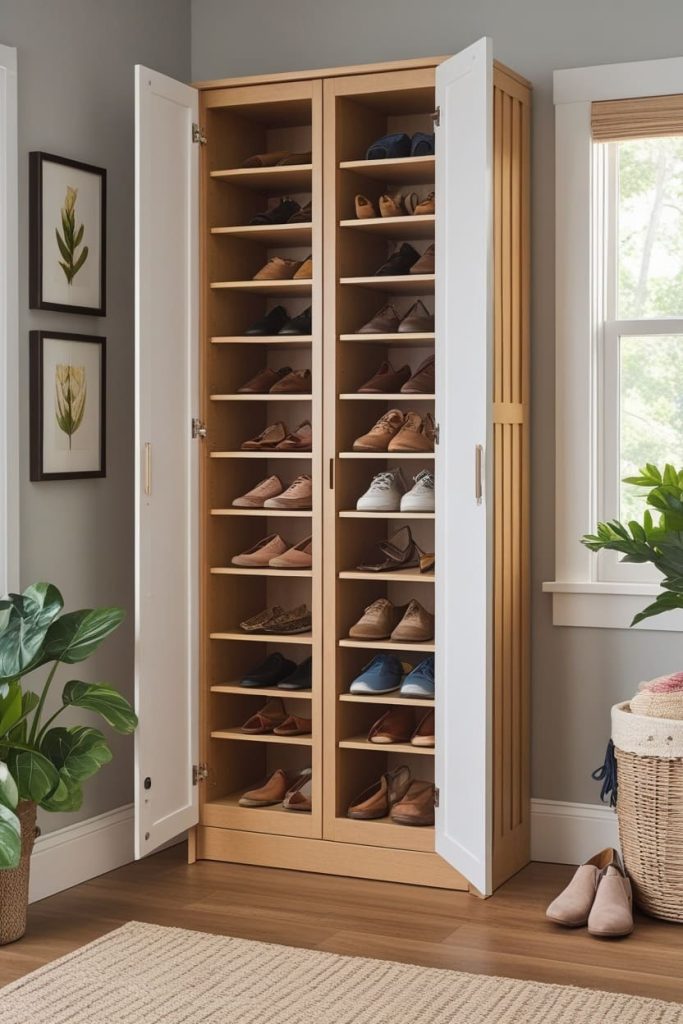
I tried open shelving first, and within a week it looked just as messy as having no storage at all. Switching to a closed-door cabinet was what actually made my entryway look “done.”
What you’ll need: A shoe cabinet with solid or slatted doors (avoid glass if you want shoes fully hidden).
Steps:
- Sort your shoes before loading the cabinet — donate or relocate pairs you don’t wear regularly to a bedroom closet.
- Place daily shoes on the most accessible shelf, and rotate seasonal pairs to the bottom or top shelf.
- Close the doors fully after each use so the front stays flush and tidy-looking.
- Wipe down the exterior weekly, since closed cabinets in entryways collect dust and shoe dirt on the outside.
Tip: If you want airflow to prevent odor, choose a cabinet with slatted or louvered doors — you still get a fully concealed look without trapping moisture inside.
Add a Slim Rolling Shoe Cabinet for Ultimate Rental Flexibility
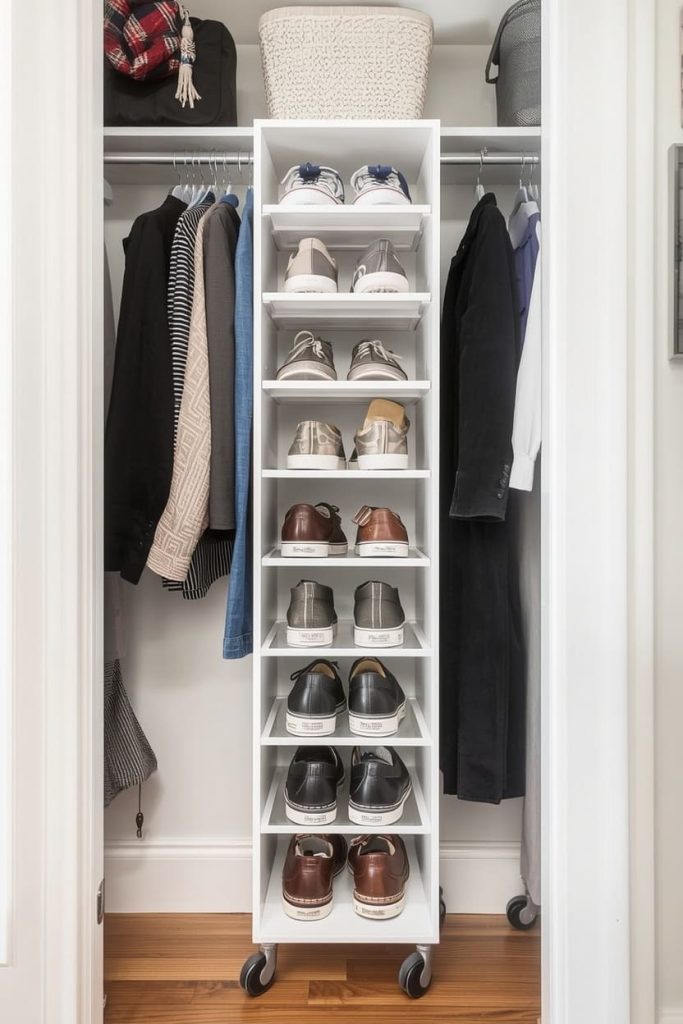
This is the option I recommend most to friends who move apartments often, because it requires zero commitment to a specific layout.
What you’ll need: A narrow shoe cabinet on locking casters, sized to fit in a closet, hallway, or beside a doorway.
Steps:
- Choose a cabinet with locking wheels so it won’t roll away every time you open or close it.
- Position it wherever fits your current apartment layout — no permanent placement needed.
- Load shoes inside and use the locking wheels to keep it steady in daily use.
- When you move, simply roll it out and reposition it in your new space without any reconfiguration.
Tip: This option is especially useful if your apartment complex does periodic inspections — you can quickly roll it into a closet if needed.
Rental-Friendly Styling Tips That Won’t Cost You Your Deposit
Since drilling and major modifications are off the table for most renters, here’s how I’ve styled around that limitation without sacrificing a polished look:
- Use furniture, not wall mounts, for storage. Freestanding shoe cabinets give you the same function as built-ins without a single hole in the wall.
- Lean mirrors and art against the wall instead of hanging them. A large leaning mirror above your shoe cabinet adds height and style with zero commitment.
- Use removable adhesive hooks sparingly for small accessories. They’re fine for lightweight items like keys, but skip them for anything heavy.
- Add a rug to define the space. Rugs are a renter’s best friend for adding personality and warmth without any permanent changes.
How to Keep a Shoe Cabinet From Looking Cluttered or Messy
Buying the cabinet is the easy part — keeping it looking good is where most people (myself included, in the beginning) fall off. What worked for me was setting a simple rule: shoes go inside the cabinet immediately, not on top of it or beside it. I also do a quick nightly reset, closing any open drawers and clearing anything that’s landed on the console top. If you live with a partner or roommates, assigning each person a specific shelf or drawer cuts down on the “whose shoes are these” pile significantly, and keeps the whole system from falling apart within the first month.
FAQs About Apartment Entryway Shoe Cabinets
How many pairs of shoes does a shoe cabinet typically hold?
Most apartment-sized shoe cabinets hold between 8 and 16 pairs, depending on the number of shelves and whether they use flip-down or fixed compartments.
Can I use a shoe cabinet in a small apartment without it looking bulky?
Yes — choose a cabinet under 16 inches deep and in a finish that either blends with your wall color or intentionally contrasts with your flooring for a lighter, more open feel.
Is a shoe cabinet better than open shelving for apartments?
For most renters, yes. Closed cabinets hide daily clutter and give your entryway a more finished, guest-ready look, while open shelving requires constant tidying to avoid looking messy.
Do shoe cabinets require any wall mounting or drilling?
No, freestanding shoe cabinets are designed to stand on their own and are ideal for renters who can’t drill into walls or make permanent changes.
Can a shoe cabinet double as an entry table?
Yes, console-style shoe cabinets with flat tops work perfectly as entry tables and can be styled with a lamp, dish, or decor just like traditional entryway furniture.
How do I prevent my shoe cabinet from smelling?
Choose a cabinet with slatted or louvered doors for airflow, and add a few charcoal deodorizer bags inside to keep odors from building up.
Final Thoughts
Your apartment entryway doesn’t have to be a compromise between function and style just because you’re renting. The right shoe cabinet — one that fits your space, hides the daily chaos, and actually looks like furniture you chose on purpose — can completely change how your entry feels the second you walk in. Start with the size and style that fits your space best, and you’ll have an entryway that looks put-together without a single hole in the wall.

Emily Harper is a kitchen decor expert and interior designer with a passion for creating stylish, functional spaces. As a busy mom, she understands the importance of a kitchen that works for both family life and design. With 6 years of experience, Emily specializes in transforming kitchens into inviting, practical spaces. She’s known for her ability to blend trends with everyday needs, helping families create kitchens that feel like the heart of the home.