
7 Luxury Curtain Ideas That Transformed My Living Room Into a Designer Space
For years, my living room had all the right pieces. A good sofa. A well-chosen rug. Art I actually loved. And yet, it still felt like something out of a catalog, not a home.
It wasn’t until an interior designer friend visited and pointed straight at my windows that I understood why.
“Everything else is doing the work,” she said, “but your curtains are an afterthought.”
She was right.
The moment I invested in proper drapery, the whole room shifted, suddenly cohesive, layered, finished. It was the single upgrade that made the biggest difference.
Here are 7 ideas that elevated my space.
5 Elevated Curtain Essentials Worth Adding to Your Living Room
- Velvet Drapery Panels — These add rich texture and light-absorbing depth, instantly giving a window the weight and presence of a designer showroom.
- Brass Curtain Rod with Statement Finials — A substantial brass rod with sculptural end caps acts as jewelry for your window, elevating even simple panels into a finished look.
- Pinch-Pleat Linen Curtains — Structured pleating creates crisp, tailored folds that fall with intention, giving your drapery a made-to-measure appearance without the custom price tag.
- Faux-Silk Sheer Panels — These bring a soft, luminous quality to daylight, layering beautifully behind heavier drapery for a refined, hotel-lobby effect.
- Decorative Tassel Tiebacks — A well-crafted tieback with tassel or braided detailing turns a simple hold-back into a considered, finishing accessory.
The 7 Luxury Curtain Ideas That Elevated My Living Room
Choose Floor-to-Ceiling Drapery to Add Architectural Drama
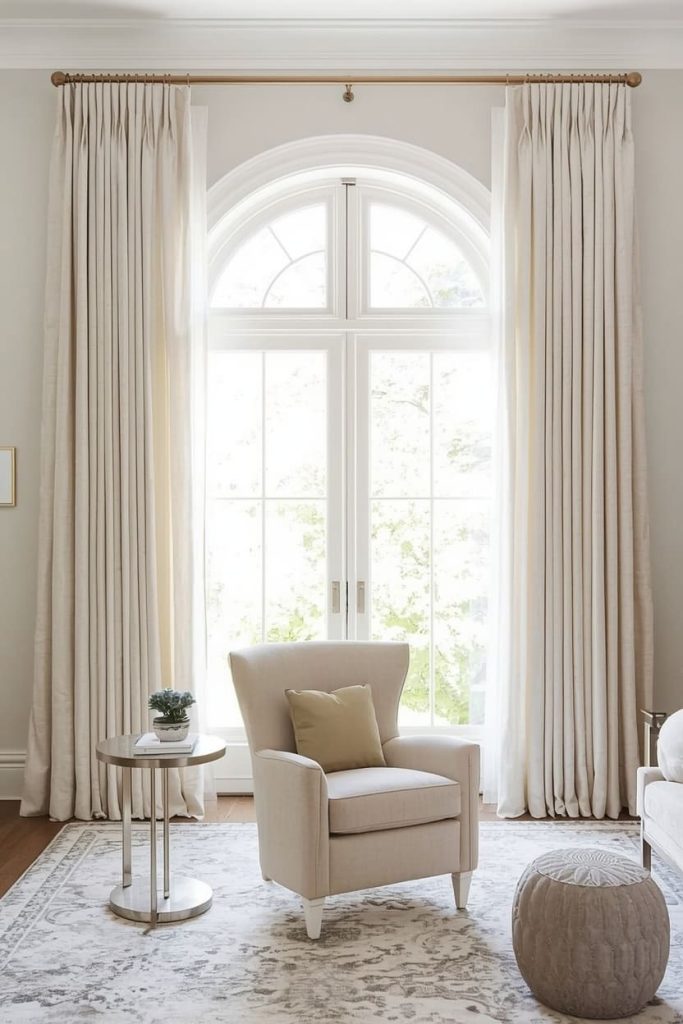
Nothing signals a designer’s hand faster than curtains that run from ceiling to floor, regardless of where your actual window ends. This is one of the most reliable ways to make a living room feel grander, more intentional, and considerably more expensive than it is.
The principle here is simple: height reads as luxury. When drapery extends nearly to the ceiling, your eye follows the line upward, making the entire room feel taller and more architecturally significant, even in a space with standard ceiling height. This is a trick used consistently in high-end hospitality and residential design because it works in almost any room.
My tip: mount your rod as close to the ceiling as your trim allows, ideally within a few inches, rather than directly above the window frame. Extend the rod well beyond the window’s width too, so the fabric can fully clear the glass when open and let light flood in unobstructed. Choose a heavier fabric like velvet or a substantial linen blend for this application, since a flimsier material won’t hold the same dramatic, grounded fall from that height. Done well, this single adjustment can make your living room feel like it belongs in a much larger, more considered home.
Layer Silk Sheers Beneath Heavier Drapery for Dimension
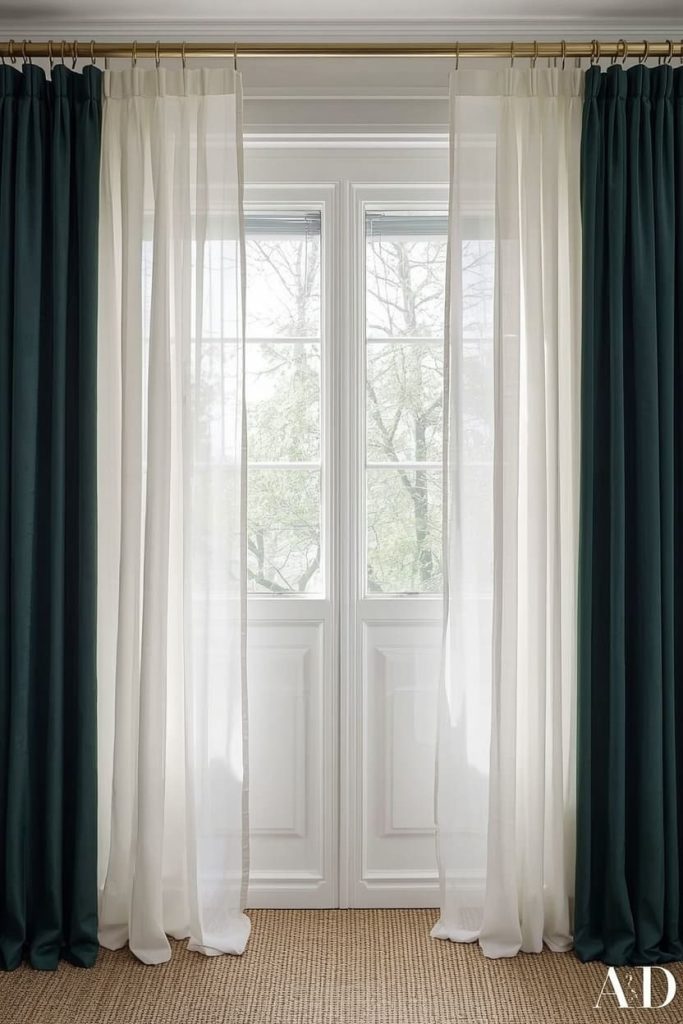
A single curtain panel, no matter how beautiful, will always read as slightly flat compared to a layered window treatment. Pairing a luminous sheer with a heavier drape is one of the most effective ways to add dimension, softness, and a sense of considered design to your living room.
This layering technique works because it mimics natural light behavior. During the day, the sheer filters sunlight into something soft and diffused, while the heavier panel remains open at the sides, framing the window like a piece of art. In the evening, drawing the heavier drape closed transforms the entire mood of the room, adding privacy and a cocooned, intimate feeling.
My tip: choose a faux-silk or genuine silk sheer for its natural sheen, which catches light beautifully throughout the day. Pair it with a velvet, heavyweight linen, or textured wool-blend drape in a rich tone like emerald, navy, or deep terracotta. Mount both on a double rod or a single rod with a wraparound track, ensuring the sheer sits closest to the glass. This layered approach also gives you flexibility, allowing you to adjust light and privacy throughout the day without ever losing the polished, styled look.
You May Love:
You May Love:
Invest in Pinch-Pleat or Goblet-Pleat Styling
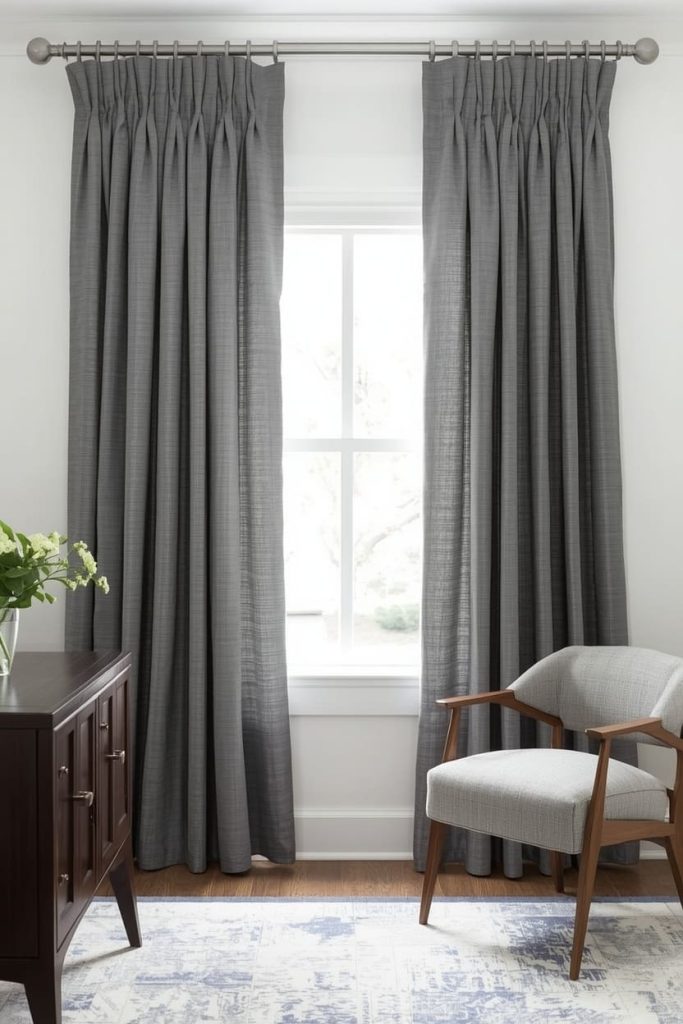
The way fabric falls matters as much as the fabric itself. Off-the-shelf rod-pocket curtains, while convenient, often bunch unevenly and lack the crisp, tailored structure you see in professionally designed spaces. Pinch-pleat and goblet-pleat styling solve this entirely, creating uniform, sculptural folds that fall with precision from top to bottom.
This detail is what separates curtains that look store-bought from curtains that look custom-made, even when both were purchased rather than commissioned. Goblet pleats, in particular, create a rounded, cup-like fold at the top of the panel that adds a sculptural, almost architectural quality to your window treatment.
My tip: look for curtains specifically labeled as pinch-pleat or goblet-pleat, as these come pre-constructed with buckram or structured headers built in, so you won’t need to alter the fabric yourself. Pair this pleating style with a traceless or decorative rod system, since the pleats themselves become part of the visual interest and shouldn’t be hidden behind a plain track. This is one of the highest-impact upgrades you can make if your current curtains feel flat or amateur, and it instantly reads as intentional, tailored design.
Choose Rich, Saturated Tones Over Safe Neutrals
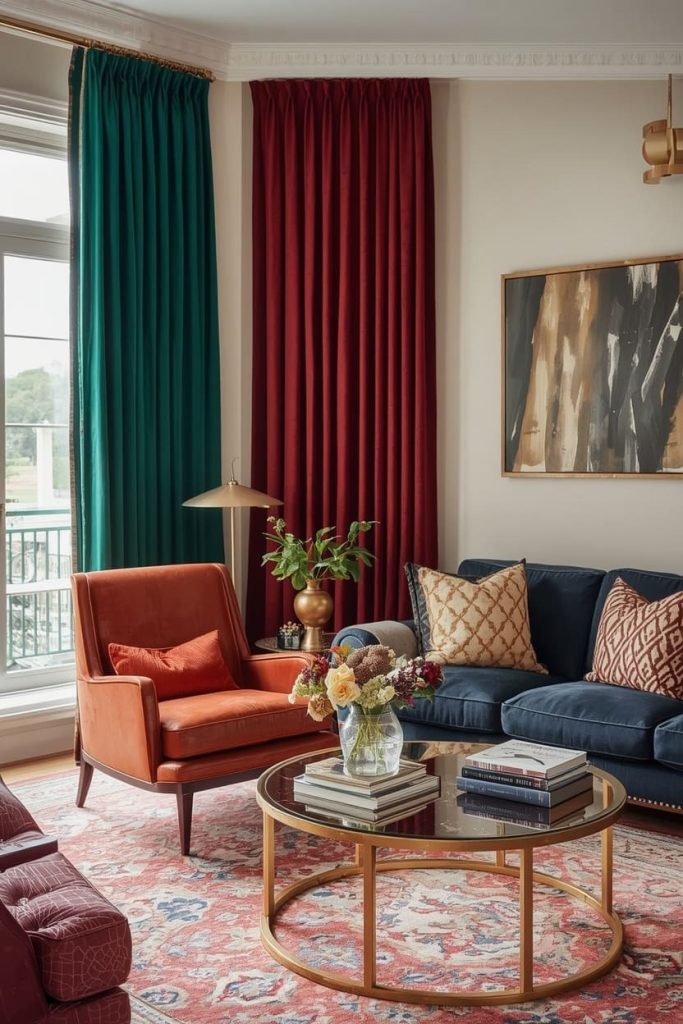
Neutral curtains have their place, but a truly luxurious living room often leans into color with confidence. Deep, saturated tones like emerald, navy, aubergine, and rich terracotta bring a sense of intention and depth that pale neutrals simply can’t match on their own.
This works because color at the window creates a focal point, drawing the eye and giving the room a defined mood rather than a passive, blended backdrop. Jewel tones in particular pair beautifully with warm metallics like brass, as well as with natural materials like leather, wood, and stone, all of which are hallmarks of an elevated interior.
My tip: if committing to a bold curtain color feels like a leap, choose one that already exists elsewhere in your room, whether in a rug, an accent chair, or artwork, so the palette feels cohesive rather than random. Deep tones also have a practical advantage: they tend to hide light wear and dust better than pale neutrals, which matters over the years a good set of curtains will live in your home. A single richly colored curtain can become the anchor that ties your entire living room’s palette together.
You May Love To Read:
You May Love To Read:
You May Love To Read:
Upgrade to Substantial Hardware and Statement Finials
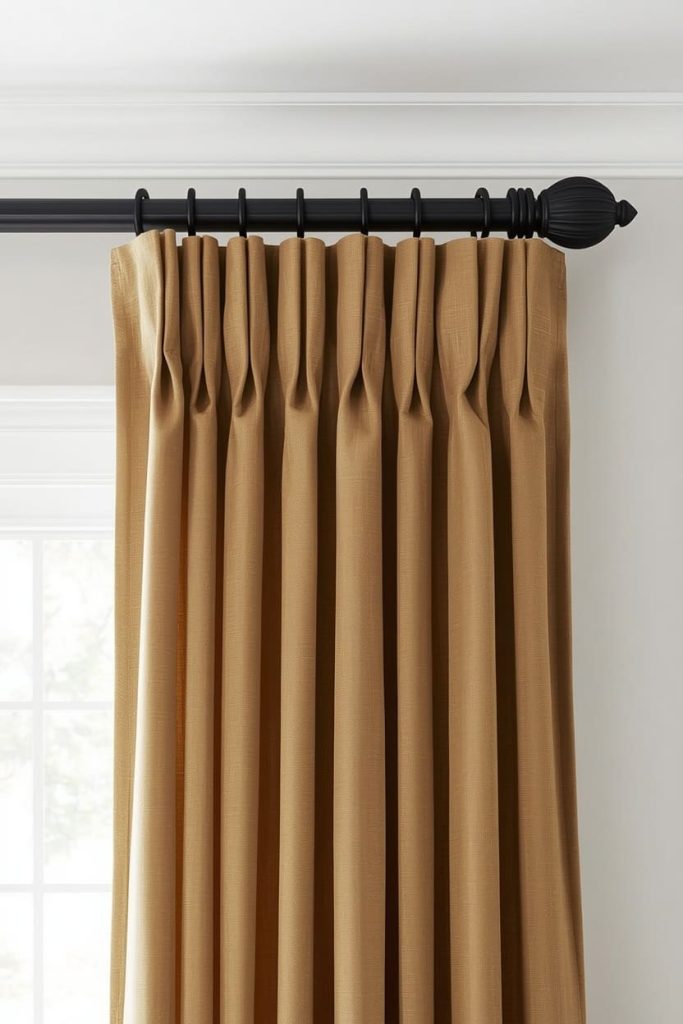
Curtain hardware is often treated as an afterthought, but it functions the same way jewelry does for an outfit. A thin, plain rod can undercut even the most beautiful fabric, while a substantial rod with a well-chosen finial elevates the entire window instantly.
Brass and aged brass finishes remain a defining choice in elevated interiors, offering warmth and a sense of permanence that pairs beautifully with both traditional and modern furnishings. Matte black is a strong alternative for a more contemporary, high-contrast look. The finial itself, whether a simple orb, a fluted cap, or a more sculptural shape, acts as the finishing detail your eye lands on first.
My tip: choose a rod with a diameter proportional to your curtain’s weight and the size of your window; a slim rod under a heavy velvet panel will look under-built and may even sag over time. Extend your rod several inches beyond the window frame on each side as well, so your curtains can stack neatly off the glass when open, maximizing both light and the visual width of your window. This is a relatively small investment that has an outsized impact on how finished your whole window treatment feels.
Add a Decorative Tieback for a Tailored, Finished Look
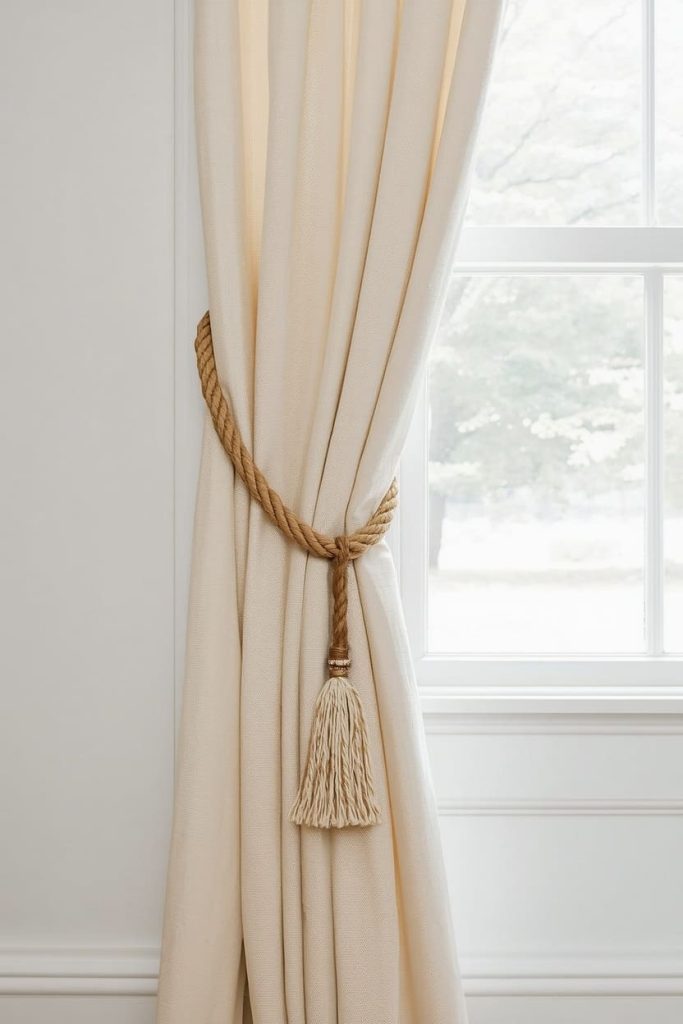
An open curtain that simply hangs loose, uncontrolled, often reads as unfinished, no matter how nice the fabric is. A well-chosen tieback brings structure and intention, shaping the fabric into elegant folds that catch light and add a sculptural quality to your window.
This detail is a favorite among interior designers because it does double duty. Practically, it holds your curtains open cleanly, letting in maximum light. Aesthetically, it creates a cinched, hourglass silhouette in the fabric that looks considered rather than accidental. Tassel, braided, and rope-style tiebacks in particular bring texture and craftsmanship to what would otherwise be a purely functional detail.
My tip: position your tieback at roughly two-thirds of the way down the curtain’s height rather than in the exact middle, as this creates a more graceful, elongated fold. Choose a tieback finish that echoes your curtain rod’s hardware, whether brass, matte black, or a woven natural fiber, so the whole window treatment feels like one cohesive design decision rather than several unrelated pieces. This is one of the simplest additions on this list, yet it consistently makes the biggest visual difference in photographs and in person.
Coordinate Curtains With Existing Architectural and Design Details
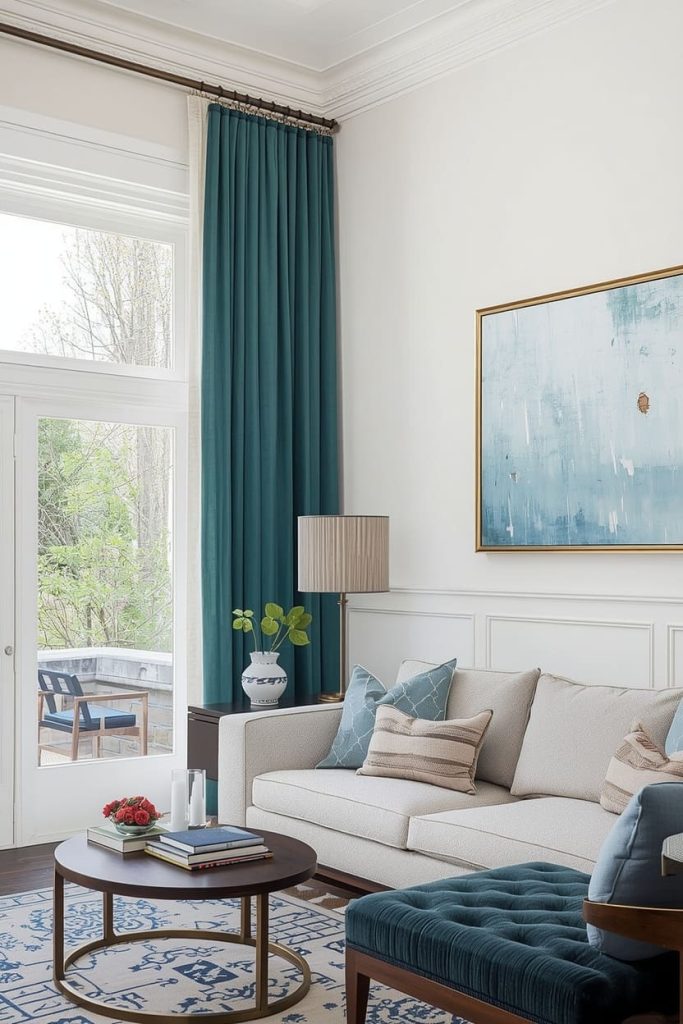
The most elevated living rooms don’t treat curtains as a standalone decision. They treat them as one piece of a larger, cohesive design story that includes crown molding, lighting fixtures, flooring, and furniture finishes. Curtains chosen in isolation, without considering the rest of the room, often feel disconnected no matter how expensive the fabric.
This is why designer spaces feel effortless: every element speaks to the others. A curtain rod’s brass finish might echo a chandelier. A drapery’s emerald tone might reappear in a throw pillow or piece of art. This kind of intentional repetition throughout a room is what creates a polished, high-end atmosphere rather than a collection of nice but unrelated pieces.
My tip: before choosing your curtains, walk your living room and note three existing elements you want to reinforce, whether that’s a metal finish, a wood tone, or a color from your rug or art. Let those details guide your fabric, hardware, and color choices rather than choosing curtains as an isolated decision. This single shift in approach, treating your curtains as part of a bigger story rather than a separate purchase, is often what separates a beautifully decorated room from a truly designed one.
Frequently Asked Questions
What fabric looks the most luxurious for living room curtains?
Velvet, heavyweight linen, and silk or faux-silk are among the most luxurious fabric choices, as their weight and drape create a rich, substantial look. Velvet in particular adds depth and light-absorbing texture that reads as high-end in almost any color.
Should I buy custom curtains or off-the-shelf panels?
Custom curtains offer precise sizing and fabric choice, but many off-the-shelf panels, particularly pinch-pleat or goblet-pleat styles, can achieve a similarly tailored look at a lower cost. The key is choosing structured pleating and proper length rather than the custom label itself.
How long should luxury curtains be, and how high should I mount them?
Floor-length or slightly pooling curtains create the most elevated look, and mounting the rod close to the ceiling, rather than directly above the window frame, adds height and drama to the entire room. This combination is one of the most reliable ways to elevate a space instantly.
How do I coordinate curtains with existing high-end finishes in my home?
Look at your existing metal finishes, wood tones, and any recurring colors in your rug, art, or furniture, and let those guide your curtain color and hardware choice. Repeating an existing finish, like brass or a specific jewel tone, creates a cohesive, intentional feel throughout the room.
How do I maintain and clean luxury curtain fabrics like velvet or silk?
Always check the care label, as many luxury fabrics require professional dry cleaning or gentle spot cleaning rather than machine washing. Regular light vacuuming with an upholstery attachment or a gentle shake-out between deeper cleans helps maintain the fabric’s texture and appearance over time.
Final Thoughts
You don’t need a full renovation to make your living room feel like it was professionally designed.
Start with one idea from this list, whether it’s raising your curtain rod for height or investing in a proper pinch-pleat panel, and build from there.
Curtains are one of the most transformative upgrades you can make to a living room, capable of turning a nice space into a genuinely elevated one.

Emily Harper is a kitchen decor expert and interior designer with a passion for creating stylish, functional spaces. As a busy mom, she understands the importance of a kitchen that works for both family life and design. With 6 years of experience, Emily specializes in transforming kitchens into inviting, practical spaces. She’s known for her ability to blend trends with everyday needs, helping families create kitchens that feel like the heart of the home.