7 Moody Farmhouse Kitchen Ideas That Bring Real Drama
I stood in my all-white kitchen one night and felt nothing. It was clean. It was safe. It was also boring. A few weeks later I sat in a dimly lit restaurant, dark green walls, black hardware everywhere, brass light catching every shadow.
I couldn’t stop looking around. That feeling followed me home. I wanted my kitchen to hold a little mystery, some weight, some depth. So I painted one wall black. Then the cabinets followed.
Then the hardware. It felt terrifying and right at the same time. Here are the seven changes that turned my kitchen from safe to unforgettable.
Shop the Look: 5 Products That Set the Tone
- Matte black cabinet hardware — Swapping in matte black pulls instantly deepens your cabinets and adds the sharp contrast this style depends on.
- Matte black kitchen faucet — A black faucet grounds your sink area and continues the dark, cohesive hardware story across the room.
- Black metal and wood open shelving — This combination gives you display space with an industrial edge that fits dark farmhouse perfectly.
- Black dome pendant lighting — Hanging these over your island adds drama overhead while casting warm, focused light below.
- Faux wood beam decor panels — These lightweight panels add rustic dark wood texture to your ceiling without any structural work.

Paint Your Cabinets a Deep, Confident Color
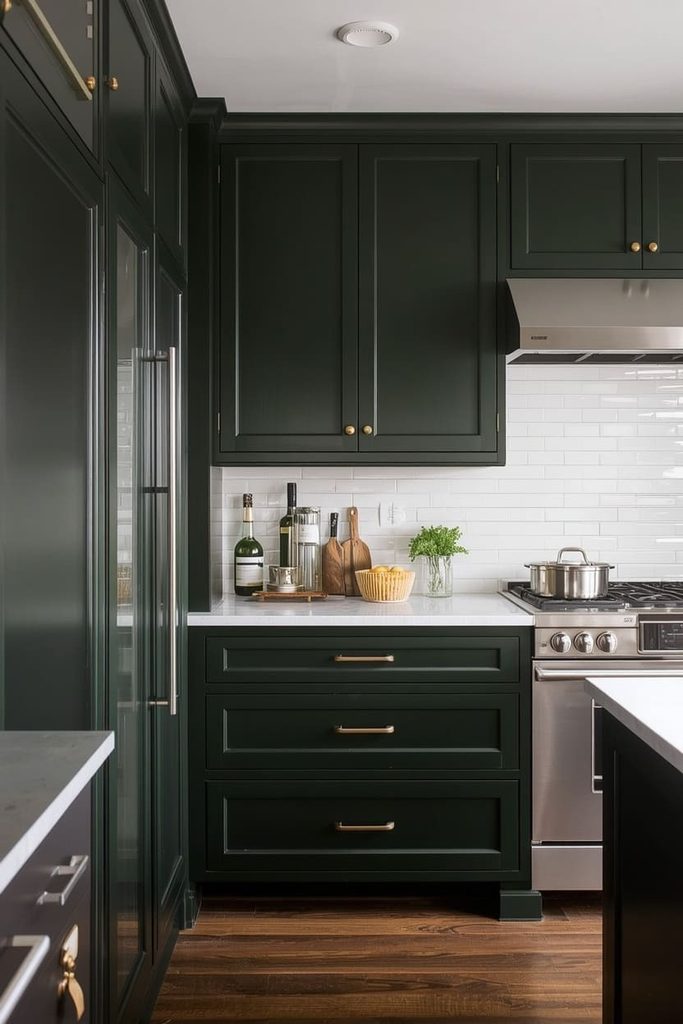
Direct answer: Dark cabinet paint, whether black, charcoal, or deep green, is the single biggest move that defines a moody farmhouse kitchen.
Start by choosing your color carefully. True black can feel intense in small spaces, so consider a near-black charcoal or deep forest green if you want drama without total darkness. Test samples on your actual cabinet doors, not just the wall, since cabinet finishes catch light differently.
Prep is everything with this project. Remove all doors and hardware first. Clean every surface with a degreaser, since kitchen cabinets collect grease you can’t always see. Sand lightly to help the paint grip, then wipe away all dust before priming.
Use a bonding primer made for cabinets, followed by two thin coats of a durable paint, ideally a cabinet-specific enamel. Thin coats dry smoother and avoid drips. Let each coat cure fully before handling doors or reattaching hardware.
This project usually takes a full weekend, sometimes longer if you’re painting a large kitchen. The result is worth the wait. Dark cabinets instantly make your kitchen feel intentional, grounded, and far more expensive than it actually cost you.
Install Matte Black Hardware and Fixtures
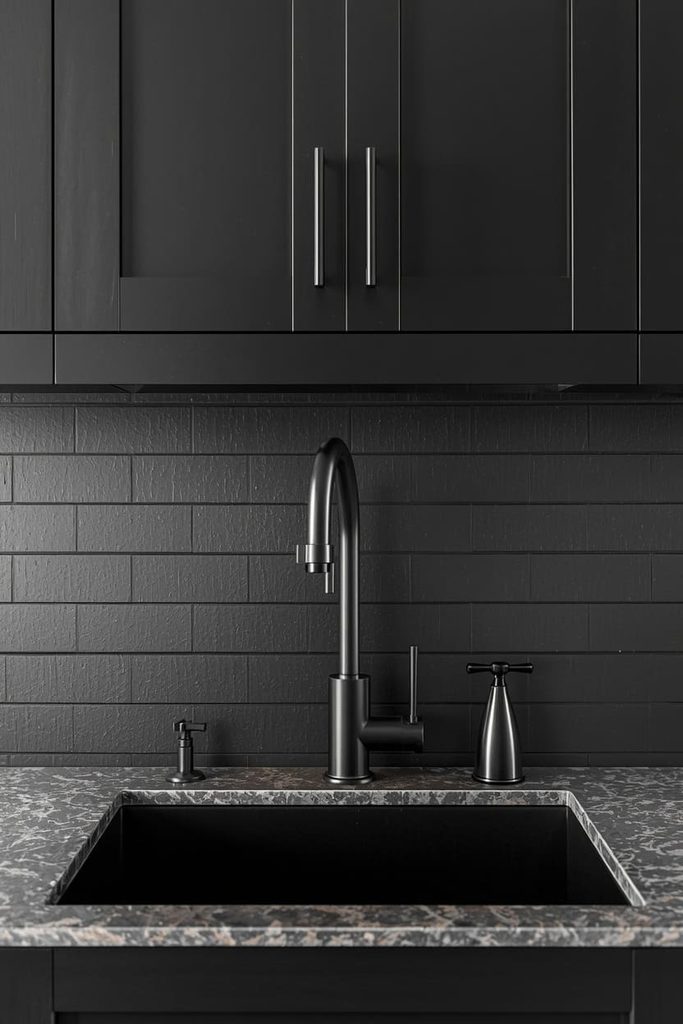
Direct answer: Swapping every metal detail to matte black, from cabinet pulls to your faucet, ties the whole moody look together in one cohesive statement.
Begin with your cabinet hardware since it’s the fastest, cheapest swap on this list. Remove your old pulls and knobs, then check if your new hardware uses the same screw spacing. If not, you’ll need to fill old holes with wood filler and drill new ones.
Move to your faucet next. Turn off your water supply lines under the sink, disconnect the old faucet, and install the new matte black one following the manufacturer’s instructions. Most kitchen faucets can be swapped in under an hour with basic tools.
Don’t stop at the sink. Look at your cabinet hinges, drawer pulls, and even your trash can or paper towel holder. Small metal details in polished chrome or brass will stand out against dark cabinets in a way that breaks the cohesive look you’re going for.
Consistency matters more than anything here. One mismatched finish draws the eye immediately. Commit to matte black across every visible metal surface for the cleanest, most dramatic result.
Add Dark Wood Ceiling Beams for Depth
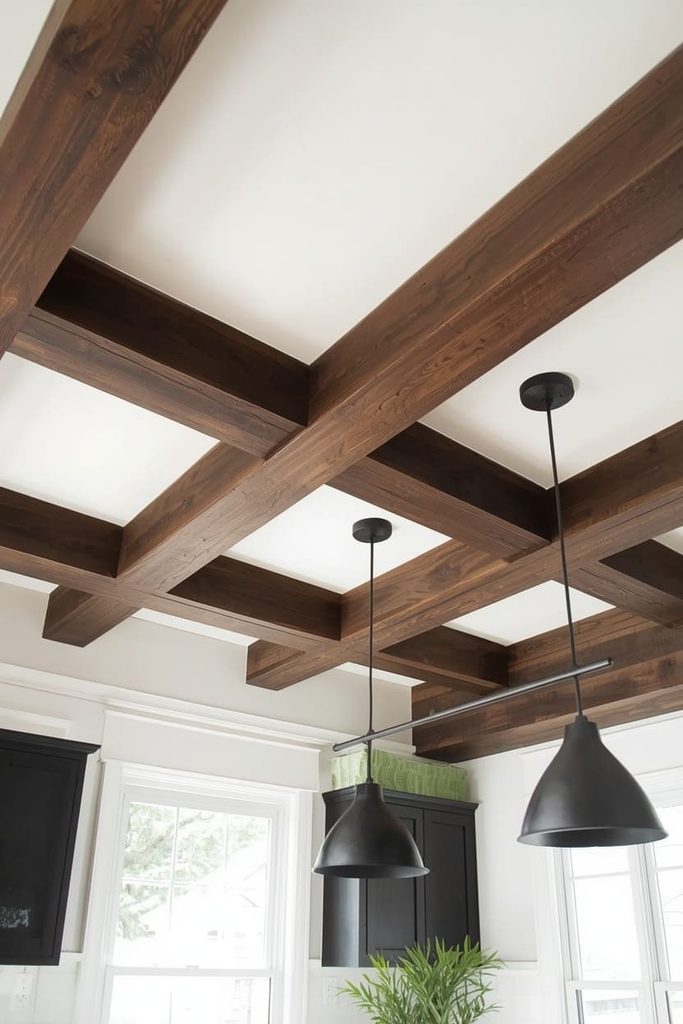
Direct answer: Exposed dark wood beams overhead bring texture, warmth, and old-world weight that flat white ceilings simply can’t offer.
If you have real structural beams already, staining them a deep espresso or black-brown color is your fastest path to drama. Sand the existing finish lightly, apply a dark wood stain in thin coats, and seal with a matte polyurethane to protect the wood from kitchen humidity.
If your ceiling is flat, faux beams are a realistic and much more affordable option. These lightweight polyurethane or wood-veneer beams install with construction adhesive and a few screws into your ceiling joists. Most homeowners can complete this project in a single day.
Space your beams evenly across the ceiling, running them perpendicular to your ceiling joists for the most natural, structural look. Two to four beams usually works well for an average kitchen, depending on your room’s size.
Once installed, add simple black pendant lighting between the beams. This combination of dark wood above and black metal light fixtures creates real depth, making your ceiling feel just as intentional as your cabinets and hardware.
Balance Dark Cabinets With Light Countertops
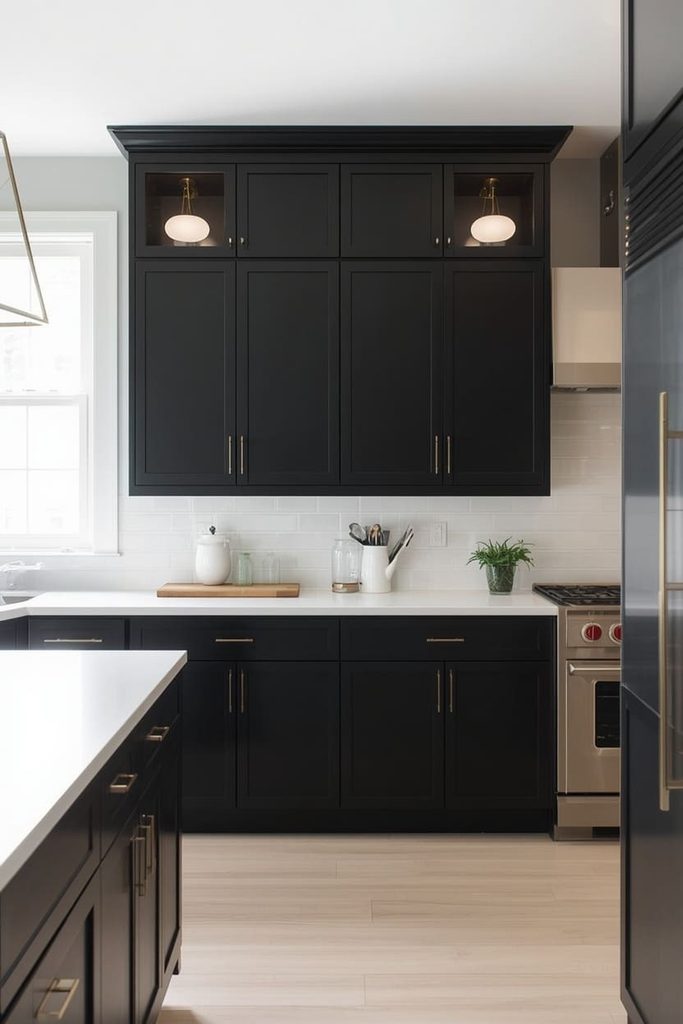
Direct answer: Pairing your dark cabinets with a light countertop, like white quartz or light butcher block, keeps the room from feeling like a cave.
This contrast is what separates a moody kitchen from a dark, closed-in one. Choose a countertop with plenty of light background and subtle veining if you want stone, or a warm, natural butcher block if you prefer wood tones against your black cabinets.
When selecting your slab or material, bring home samples and place them directly against your cabinet color, or a paint sample if you haven’t painted yet. Look at this pairing in both daylight and evening light, since your kitchen will be used at all hours.
Keep your backsplash simple and light as well. A plain white subway tile or light natural stone lets the contrast between counters and cabinets stay the visual focus, rather than competing with a busy pattern.
This balance is what makes dark kitchens photograph so beautifully. The light countertop catches available light and bounces it back into the room, keeping the space bright and usable even with black cabinets surrounding it.
Layer In Warm Brass or Gold Lighting Accents
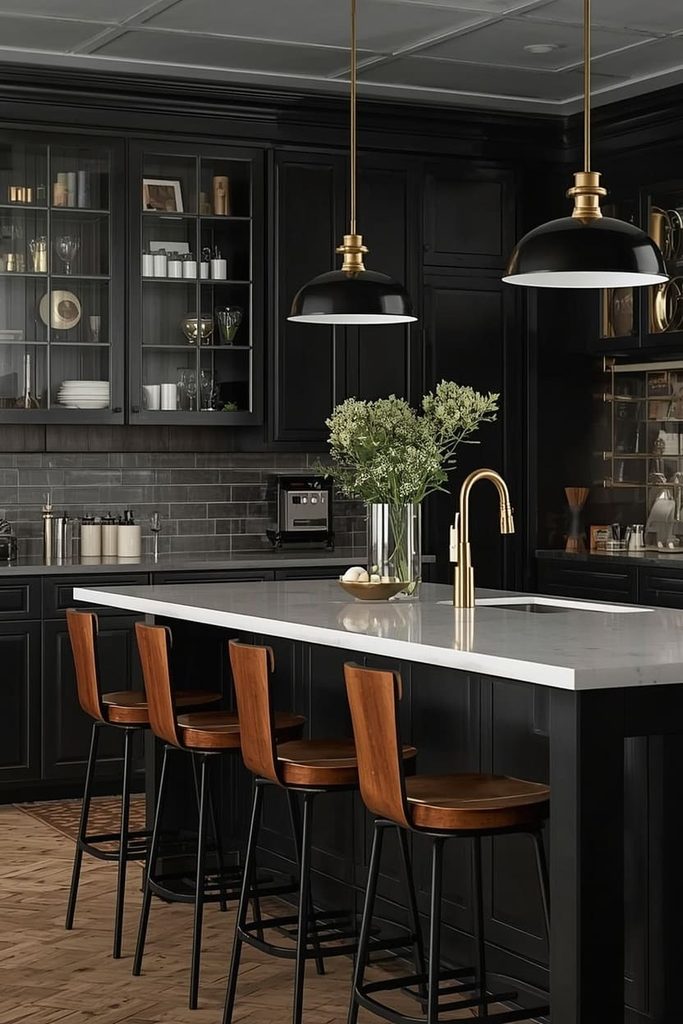
Direct answer: A touch of warm brass or gold lighting against your black cabinets adds richness and prevents the space from feeling flat or cold.
Start with your island or table pendant lighting, since this is the most visible fixture in the room. Look for fixtures that combine black metal with warm brass or gold detailing, giving you both finishes in one cohesive piece.
If you already have all-black fixtures, consider adding brass accents elsewhere: a brass faucet handle detail, brass cabinet hardware mixed sparingly with black, or a brass-framed mirror or piece of art on an open wall.
Keep this warm metal as an accent, not the main event. Too much brass competes with the black and green tones driving this style. A little goes a long way, usually just one or two fixtures per room.
The warmth from brass under dim, evening light creates the exact restaurant-like glow that likely inspired your moody kitchen in the first place. It’s a small detail with a big emotional payoff.
Use Black Window Frames or Trim for Sharp Lines
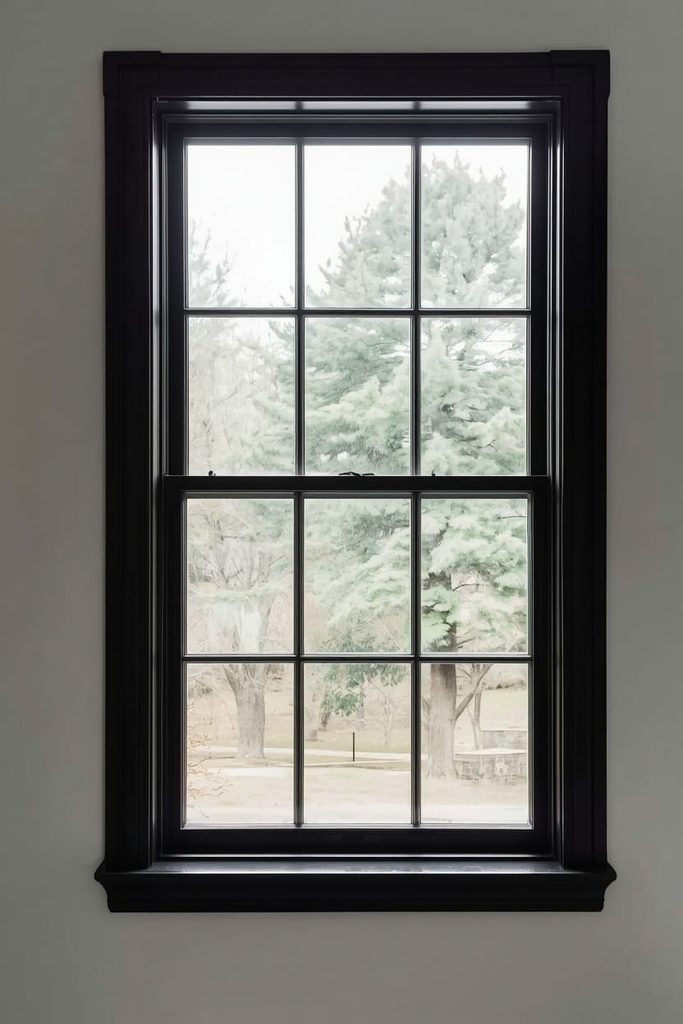
Direct answer: Black-framed windows, or simple black trim around your existing windows, add crisp architectural lines that elevate the entire moody aesthetic.
If you’re already replacing windows during a renovation, choosing black-framed options is the most seamless path. These frames create strong, defined lines against light walls or dark cabinets alike, adding structure to the whole room.
If new windows aren’t in your budget, you can achieve a similar look with black trim paint around your existing window frames. Tape off the surrounding wall, clean the trim, and apply a black or dark charcoal trim paint in two thin coats.
For renters or anyone who can’t paint, black window film applied directly to the frame edges offers a temporary, removable alternative that still adds visual definition without any permanent changes.
This detail might seem small compared to cabinets or beams, but it matters. Black window lines frame your view outside like a piece of art, adding one more layer of intentional darkness to the space.
Add Textural Layers Through Dark Rugs and Textiles
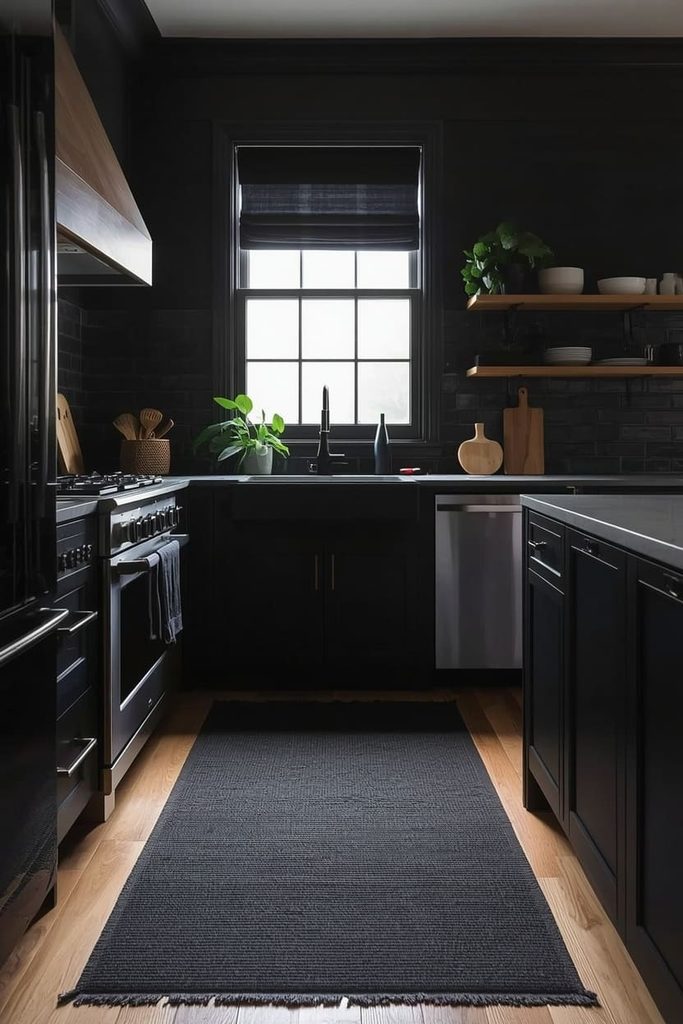
Direct answer: Dark, textured rugs and simple black or deep-toned textiles ground the room and complete the moody atmosphere from floor to counter.
Choose a rug in a deep, rich tone, black, charcoal, or deep green, with some visible texture like a low pile wool or a woven pattern. Place it in a high-traffic spot, like in front of your sink or island, where you’ll actually feel and see it daily.
Add simple black or dark linen tea towels near your stove and sink. These small textile swaps continue your color story into everyday functional items, keeping the whole kitchen visually connected.
Consider dark curtains or a simple black roman shade if your window needs coverage. This adds one more layer of your palette while also giving you control over how much light enters the room throughout the day.
Small textile changes finish the room. They soften all the hard black surfaces just enough, keeping the space feeling intentional and lived-in rather than stark or unfinished.
Frequently Asked Questions
Will a dark kitchen make my space feel smaller? Not necessarily. Balancing dark cabinets with light countertops, good lighting, and some reflective surfaces keeps the room feeling open. Small kitchens can absolutely pull off this look with the right contrast.
How much does a moody kitchen renovation typically cost? Painting existing cabinets and swapping hardware can cost under $500. A full renovation with new cabinets, countertops, and lighting can range from $15,000 to $40,000 depending on your scope and materials.
Will dark cabinets hurt my home’s resale value? Dark kitchens have grown steadily in popularity and generally appeal to a wide range of buyers today. Pairing dark cabinets with timeless, light countertops and neutral flooring keeps the overall look broadly appealing.
What’s the best color if I’m nervous about going full black? Deep charcoal, espresso brown, or a rich forest green offer the same moody drama with slightly less intensity than true black. These colors are a great middle ground for a first dark kitchen.
How do I keep a dark kitchen from feeling too dim to cook in? Layer your lighting. Add task lighting under your cabinets, a bright overhead fixture, and pendant lights over your island. Good lighting design matters more in a dark kitchen than in a light one.
Going dark felt risky at first, but it turned my kitchen into the room I actually want to spend time in. Start with one change, paint, hardware, or lighting, and build from there. That first bold decision is always the hardest one to make.

Emily Harper is a kitchen decor expert and interior designer with a passion for creating stylish, functional spaces. As a busy mom, she understands the importance of a kitchen that works for both family life and design. With 6 years of experience, Emily specializes in transforming kitchens into inviting, practical spaces. She’s known for her ability to blend trends with everyday needs, helping families create kitchens that feel like the heart of the home.