Farmhouse Kitchen Shelving That Doesn’t Look Like Everyone Else’s Pinterest Board
I saved farmhouse kitchens for years before I built my own. White shiplap. Mason jars. Black metal brackets. Every board looked the same.
Then I worried mine would too.
I didn’t want a kitchen that screamed “trend from five years ago.” I wanted something that still felt warm, still felt like a farmhouse, but felt like mine.
So I changed a few things. Wood tone. Hardware. Styling choices. Small shifts, big difference.
Nobody’s walked in and called it generic yet. Here’s exactly what I changed, one shelf idea at a time.
Top 5 Products You’ll Actually Need
- Reclaimed-look wood shelf boards — these bring texture and warmth without looking like a store-bought farmhouse kit.
- Mixed-metal bracket set (black and brass) — combining metals breaks the all-black farmhouse cliché instantly.
- Vintage-style cabinet hardware — swapping in aged brass or iron pulls adds character that plastic hardware can’t fake.
- Dark walnut wood stain — this shifts a shelf away from the “whitewashed everything” look toward something richer.
- Small woven baskets for shelf storage — these replace mason jars with texture that feels less trend-driven.
Skip the All-White Shelf and Try a Warm Wood Tone Instead
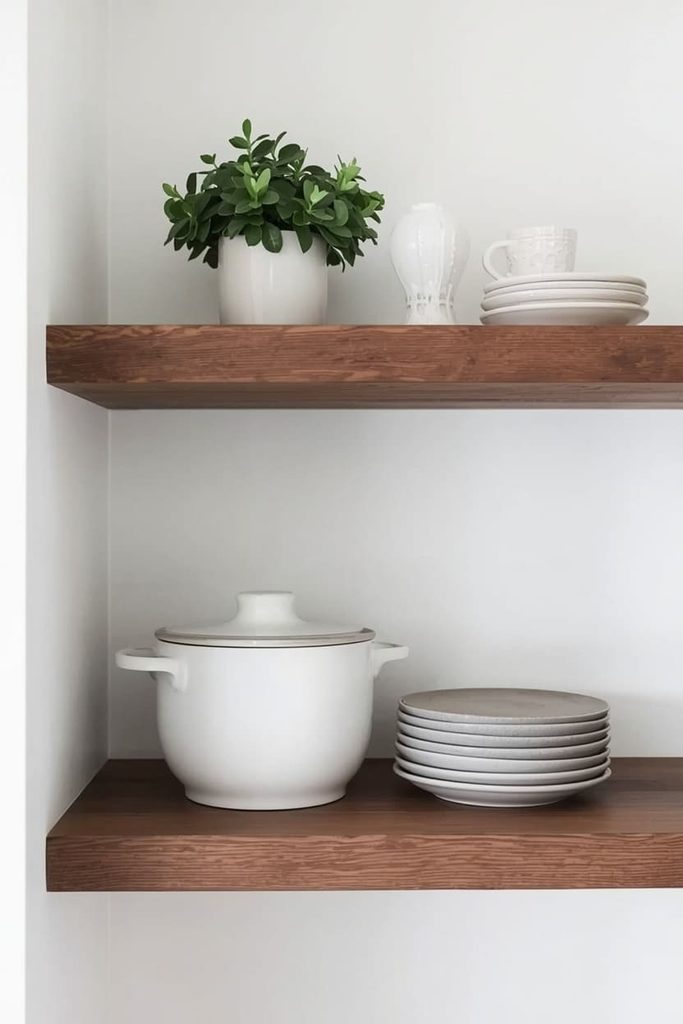
Choose a stained walnut or oak shelf instead of painted white wood.
White shelving is the most common farmhouse choice, which is exactly why it reads as expected. A warm wood tone still feels farmhouse but shifts the look toward something that feels collected over time, not bought as a matching set.
Steps to get this right:
- Sand your shelf board lightly before staining.
- Apply a wood conditioner first for even color absorption.
- Choose a walnut or dark oak stain instead of white paint.
- Seal with a matte finish to keep the wood grain visible.
Swap Mason Jars for Woven Baskets and Ceramic Crocks
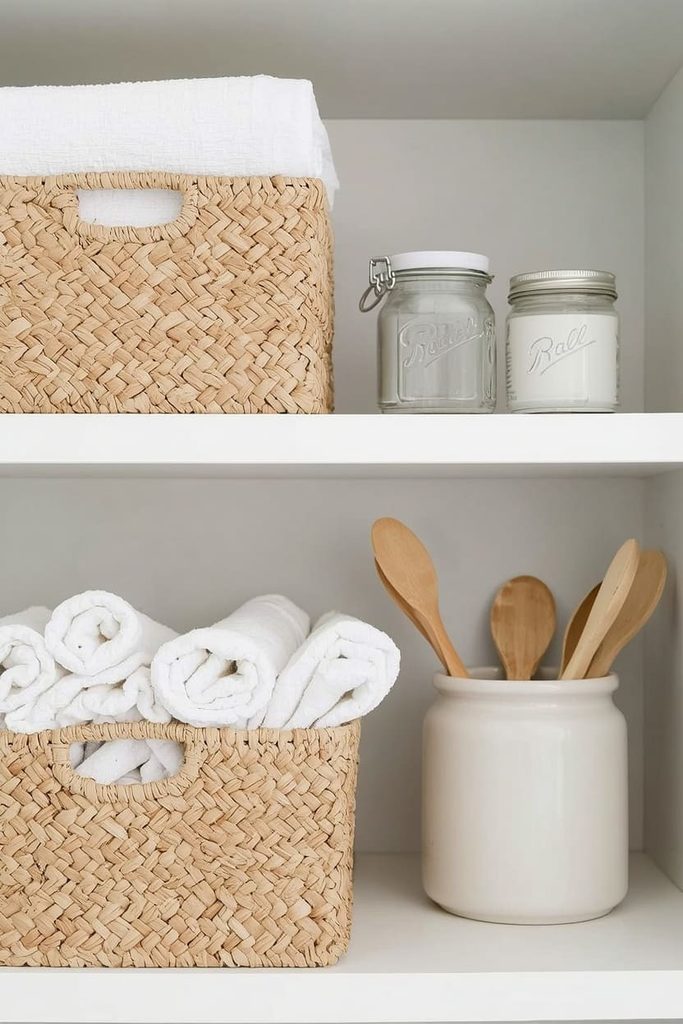
Style your shelf with texture-based storage instead of glass jars.
Mason jars became the unofficial symbol of farmhouse style, which means they’re also the fastest way to make a shelf look like a copy of someone else’s. Baskets and ceramic crocks give the same rustic feel without the instant recognition.
Steps to get this right:
- Choose one woven basket for towels or napkins.
- Add one ceramic crock for utensils or wooden spoons.
- Skip glass entirely on this shelf to break the expected pattern.
- Keep colors in the same warm neutral family for cohesion.
Mix Black and Brass Hardware Instead of All Black
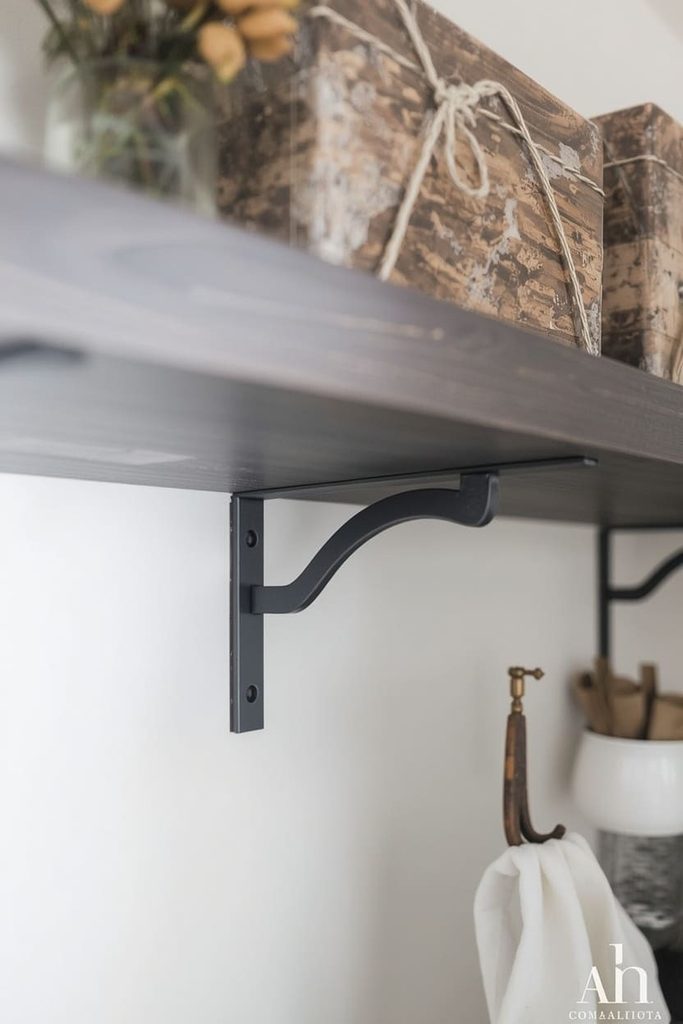
Combine matte black brackets with brass shelf pegs or hooks.
All-black hardware became a farmhouse shorthand fast, which means an all-black shelf can read as dated rather than timeless now. Mixing in brass or aged gold breaks that expected pattern and adds warmth back into the metal tones.
Steps to get this right:
- Choose black brackets for the main shelf support.
- Add small brass hooks underneath for hanging mugs or towels.
- Keep the ratio uneven, more black than brass, so it doesn’t look mismatched.
- Repeat the brass tone somewhere else nearby, like a faucet or light fixture.
Add One Modern Element to Break Up the Rustic Look
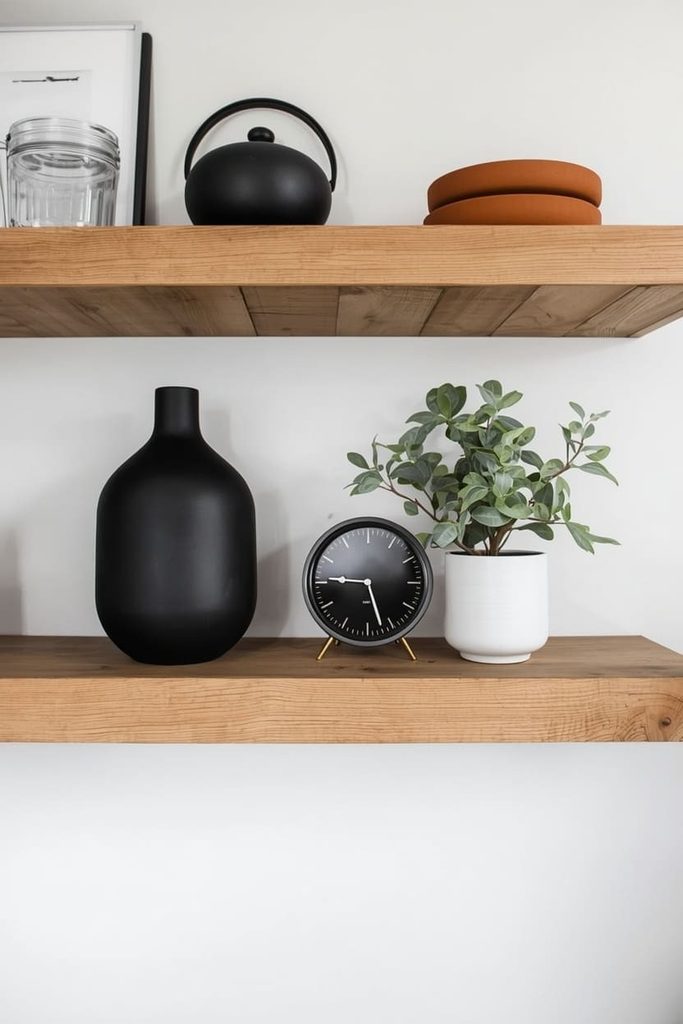
Place one sleek, modern object on an otherwise rustic shelf, like a matte black vase or minimal clock.
A shelf that’s 100% rustic can start to feel like a costume rather than a real kitchen. Adding one modern piece signals that the space is lived-in and personal, not staged to match a single Pinterest theme.
Steps to get this right:
- Choose one clean-lined object, avoiding anything distressed or “aged” looking.
- Place it at one end of the shelf, not the center.
- Balance it with two rustic items on the opposite side.
- Avoid adding more than one modern piece per shelf.
Use Uneven Shelf Lengths Instead of a Matching Set
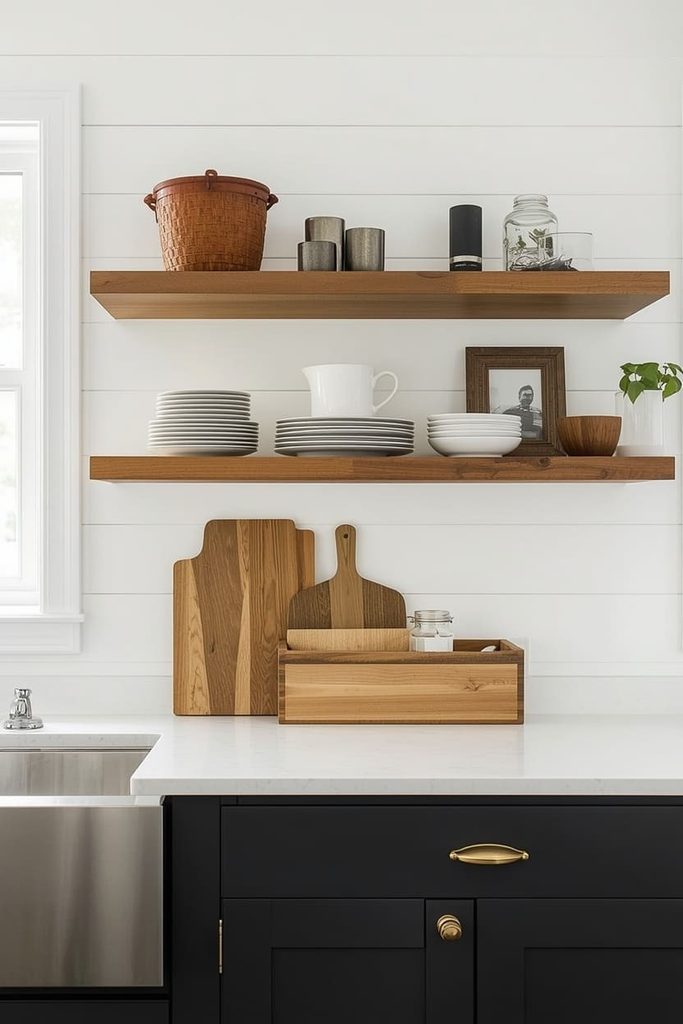
Install two shelves of different lengths instead of a symmetrical matching pair.
Matching shelf sets are common because they’re easy to buy, but that symmetry is also part of what makes farmhouse kitchens start to look identical. Uneven lengths create visual interest and feel more like a room built over time.
Steps to get this right:
- Choose one longer shelf for your main wall space.
- Add one shorter shelf nearby, offset in height by a few inches.
- Style the shorter shelf with fewer items to keep it from feeling crowded.
- Leave extra wall space around both shelves instead of filling every inch.
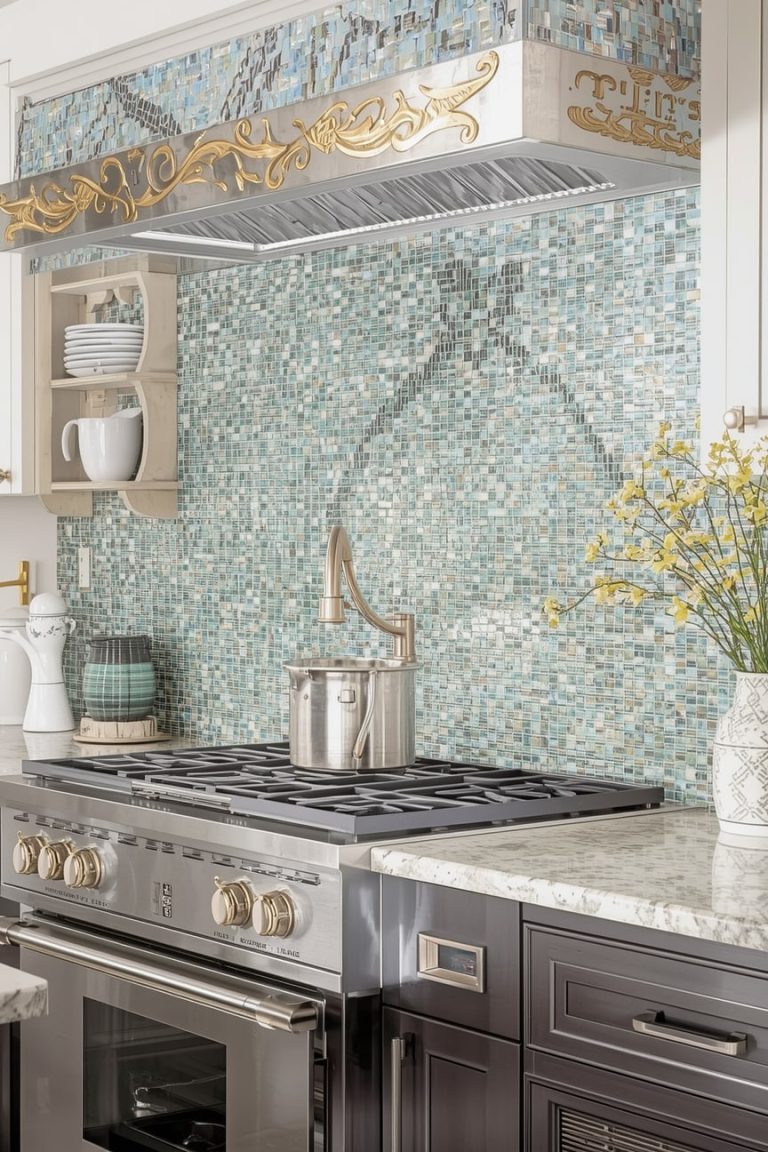
Choose a Non-White Backsplash Behind Your Shelving
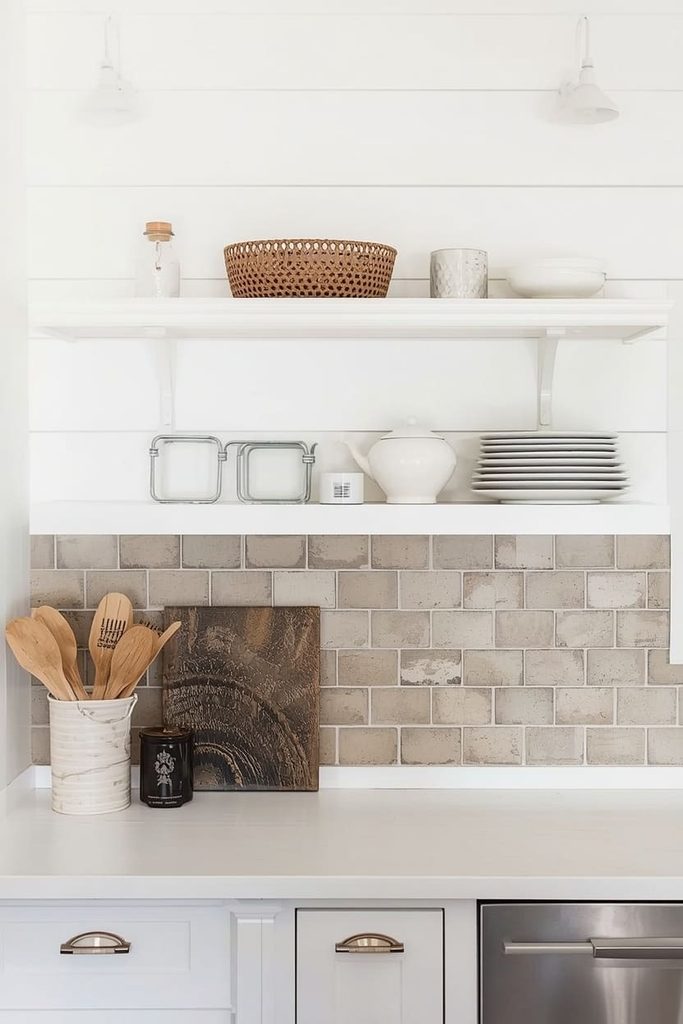
Pair your shelf with a colored or textured backsplash instead of plain white subway tile.
White subway tile paired with white shiplap and a white shelf creates a flat, matchy look that’s become an easy way to spot a farmhouse trend follower. A colored or textured backsplash adds depth behind the shelf itself.
Steps to get this right:
- Choose a soft sage, warm terracotta, or textured stone-look tile.
- Keep your shelf wood tone warm to complement the new color.
- Avoid choosing a backsplash that competes with your cabinet color.
- Test a small tile sample against your wall in daylight first.
Add a Vintage or Antique Piece Instead of New Décor
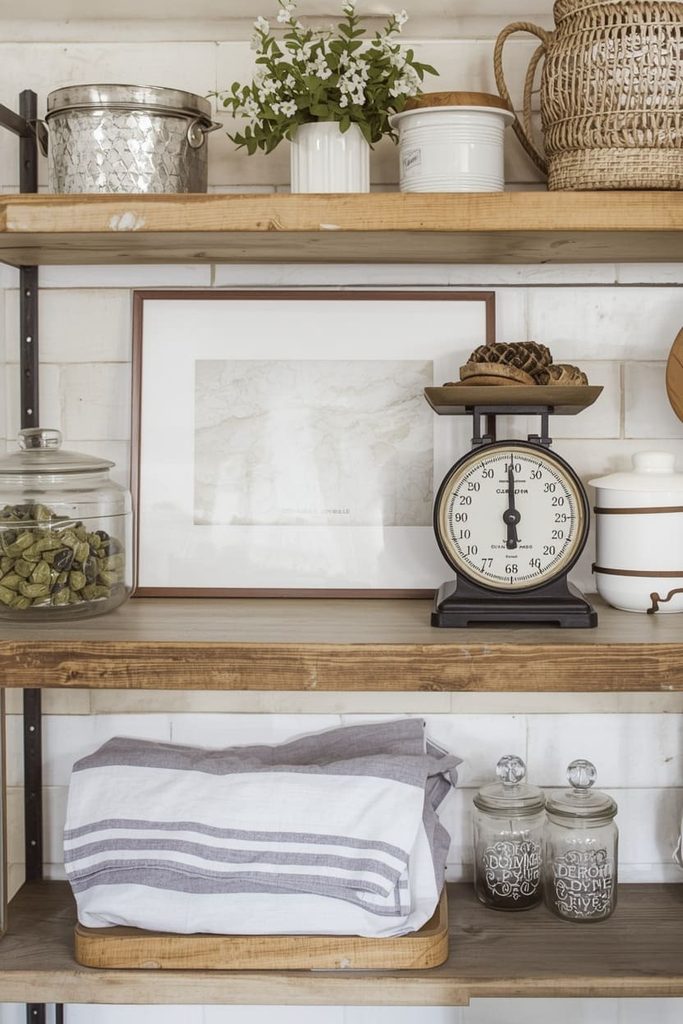
Style one real vintage item, like an old scale, tin, or ironware piece, instead of buying all-new farmhouse decor.
Store-bought “farmhouse style” decor often looks the part but lacks the texture and history of something genuinely old. One real vintage piece adds authenticity that new, mass-produced decor can’t replicate.
Steps to get this right:
- Visit a local thrift store, flea market, or estate sale for one small piece.
- Choose something functional, like an old scale or tin container.
- Place it as the focal point of your shelf, not tucked in a corner.
- Keep the rest of the shelf simple so the vintage piece stands out.
Frequently Asked Questions
How do I keep farmhouse shelving from looking dated in a few years? Mix in a few modern or vintage pieces instead of committing fully to one trend-driven look. Farmhouse style ages better when it feels personal and collected rather than matched from a single store display.
Should I choose painted or natural wood shelves for a farmhouse kitchen? Natural or stained wood tends to feel warmer and less trend-specific than painted white shelves. Painted shelves can still work well, but pairing them with warm wood tones elsewhere helps balance the look.
Can I mix metal finishes on farmhouse shelving without it looking messy? Yes, as long as one metal clearly leads and the other is used sparingly as an accent. An uneven ratio, like mostly black with small brass details, keeps the mix looking intentional.
How do I style a farmhouse shelf without it looking cluttered? Stick to three or fewer items per shelf section, and leave visible empty space between groupings. Cluttered shelves happen when every inch gets filled instead of allowed to breathe.
Is farmhouse kitchen shelving expensive to build? Most farmhouse-style shelves cost under $150 total, including wood, brackets, and stain. Vintage decor pieces add character without adding much cost, especially if sourced secondhand.
How do I clean and maintain wood farmhouse shelving? Wipe shelves weekly with a dry or slightly damp cloth to prevent grease buildup near the stove. Reapply a matte sealant once a year to keep the wood protected and looking fresh.
Farmhouse style doesn’t have to mean matching everyone else’s kitchen. A few small swaps, a warm wood tone, mixed metals, one vintage find, and it starts to feel like yours instead of a copy of a trend. That’s really all it takes.

Emily Harper is a kitchen decor expert and interior designer with a passion for creating stylish, functional spaces. As a busy mom, she understands the importance of a kitchen that works for both family life and design. With 6 years of experience, Emily specializes in transforming kitchens into inviting, practical spaces. She’s known for her ability to blend trends with everyday needs, helping families create kitchens that feel like the heart of the home.