Farmhouse Kitchen Ideas for Small Spaces You Can Actually Pull Off
My first kitchen was 62 square feet. I measured it twice because I didn’t believe it. I wanted farmhouse style — open shelves, warm wood, layered textures — but every Pinterest photo I saved showed a kitchen three times the size of mine.
I tried anyway. My first attempt looked like a garage sale exploded on my counters. Too much stuff, not enough air. I had to unlearn “more farmhouse” and relearn “the right farmhouse.”
Once I did, the space felt bigger and warmer at the same time. If you’re working with a tight kitchen, here’s exactly what I changed.
Top 5 Amazon Products for This Look
- A magnetic knife strip with a wood or black iron backing — it clears counter and drawer space while adding a rustic wall detail at the same time.
- A slim rolling cart with a butcher block top — it works as extra counter space, storage, or a mini island, and you can tuck it away when you need floor space back.
- An over-the-sink cutting board or drying rack — it turns wasted space above your sink into usable prep area, which matters most in tiny kitchens.
- Stackable wire or wood bins for cabinets — they double your usable shelf space without any installation.
- Tension-mounted or command-strip floating shelves — you get the open-shelf farmhouse look without drilling into walls, which matters if you’re renting.
Use a Slim Rolling Cart as a Movable Farmhouse Island
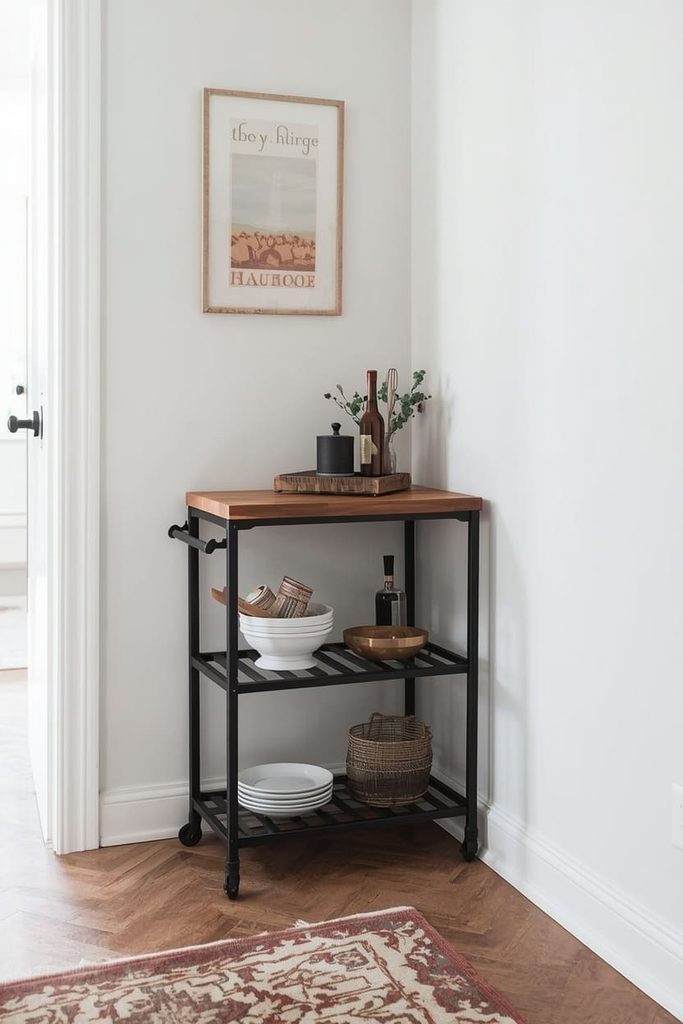
Skip the built-in island. Use a narrow rolling cart with a wood top and iron or black metal frame instead.
A cart gives you the extra counter space and farmhouse texture of an island without permanently eating your floor space. Roll it out when you’re cooking, tuck it against a wall when you’re not. I used mine as my only prep surface for two years in a kitchen with maybe eighteen inches of counter.
Look for a cart under 20 inches wide if your walkway space is tight. Butcher block tops give you the warm wood look this style depends on, and most carts run $80–$200 depending on size and material. Add a lower shelf model if you also need storage, not just counter space.
Measure your walkway before you buy. A cart that’s an inch too wide will block your fridge door every single time, and you’ll notice it daily.
Install Floating Shelves With Command Strips or Tension Mounts Instead of Cabinets
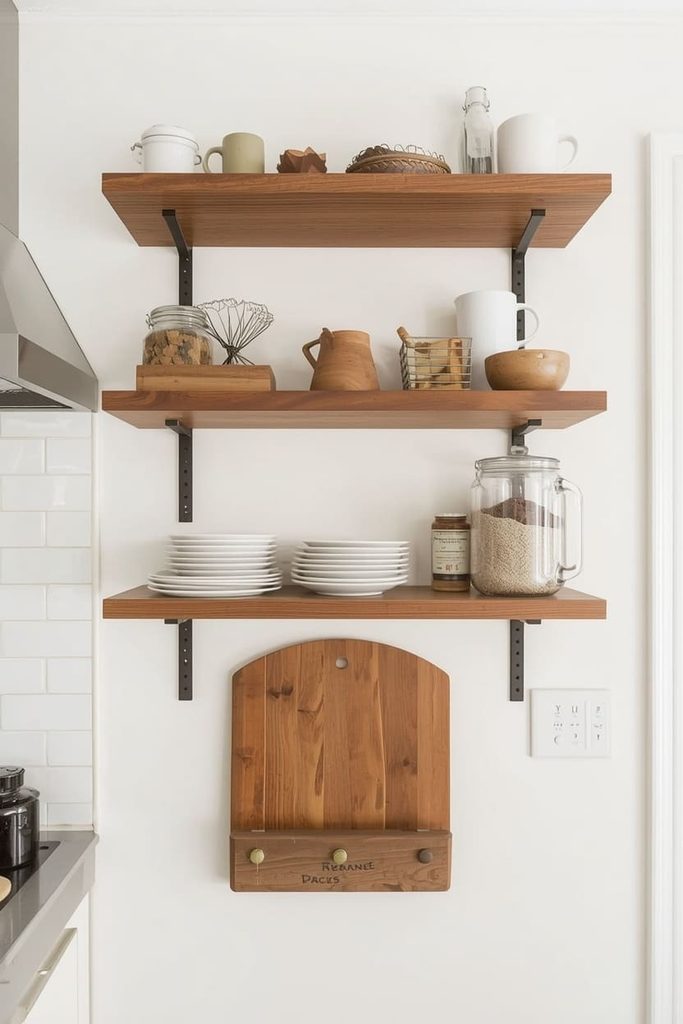
Skip upper cabinets on one wall. Use floating shelves mounted with heavy-duty command strips or a tension rod system instead of drilled brackets.
Open shelving makes a small kitchen feel taller and less boxed-in, since your eye isn’t stopped by solid cabinet doors. It also gives you the visual warmth of farmhouse style without adding bulk. This is the renter-friendly version — no drilling, no landlord conversation required.
You’ll need heavy-duty command strip shelving rated for at least 10–15 lbs, or a tension-mounted shelf kit that wedges between floor and ceiling if you want something sturdier. Keep it to two or three items per shelf. This is the step most people skip, and it’s the reason small open shelving reads as cluttered instead of styled.
Budget $30–$80 depending on the shelf style. If you’re a renter, always check your lease for wall-covering restrictions before mounting anything, even damage-free products.
Hang a Pot Rail Instead of Storing Pots in a Cabinet
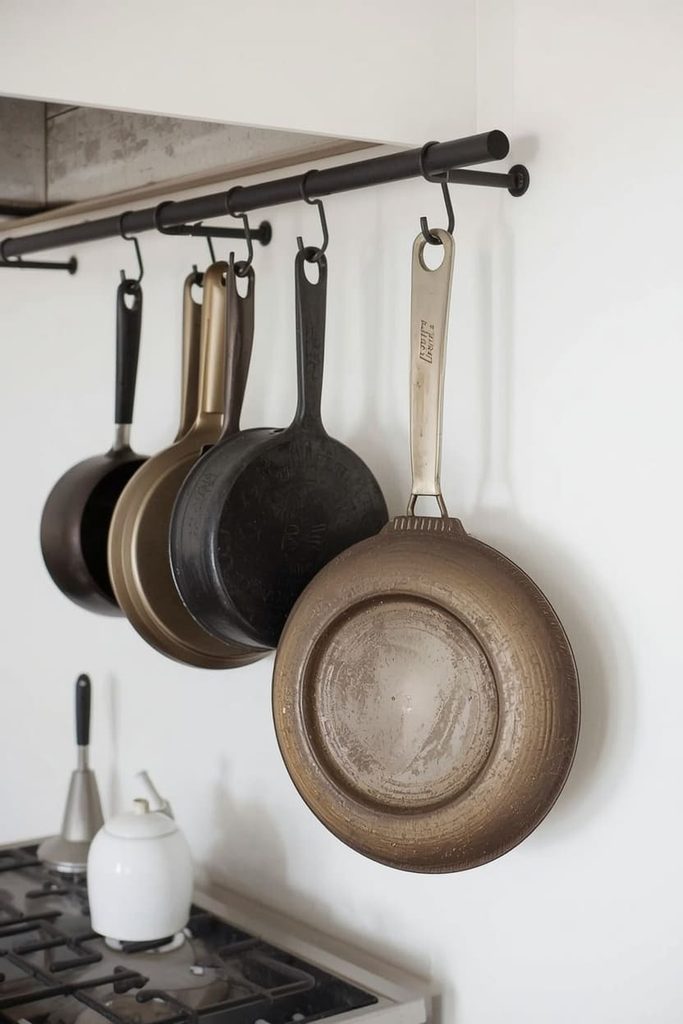
Mount a simple iron rail or rod on the wall above your stove, and hang your most-used pots and pans from S-hooks.
This move frees up an entire cabinet in a kitchen where every cabinet counts, and hanging pots is a classic farmhouse detail on its own. It also puts your cookware in reach instead of buried in a stack you have to dig through.
You’ll need a wall-mounted rail (12–24 inches works for most small kitchens), S-hooks sized to your pot handles, and wall anchors if you’re not hitting a stud — check your wall type before hanging anything heavy near a stove. Budget $25–$60 for the rail and hooks.
Hang your heaviest pieces closest to the wall studs if you can find them, and lighter pans further out. I learned this after a rail sagged slightly under an unevenly loaded cast iron pan.
Swap One Upper Cabinet’s Doors for Glass or Remove Them Entirely
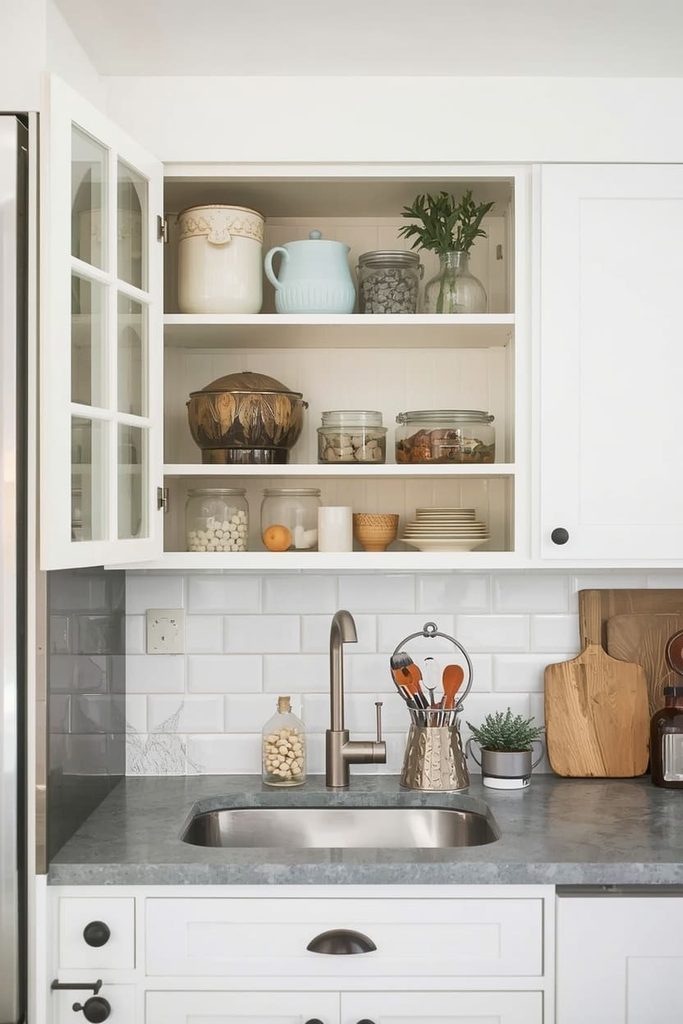
Pick a single cabinet, remove the door (or swap it for a glass-front option), and style the inside instead of hiding it.
This gives you an open-shelving look without committing your whole kitchen to it, and it’s reversible if you’re renting or unsure about full open shelving. One open cabinet reads as an intentional design choice, not a half-finished renovation.
You’ll need a screwdriver to remove the existing door, and either a glass-front replacement panel or simply store the door somewhere for when you move out. If you go glass, expect $30–$80 per door for a basic frosted or clear panel, or a local glass shop can cut one to fit your exact frame.
Keep the door if you’re renting. Reinstalling the original before you move out takes ten minutes and avoids any deposit issues.
Paint an Accent Wall Instead of Retiling for a Farmhouse Backsplash Look
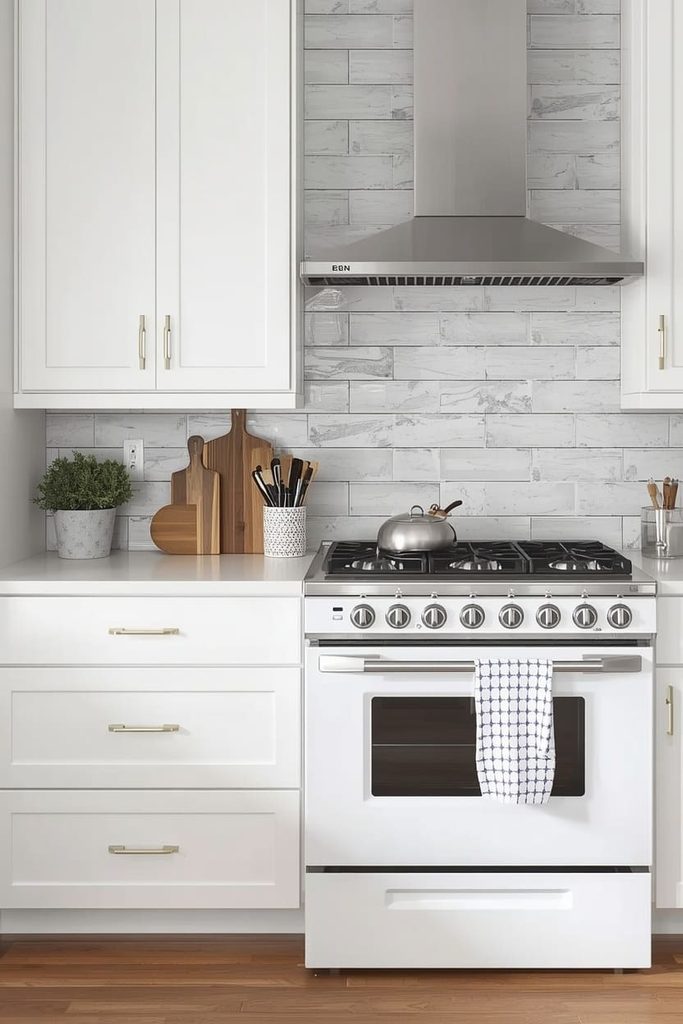
Skip full tile if your budget or lease doesn’t allow it. Use peel-and-stick tile or a painted faux-tile pattern on your backsplash wall instead.
A backsplash is one of the fastest ways to bring farmhouse character into a small kitchen, and it does that work in a space too small for a big design statement elsewhere. Peel-and-stick versions look convincingly like subway tile or shiplap from a normal viewing distance, and most are designed to remove cleanly.
You’ll need peel-and-stick tile sheets sized to your backsplash area (measure first, they’re sold by square footage), a level, and a utility knife for trimming around outlets. Budget $40–$120 depending on your wall size and tile style. This is one of the few projects on this list that genuinely takes under a day.
Clean your wall thoroughly before applying anything peel-and-stick. Grease residue near a stove is the number one reason these tiles peel up early.
Frequently Asked Questions
How do I get farmhouse style without it looking cluttered in a small kitchen? Pick two or three farmhouse details to focus on — open shelving, a pot rail, warm wood tones — rather than layering in every trend at once. In a small space, restraint reads as intentional, and too many textured elements competing for attention reads as chaos.
What farmhouse updates are actually renter-friendly? Command-strip shelving, peel-and-stick backsplash tile, rolling carts, removable hardware covers, and swapped cabinet doors you can reinstall later are all reversible. Anything requiring drilling, plumbing changes, or permanent paint on fixtures should get a landlord check first.
How do I add storage without built-in cabinets? Look up, not just around. Wall-mounted rails, stackable bins inside existing cabinets, and floating shelves all add storage using vertical space you’re probably not using yet. Rolling carts also double as hidden storage when parked against a wall.
Can I really mix style and function, or do I have to choose one? You don’t have to choose. The best small-space farmhouse ideas solve a functional problem and add character at the same time — a pot rail clears cabinet space and looks styled, a rolling cart adds counter space and warm wood tone. Function-first design usually looks better in small kitchens anyway.
What’s a realistic budget for updating a small farmhouse kitchen? Most of the ideas here cost $25–$200 individually, and you can do all five for well under $500 total if you shop carefully. That’s a fraction of a full renovation, and in a small kitchen, a handful of well-chosen updates go much further than they would in a larger space.

Emily Harper is a kitchen decor expert and interior designer with a passion for creating stylish, functional spaces. As a busy mom, she understands the importance of a kitchen that works for both family life and design. With 6 years of experience, Emily specializes in transforming kitchens into inviting, practical spaces. She’s known for her ability to blend trends with everyday needs, helping families create kitchens that feel like the heart of the home.