Kitchen Corner Shelving Ideas: The Blueprint For Your Most Wasted Space
I had a corner in my kitchen that did nothing. Just empty air, wall to wall.
I walked past it every day. I never noticed it, not really. Then I measured my kitchen for a shelf and saw the number. That corner alone was almost four square feet of wasted space.
Four square feet. That’s a small closet.
I felt a little silly. All that space, doing nothing, for years. So I fixed it. And once I understood how to measure and fit shelves into that angle, everything changed.
Here’s exactly how you can do the same thing, starting with the part most people skip.
5 Amazon Products For Corner Shelving Projects
- Corner floating shelves (triangle-cut wood) – These are pre-shaped to fit a 90-degree corner, saving you from cutting your own angles.
- Corner shelf unit (stacked, 3 to 5 tiers) – This freestanding option works great for renters who can’t drill into walls.
- L-shaped wall brackets – These support corner shelves at the correct angle, distributing weight evenly across both walls.
- Adhesive heavy-duty wall strips – These hold lightweight corner shelves without any drilling, ideal for rental kitchens.
- Small corner turntable (lazy Susan style) – This maximizes an in-cabinet or lower corner shelf, keeping items easy to reach instead of stuck in the back.
Measure Your Corner Before You Buy Anything
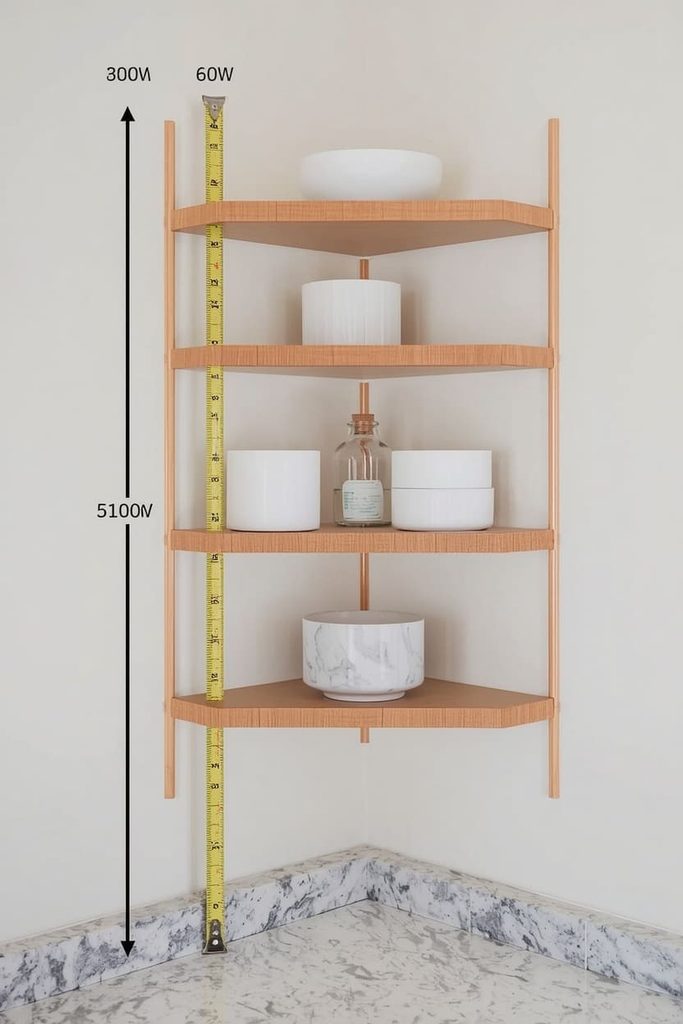
Measuring your corner correctly, before shopping, is the single step that prevents wasted money and wobbly shelves. Skip this and you’ll likely buy something that doesn’t fit.
Measure each wall separately, starting from the corner point. Most kitchen corners aren’t a perfect 90 degrees, especially in older homes. Use a small angle finder tool, or a piece of paper folded to match the corner, to check for gaps.
Write both wall measurements down before you shop. A shelf that’s even half an inch too long won’t sit flush, and it’ll look off no matter how nice the shelf itself is.
Understand How Much Depth You Lose To The Angle
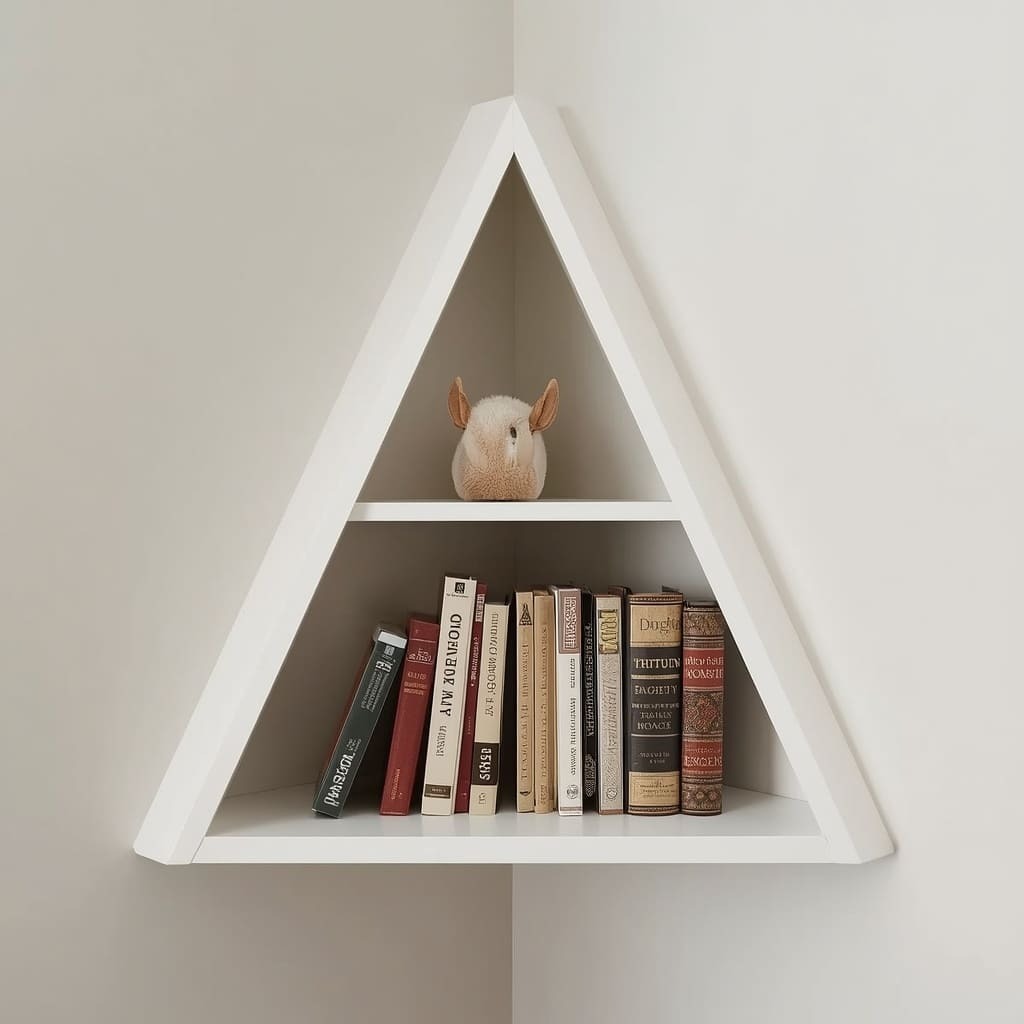
A corner shelf always loses usable depth near the point of the angle, which means the back few inches often can’t hold anything practical. This is the part most people don’t plan for.
A triangle-shaped corner shelf, cut at 90 degrees, gives you full depth along the front edge but almost no depth right at the point. Anything you place near that inner corner point will be hard to reach and easy to forget.
Plan your storage with this in mind. Keep small, light items near the point. Keep taller or frequently used items closer to the front edge, where you actually have room to grab them.
Choose Triangle Shelves For Tight 90-Degree Corners
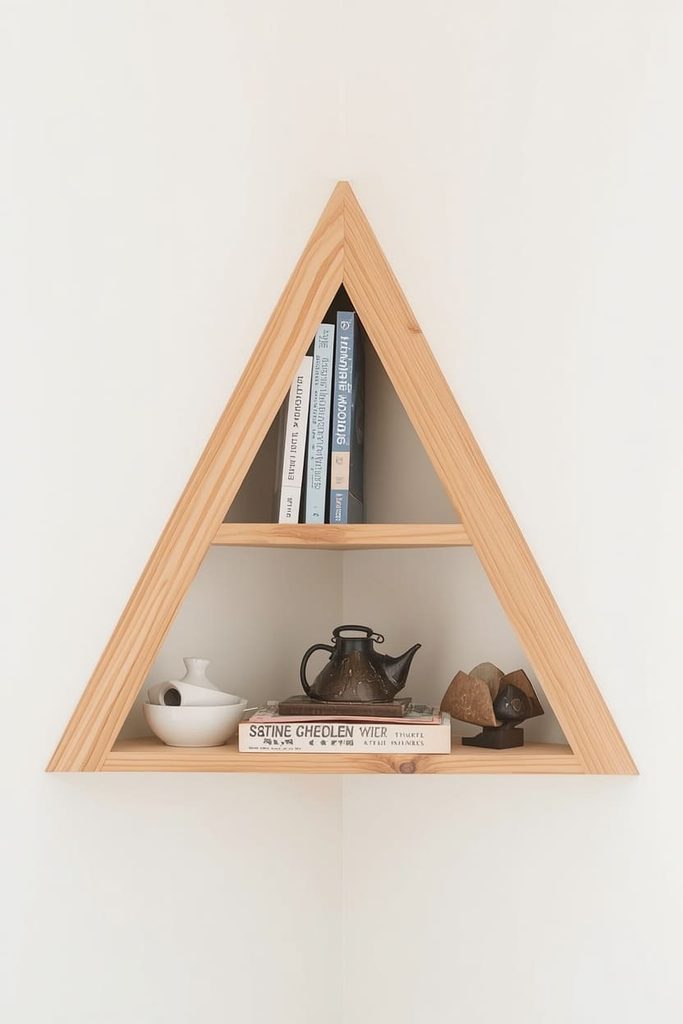
Triangle-shaped shelves are the best fit for a standard inside corner, since they match the angle without leaving gaps on either wall. Curved or rectangular shelves often don’t sit flush in a true corner.
Look for a shelf cut at exactly 90 degrees, with two straight back edges. Measure your own corner first, since some homes have angles slightly off from 90, and a shelf cut too perfectly might leave a small gap on one side.
This shape also uses the wall space efficiently. You get support from two walls instead of one, which means the bracket doesn’t have to carry all the weight alone.
Stack Multiple Corner Shelves For Vertical Storage
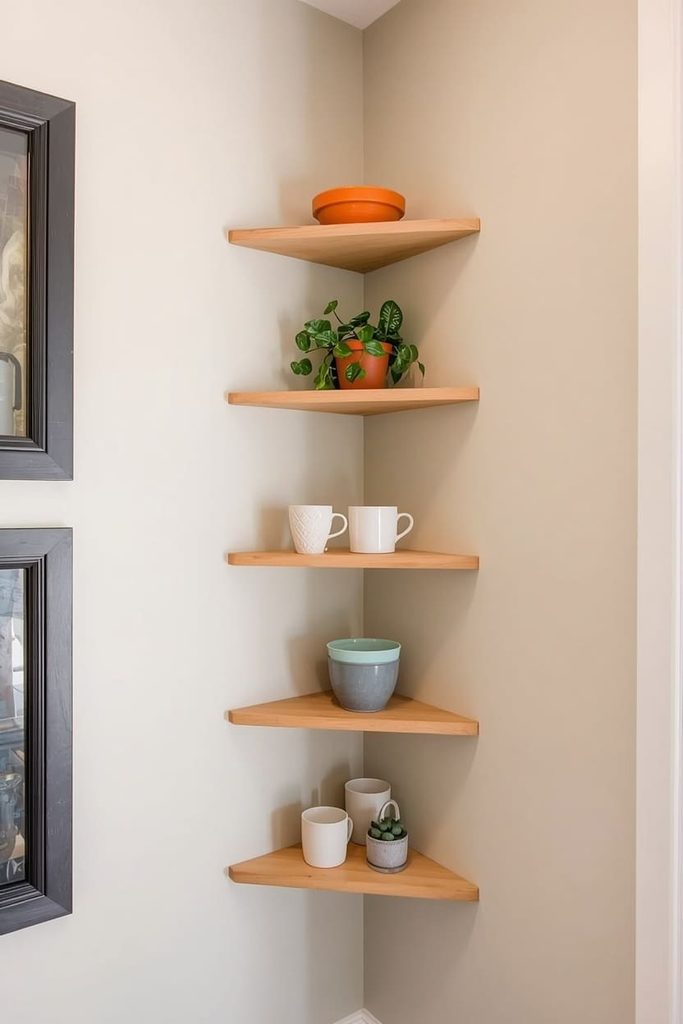
Stacking three or four triangle shelves vertically turns one small corner into serious storage, without touching any other wall in your kitchen. This works especially well in narrow galley kitchens.
Space each shelf 10 to 12 inches apart, measured from the bottom of one shelf to the top of the next. This gives enough room for mugs, small plants, or stacked bowls without feeling cramped.
Mount the bottom shelf first, then use a level to line up each one above it. A single degree of tilt on the bottom shelf throws off every shelf stacked above it.
Install A Freestanding Corner Unit For Rental Kitchens
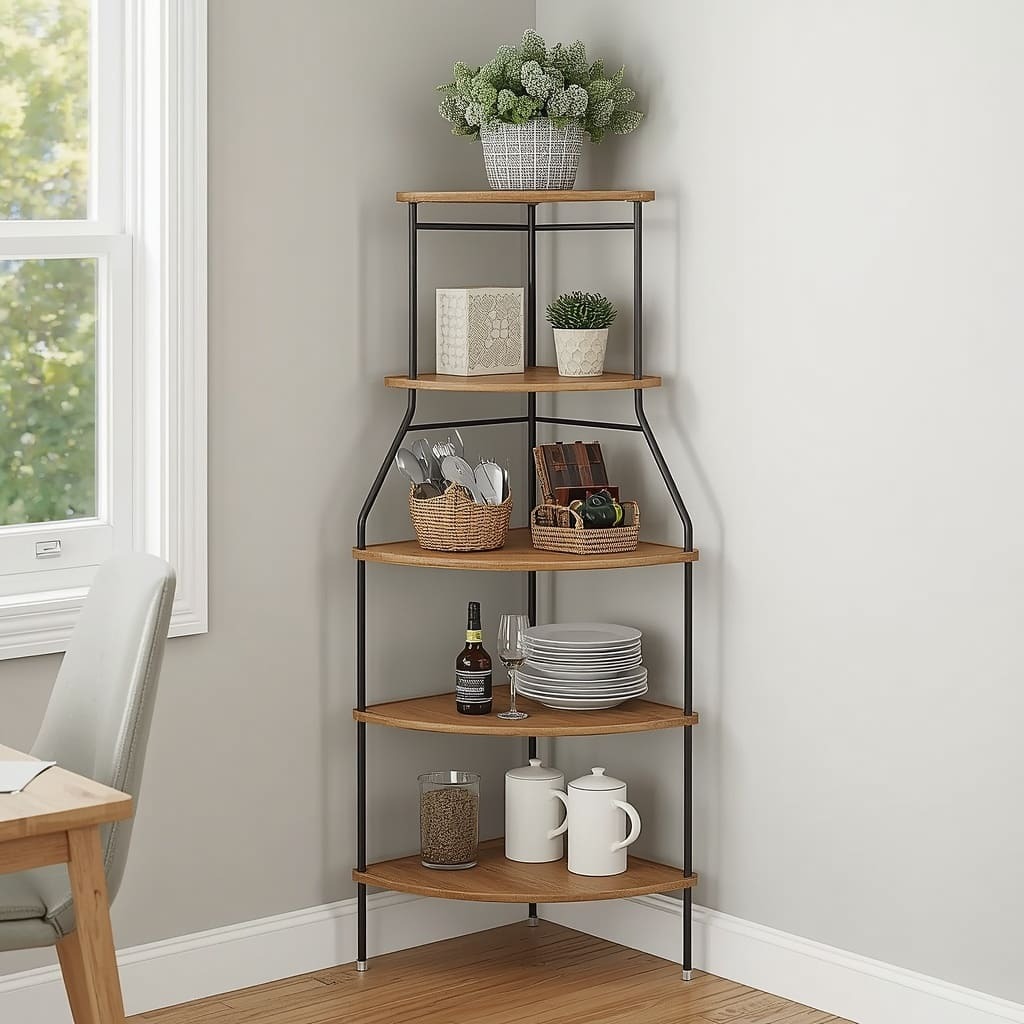
A freestanding corner shelf unit gives you the same storage benefit as a mounted shelf, without drilling a single hole in the wall. This is the easiest option if you’re renting.
Choose a unit with a wide base and narrow top, so it tapers to match the corner’s shape without tipping. Place heavier items on the bottom shelf and lighter items near the top, since a lower center of gravity keeps the whole unit stable.
This solves the exact problem most renters face. You get the storage of a built-in shelf, and you take it with you when you move.
Use A Corner Turntable To Reach Every Inch
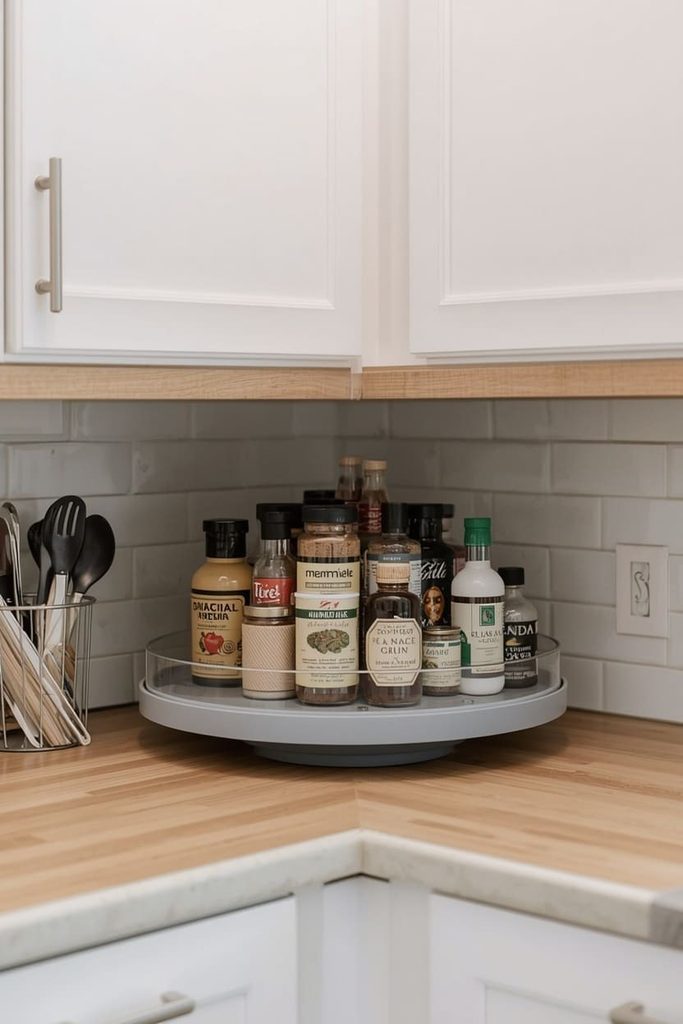
A corner turntable spins items into reach, which solves the problem of the dead space created by a corner’s natural depth loss. This works especially well inside lower cabinets or on a low corner shelf.
Place a turntable, roughly 12 to 18 inches wide, directly on your corner shelf. Load spices, small jars, or oils on top. Spin it instead of reaching into the back of the angle, where items usually get lost and forgotten.
This idea directly solves the depth problem mentioned earlier. Instead of avoiding the point of the corner, you make it usable by rotating items forward.
Add A Single Floating Corner Shelf As A Display Spot
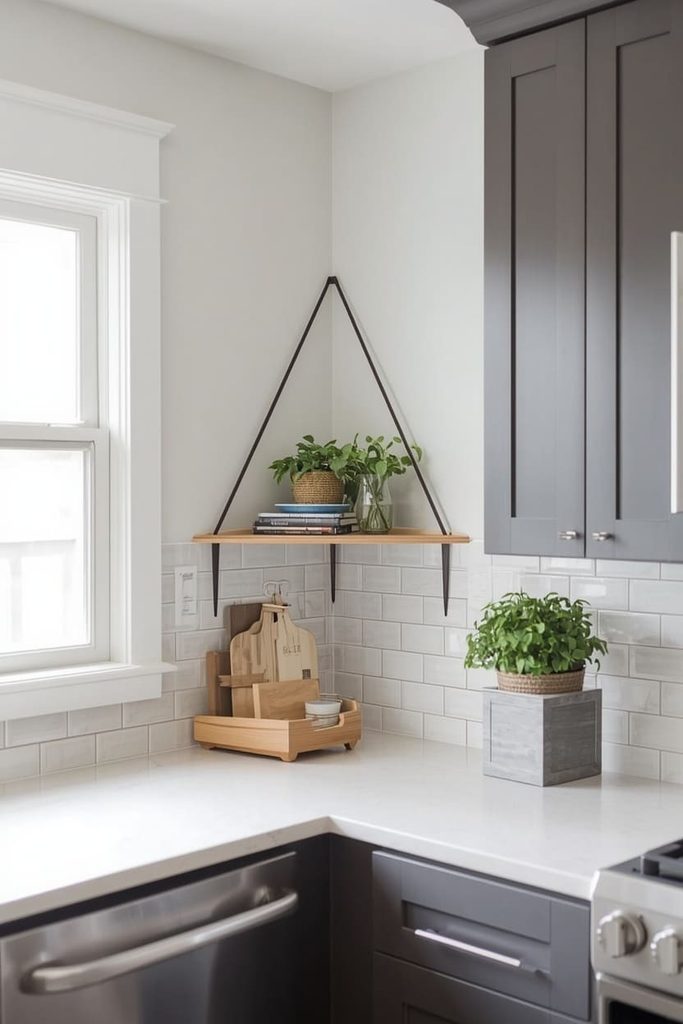
One small floating corner shelf, placed at eye level, works as a display spot for a plant or a few small items, without taking up real storage space. This is the simplest corner project on this list.
Measure the corner at eye level first, usually 60 to 66 inches from the floor. Mount one triangle shelf, no bigger than 10 inches per side. Add one plant or one small object, keeping the space open and uncluttered.
This idea works well paired with a stacked or freestanding unit lower on the same corner. You get function down low and a styled moment up high.
Frequently Asked Questions
How do I know if my kitchen corner is a true 90 degrees? Use a small angle finder tool or fold a piece of paper to match the corner. Many older homes have corners slightly off from 90 degrees, which affects how flush a shelf will sit.
What’s the best material for a corner shelf near a stove? Sealed wood or metal holds up best near heat and grease. Avoid raw, unsealed wood, since it can warp or stain over time.
Can I install corner shelves without drilling into the wall? Yes. Freestanding corner units or heavy-duty adhesive strips both work well without permanent wall damage, which is ideal for renters.
How much weight can a triangle corner shelf hold? Most hold between 10 and 30 pounds, depending on the bracket type. L-shaped brackets anchored into both walls generally hold more weight than adhesive mounts.
Why does the back of my corner shelf feel unusable? That’s the depth loss created by the angle itself. Keep small, light items near the back point and heavier or daily-use items closer to the front edge.
That empty corner isn’t empty anymore, not once you measure it right. Grab a tape measure. Check your angle. Your kitchen has more space than you think.

Emily Harper is a kitchen decor expert and interior designer with a passion for creating stylish, functional spaces. As a busy mom, she understands the importance of a kitchen that works for both family life and design. With 6 years of experience, Emily specializes in transforming kitchens into inviting, practical spaces. She’s known for her ability to blend trends with everyday needs, helping families create kitchens that feel like the heart of the home.