7 Rustic Farmhouse Kitchen Ideas You Can Actually Pull Off
When I bought my 1920s farmhouse, the kitchen had a wall of dented tin ceiling tiles. My contractor wanted to rip it out. I almost let him. Something stopped me.
I had it cleaned and patched instead of replaced. Now it’s the first thing people notice when they walk in. That dent near the stove? Someone’s been cooking in this house for a hundred years.
I stopped chasing perfection after that. I started chasing characters instead. If you’re staring at an old kitchen wondering what to save and what to fix, here are seven ideas that worked for me, without a full remodel budget.
Top 5 Amazon Products for This Look
- Black wrought iron cabinet pulls with a hand-forged look — they bring instant age and texture to plain cabinet doors without any carpentry.
- Rustic wood shelf brackets with a distressed or hammered iron finish — sturdy enough for real dishes, and they look like they’ve held shelves for decades already.
- A bridge-style faucet with a vintage brass or oil-rubbed bronze finish — it reads as reclaimed even when it’s brand new.
- A caged pendant light fixture with an Edison-style bulb — warm, low light that mimics old farmhouse fixtures and softens a whole room.
- Woven or ladder-back counter stools with a weathered wood finish — they add the “found at a barn sale” texture this style depends on.
Whitewash Your Existing Cabinets Instead of Replacing Them
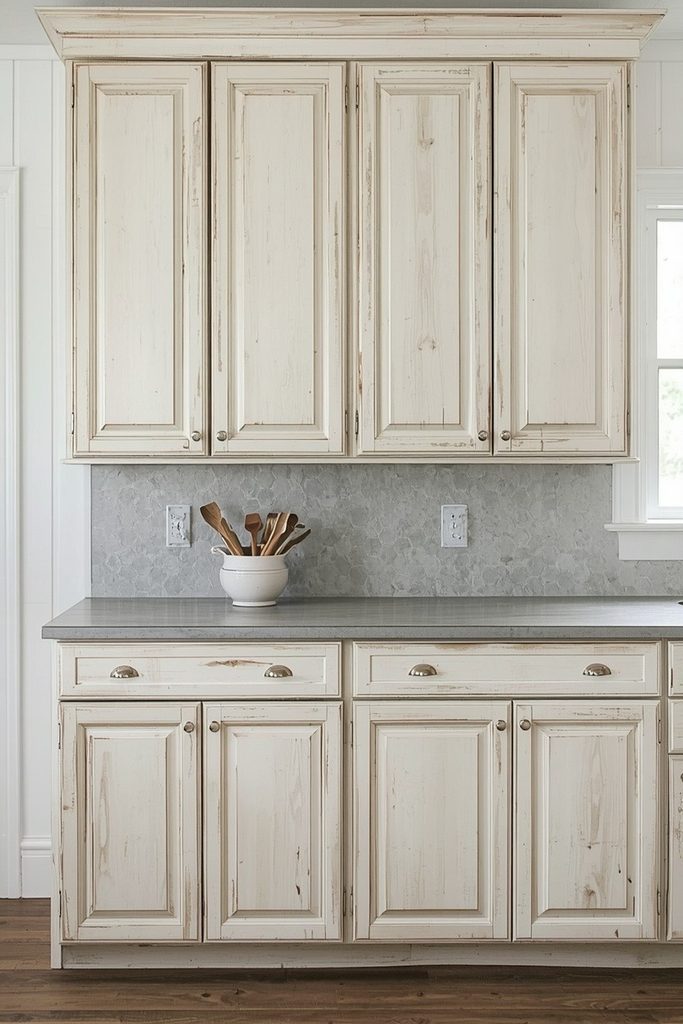
Skip the demo. Mix white paint with water, brush it on, and wipe most of it off before it dries.
Whitewashing lets the wood grain show through a soft white haze, which is the whole appeal of rustic farmhouse style. It looks like the cabinets have aged gracefully, not like they were installed last week.
I did this over oak cabinets that were too solid to justify tearing out, and the grain pattern still shows through every panel.
You’ll need diluted latex paint (roughly one part paint to one part water), a rag, and a paintbrush. Test your ratio on the inside of a cabinet door first — too much paint and you lose the grain, too little and it barely shows. Budget under $50 for a full kitchen since one gallon covers a lot of ground.
Work in small sections. Paint dries fast, and wiping off dried paint is a fight you won’t win.
Build Open Shelving From a Single Reclaimed Board
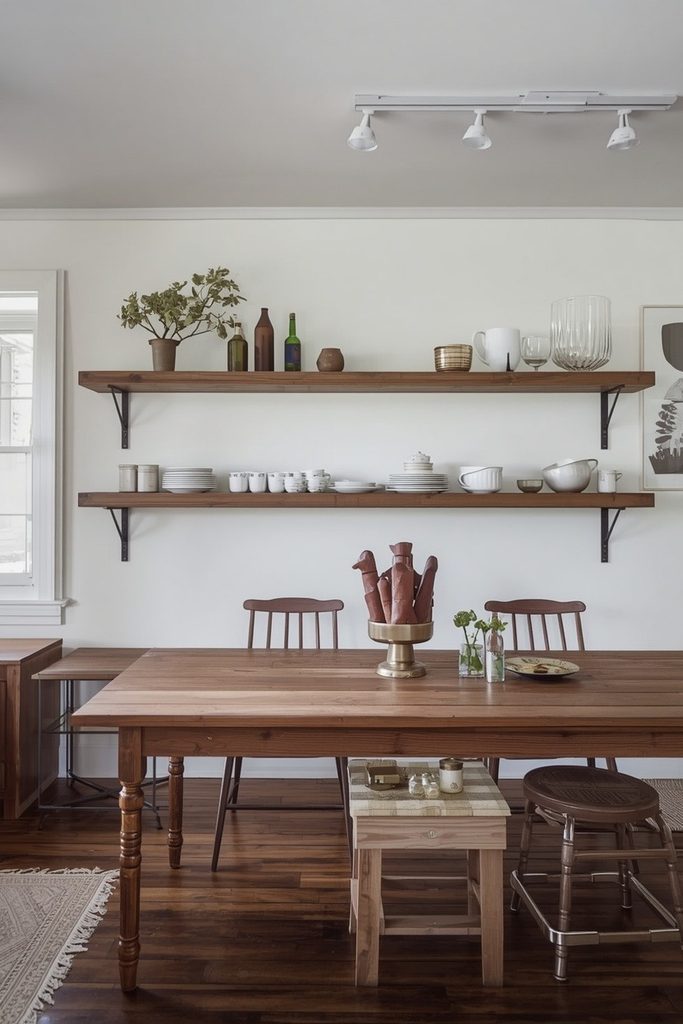
Skip buying pre-made shelving. Find one solid board — barn wood, an old fence plank, even a thrifted mantel — and mount it with iron brackets.
One imperfect board does more for this look than three matching cabinets ever will. The knots, nail holes, and uneven color are the point. I used a board from a torn-down shed on my property, sanded the splinters off, and left everything else alone.
You’ll need a board at least 1 inch thick to hold weight safely, brackets rated for your dish load, and a stud finder — this step is not optional, plates are heavy. If your board has a rough saw-cut edge, keep it. Sand only where your hand will touch it.
Materials run $30–$80 if you’re sourcing the wood yourself, more if you’re buying reclaimed lumber from a salvage yard. Salvage yards almost always sell scraps cheaper than full boards, and scraps are usually all you need for one shelf.
Swap In a Farmhouse Apron Sink Without Replacing Your Cabinets
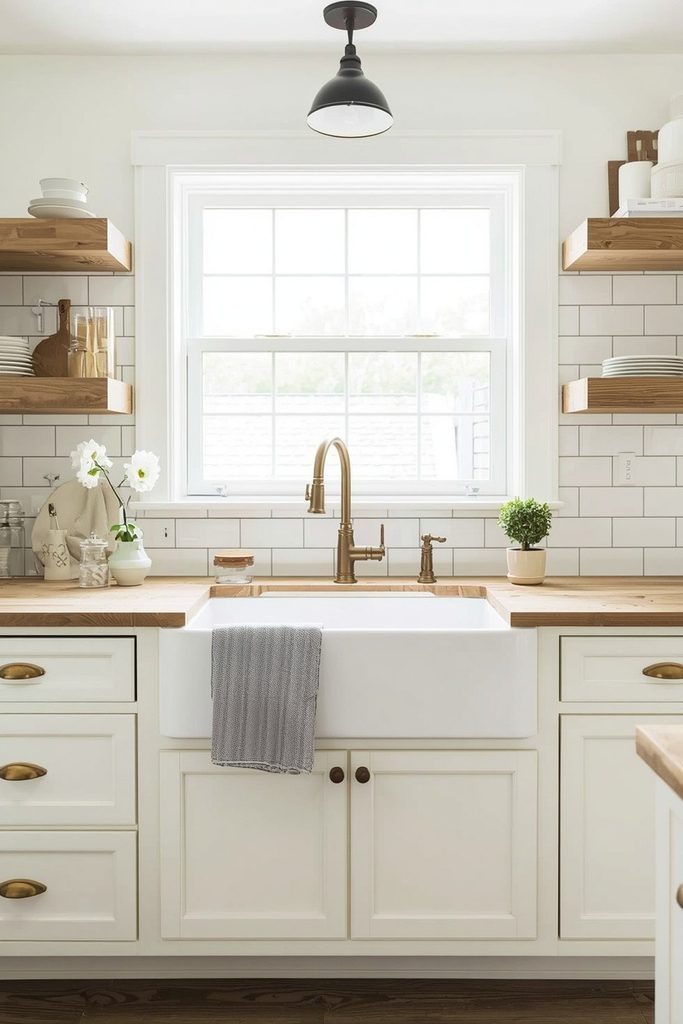
Look for a cabinet base retrofit kit or a sink that matches your existing cabinet opening, so you get the exposed-front farmhouse look without a full cabinet rebuild.
The deep basin and exposed front are the visual anchor of a rustic kitchen. It’s the fixture that makes people say “farmhouse” the second they see it. I found mine secondhand through a local salvage shop for a third of retail.
Measure your current sink base opening before you shop. Fireclay holds up to scratches better than stainless and shows less wear over time, which matters for that “lived-in, not brand-new” look. Budget $400–$900 for the sink if buying new, $100–$300 if you go the secondhand or salvage route like I did.
Check for hairline cracks on secondhand fireclay sinks before you buy. A small crack in fireclay can spread once it’s holding water daily.
Layer In Mismatched Vintage Hardware Instead of a Matching Set
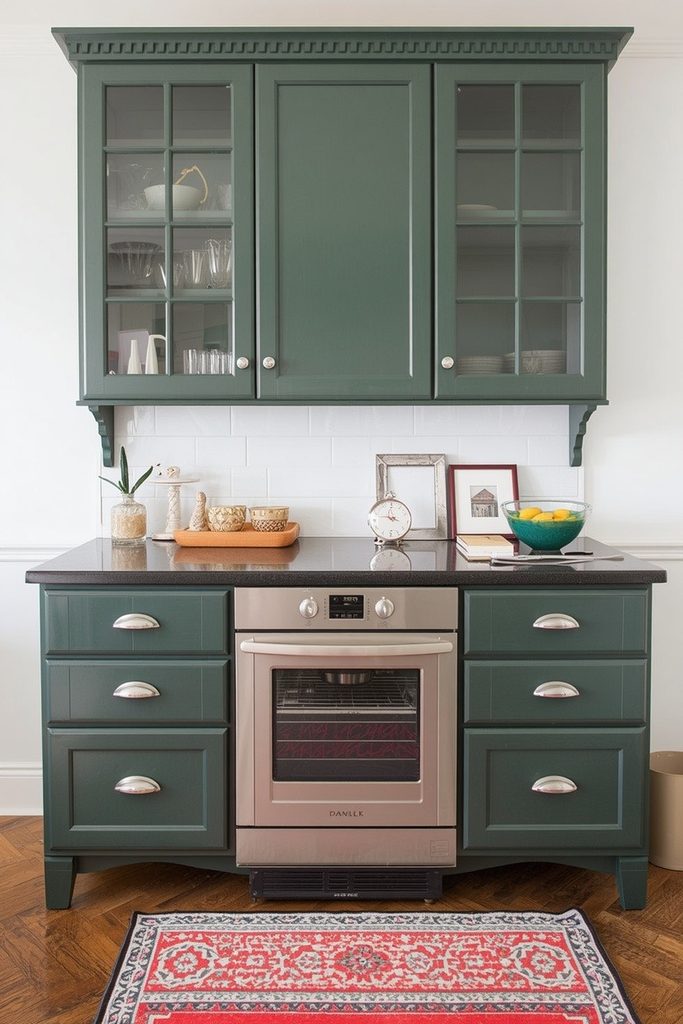
Buy or thrift several styles of pulls and knobs in a similar dark metal finish, then mix them across your cabinets instead of using one uniform set.
Matching hardware looks intentional but sterile. Mismatched hardware, even subtly, looks collected — like it arrived in your kitchen over years, not one Amazon order. I mixed iron cup pulls with a few forged knobs, all in a similar black finish so it reads cohesive instead of chaotic.
Keep your finish family consistent (all black, all bronze, all iron) even while your shapes vary. That’s the trick that keeps this from looking like a mistake. Thrift stores, flea markets, and salvage shops are your best source here.
Budget $40–$120 depending on how much you thrift versus buy new. I found half my knobs at an estate sale for a dollar each.
Expose or Fake a Wood Beam Across Your Ceiling
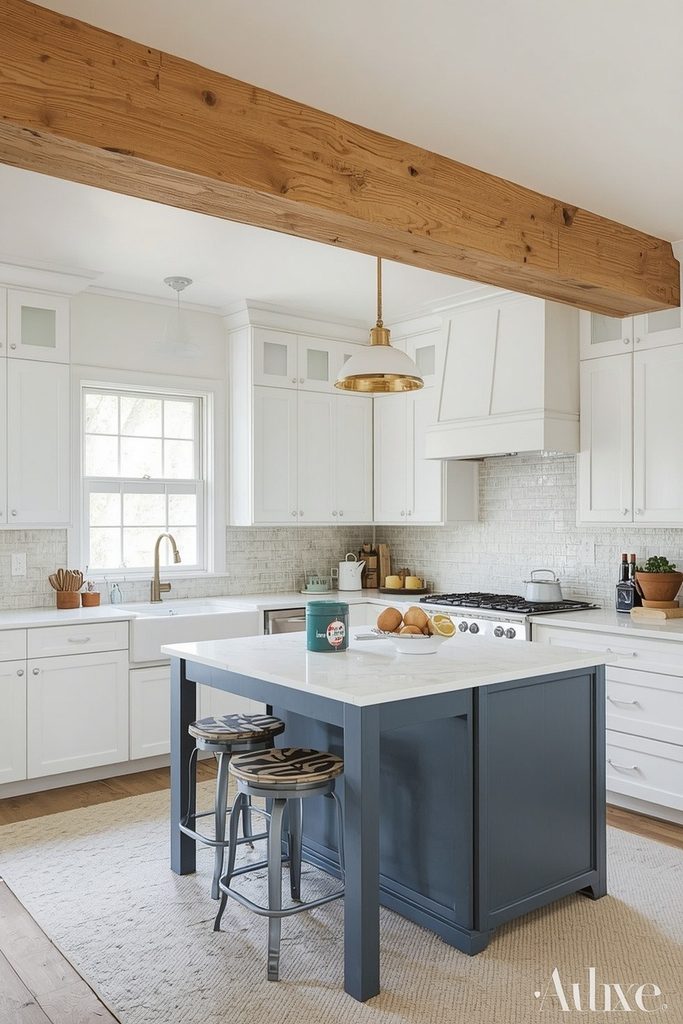
If you have a load-bearing beam hidden behind drywall, consider exposing it. If you don’t, build a lightweight faux beam from boxed-out wood and mount it to the ceiling.
A beam breaks up a flat ceiling and adds the architectural weight that makes a kitchen feel old, even in a newer house. Mine was hidden under decades of paint and drywall patches, and uncovering it was worth every hour of scraping.
For a faux beam, you’ll need three boards nailed into a U-shape, wood stain or reclaimed lumber for the surface, and construction adhesive plus screws into ceiling joists (find your joists first). For an exposed real beam, you may need a contractor to confirm it’s structurally safe to reveal.
Faux beams run $100–$250 in materials for a DIY build. Exposing a real beam varies wildly depending on what’s covering it, so get a contractor’s opinion before you start demo.
Hang Café Curtains Instead of Blinds on Your Kitchen Window
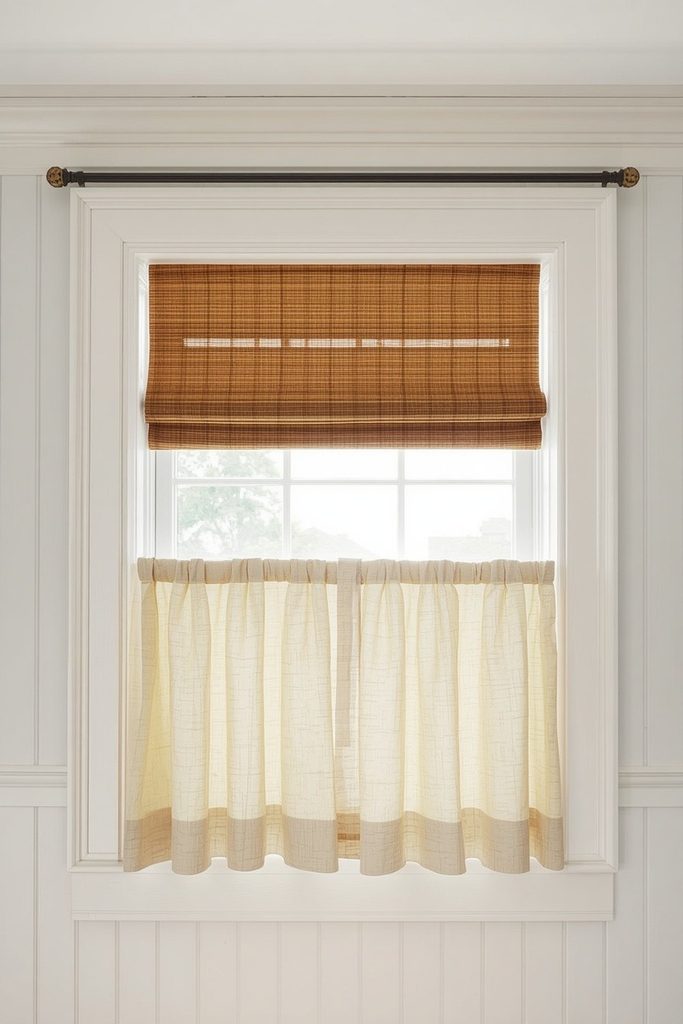
Replace vinyl blinds with a simple gathered curtain on a tension rod, covering just the lower half of the window.
Café curtains let light in while adding the soft, homey texture that blinds can’t. It’s a five-minute change with a real visual payoff, and it’s one of the cheapest updates on this list. I used leftover linen fabric from another project and had it up before lunch.
You’ll need a tension rod sized to your window frame and fabric or a pre-made curtain panel in a natural material like linen or cotton. Gingham, ticking stripe, or plain linen all fit this look well.
Budget $15–$40 total. If you’re sewing your own, a basic rod-pocket panel takes under an hour, even for a beginner.
Repaint or Replace Just Your Kitchen Door With a Dutch Door
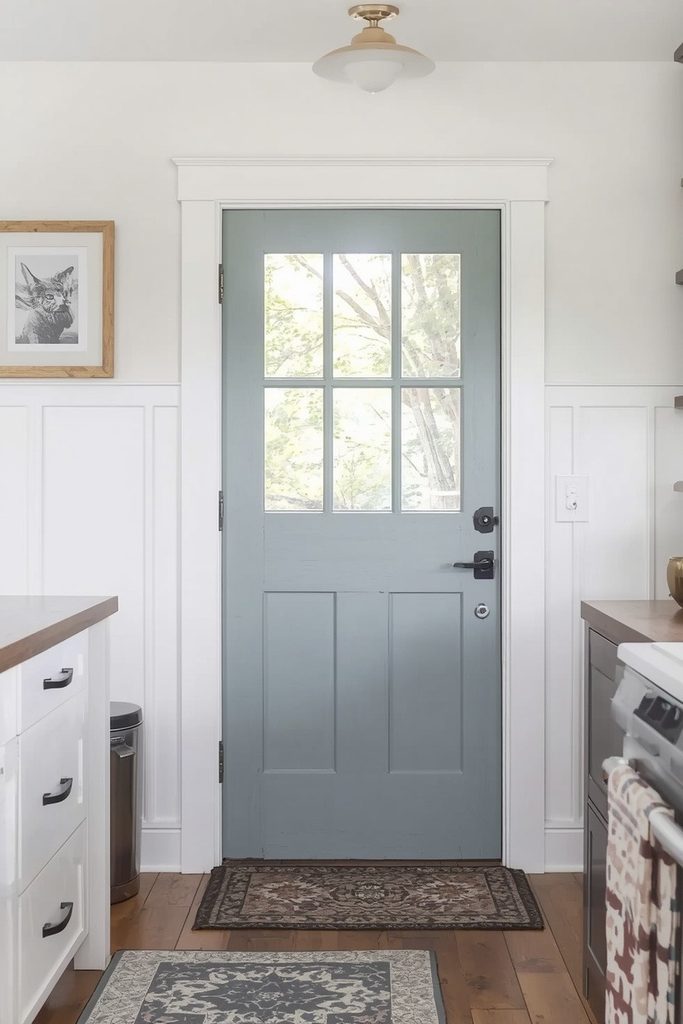
If your kitchen has an exterior or pantry door, consider converting it to a Dutch door that opens top and bottom separately.
Dutch doors are a classic farmhouse detail that adds character and function at once, letting air in without letting kids or pets wander off. Conversion kits exist for standard door frames, or you can buy a pre-made Dutch door sized to your opening.
You’ll need to measure your existing frame carefully, since Dutch doors require enough clearance for the split hardware. A pre-hung Dutch door runs $400–$900 depending on wood type; a conversion kit for an existing door is cheaper but requires more carpentry skill.
Budget for hinges rated for the extra weight of a split door — standard hinges won’t hold up long-term.
Frequently Asked Questions
Can I get this look on a tight budget? Yes. Whitewashing, hardware swaps, and café curtains cost under $50 each and make a real visual difference. Save your budget for one bigger anchor piece, like the sink or shelving, and DIY the rest.
How do I mix old and new without it looking mismatched? Keep a consistent finish family, like black iron or aged brass, across whatever you mix. The materials can vary in age and origin as long as the color story stays consistent.
Should I renovate or just restore what’s already there? Restore first when you can. Original details like tin ceilings, wood floors, and old trim are hard to replicate and usually cheaper to clean and repair than to remove and replace.
Does rustic farmhouse hurt or help resale value? It’s generally neutral to positive, especially in rural or small-town markets where buyers expect character. It can be less universally appealing in urban condo markets, so consider your local buyer pool if resale is a concern.
What should I DIY versus hire out? Painting, hardware, shelving, and curtains are beginner-friendly DIY projects. Sink plumbing, structural beam work, and door frame conversions are worth hiring a licensed contractor for, since mistakes there are expensive to undo.

Emily Harper is a kitchen decor expert and interior designer with a passion for creating stylish, functional spaces. As a busy mom, she understands the importance of a kitchen that works for both family life and design. With 6 years of experience, Emily specializes in transforming kitchens into inviting, practical spaces. She’s known for her ability to blend trends with everyday needs, helping families create kitchens that feel like the heart of the home.