7 Modern Farmhouse Kitchen Ideas You Can Actually Pull Off
I gutted my first kitchen with a crowbar and zero plan. Big mistake. I tore out the cabinets before I picked a single finish, and for three weeks I cooked out of a microwave in my dining room.
Somewhere around week two, standing in a room full of exposed studs, I finally understood what “modern farmhouse” actually meant. It’s not shiplap and mason jars. It’s warmth built on clean lines.
That lesson cost me time and a few hundred dollars in takeout. You don’t have to learn it the hard way. Here are seven ideas I’ve actually used, tested, and would use again.
Top 5 Amazon Products for This Look
- Matte black cabinet pulls with a slim bar design — they add contrast without looking heavy, which is the whole point of modern farmhouse hardware.
- A three-light linear pendant fixture in black or aged bronze — it gives you that farmhouse silhouette while still reading as current over an island.
- A single-handle pull-down faucet in matte black or brushed nickel — functional, streamlined, and it won’t fight with your other finishes.
- Solid wood floating shelf brackets in a dark iron finish — sturdy enough for real dishes, and they’re the detail that makes open shelving look intentional instead of unfinished.
- Woven counter stools with black metal legs — they soften a kitchen full of hard surfaces without tipping into rustic territory.
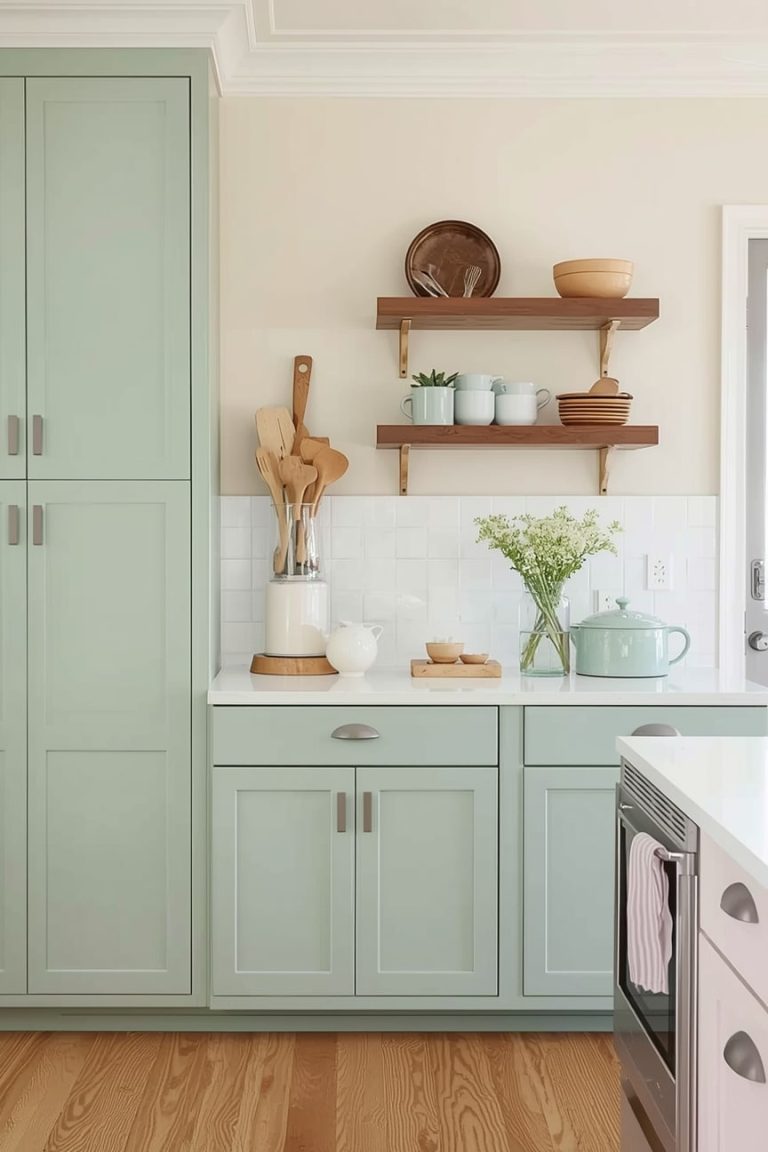
Paint Your Lower Cabinets a Deep, Moody Color and Keep the Uppers White
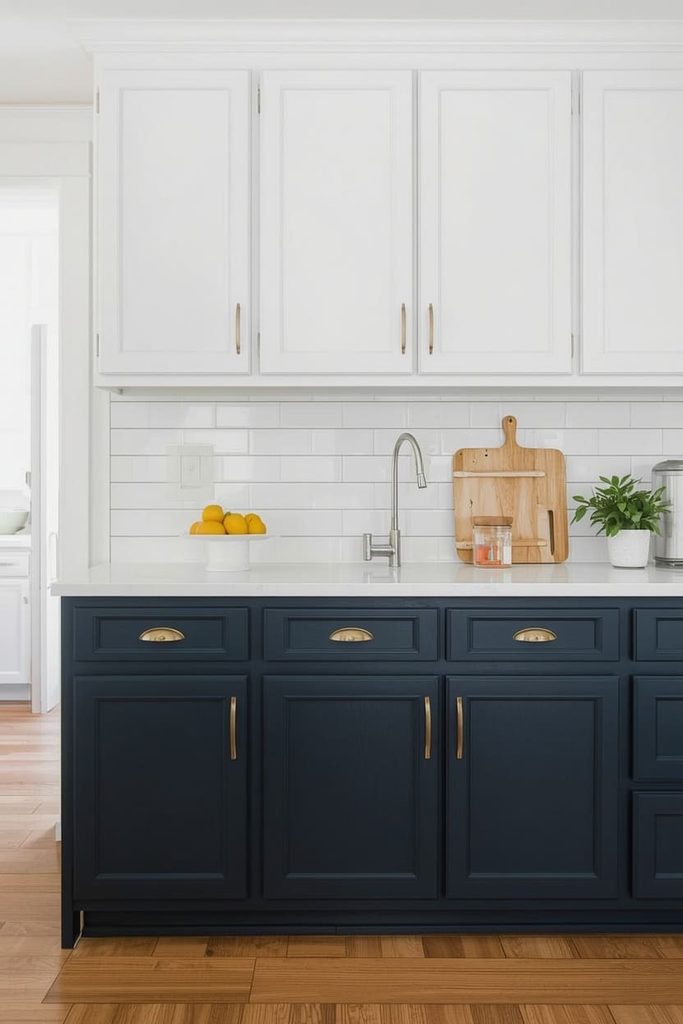
Two-tone cabinets are the fastest way to get a custom look without a custom budget. Paint your bottom cabinets navy, charcoal, or deep sage. Leave the top cabinets white or off-white.
This works because it grounds the room. White uppers keep the kitchen feeling open and bright, while the darker lowers add the depth that makes a farmhouse kitchen feel lived-in instead of sterile. I did this in a 1990s oak kitchen, and it hid decades of scuffs on the lower doors that would’ve shown on a lighter color.
You’ll need cabinet-grade paint or a mineral paint made for cabinetry, a bonding primer if your cabinets are laminate or heavily sealed wood, and painter’s tape for clean lines where the two colors meet. Budget $150–$300 in materials if you’re doing it yourself. A pro will run $1,500–$3,000 depending on cabinet count.
Sand lightly between coats. Skipping this step is the number one reason cabinet paint chips within a year.
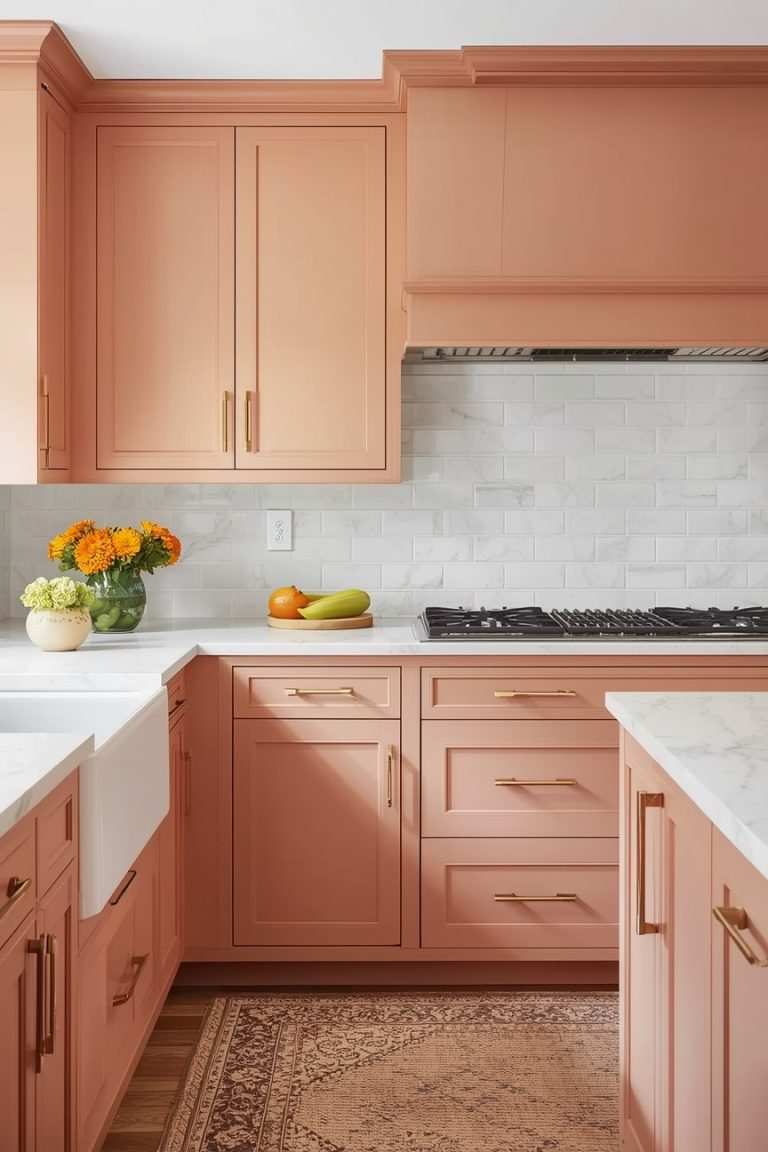
Swap Your Cabinet Hardware for Matte Black or Aged Brass Pulls
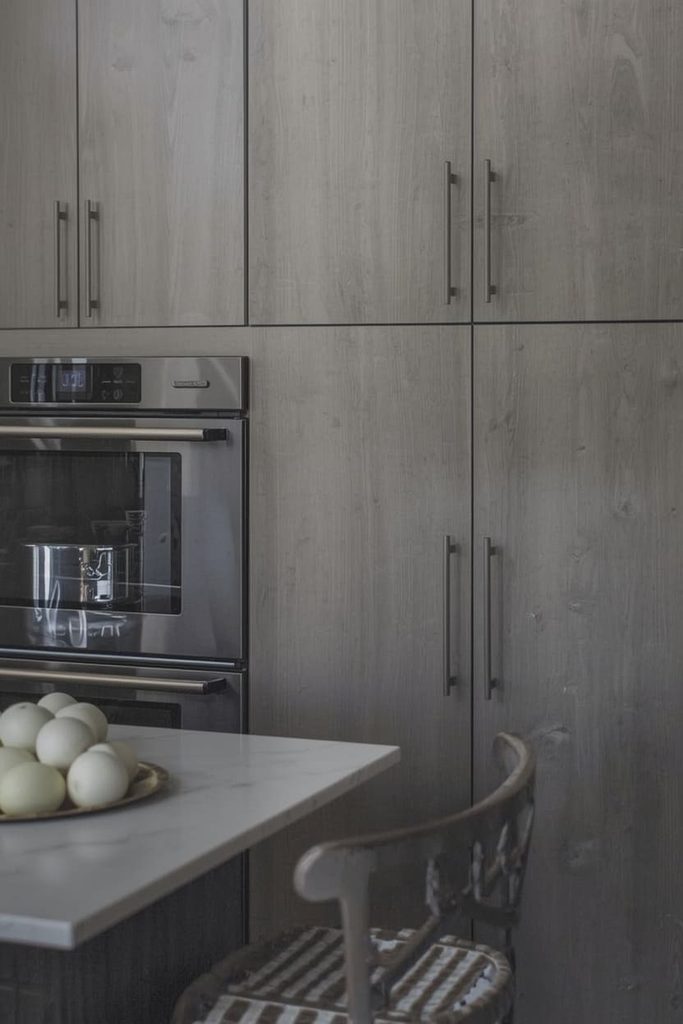
New hardware changes a kitchen more than almost any other five-minute fix. Pull off your old knobs, measure the hole spacing, and order pulls that match.
Hardware is the jewelry of your kitchen. Builder-grade brushed nickel knobs read as generic and dated. Matte black bar pulls or aged brass cup pulls instantly signal “updated.” I replaced mine on a Sunday afternoon with a cordless drill and a $40 hardware set, and it was the single best dollar-for-impact upgrade I made.
Check your existing hole spacing first — most cabinets use either single-hole knobs or two-hole pulls spaced 3 or 4 inches apart. Buying pulls with the wrong spacing means drilling new holes, which you want to avoid unless you’re also refinishing the doors.
Budget $50–$150 for a full kitchen’s worth of hardware. This is a project you can finish before dinner.
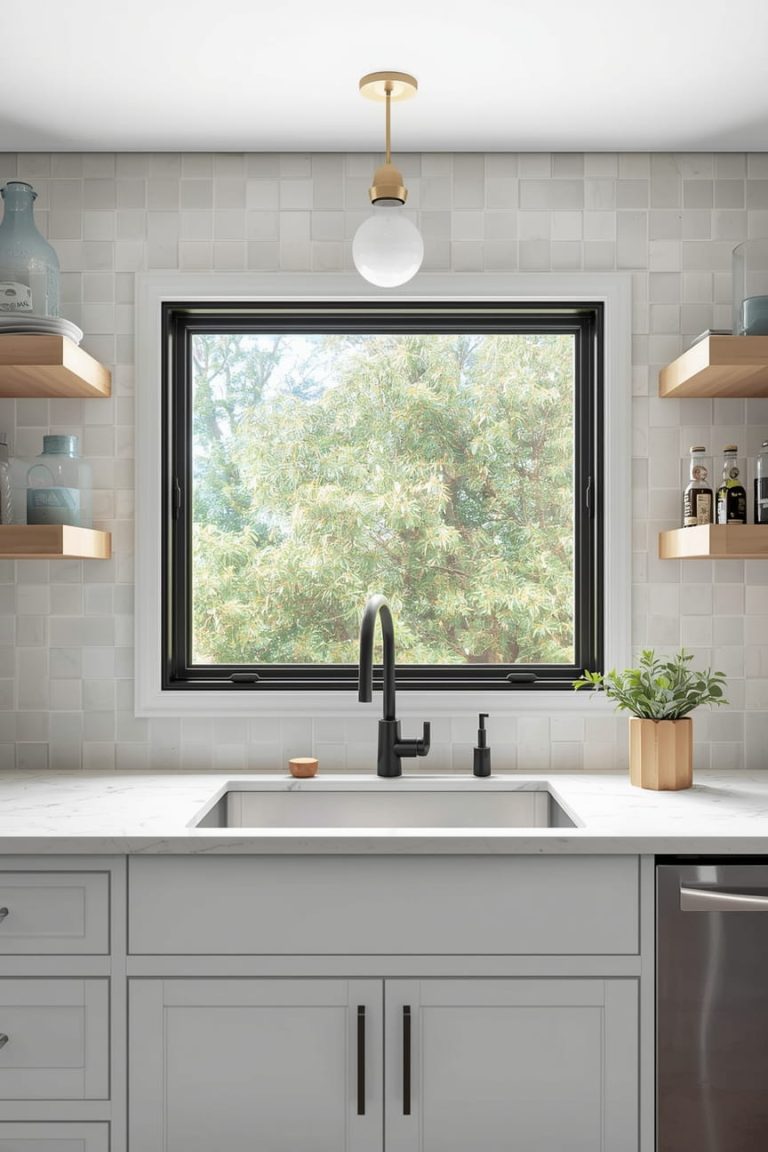
Add Open Shelving with Reclaimed Wood Brackets for a Lived-In Look
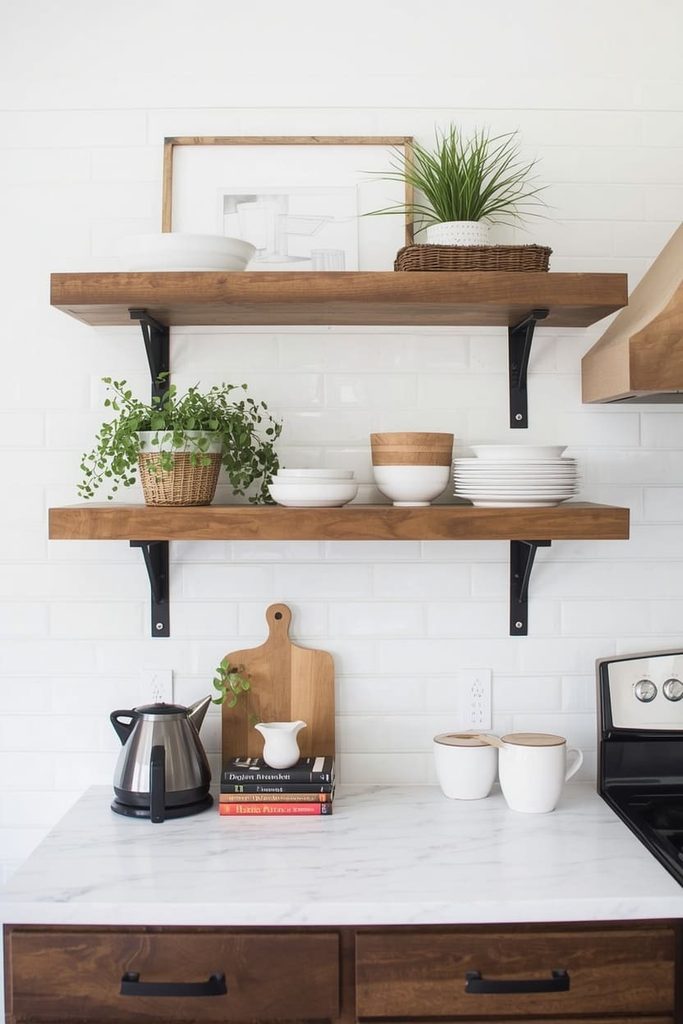
Remove one or two upper cabinet doors, or skip cabinets entirely on one wall, and install wood shelves with iron or dark wood brackets.
Open shelving does two things: it breaks up a wall of solid cabinetry, and it gives you a spot to style dishes, plants, or cookbooks that makes the kitchen feel personal. The trick is restraint. Overloaded shelves look cluttered fast.
You’ll need shelf brackets rated for at least 25–30 lbs per shelf, a stud finder (this is non-negotiable — drywall anchors alone won’t hold real dishware), and either reclaimed lumber or a pre-finished floating shelf. Sand and seal raw wood with a food-safe finish if it’s near your stove.
Materials run $80–$200 for two shelves. I learned the stud-finder lesson after my first shelf came loose under the weight of stacked bowls. Find the studs. Every time.
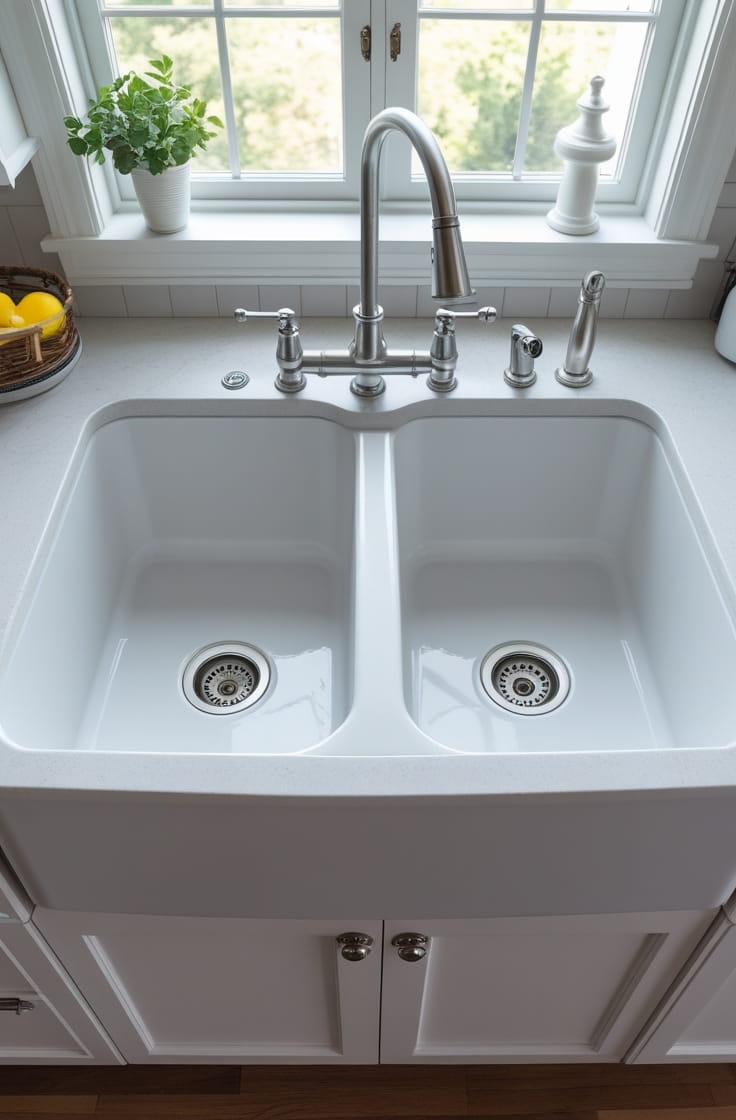
Install a Farmhouse Apron-Front Sink as Your Kitchen’s Anchor Point
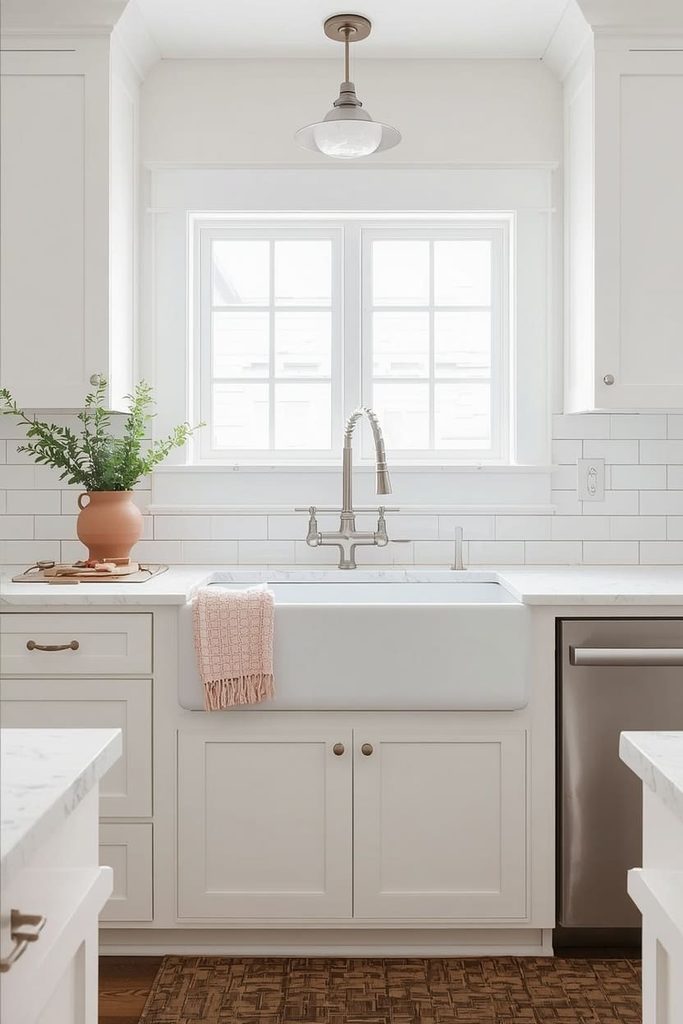
Replace your standard undermount sink with a deep apron-front (farmhouse) sink that extends past the cabinet face.
This single fixture does more visual work than almost anything else in the room. The exposed front panel is the defining feature of farmhouse style, and the extra depth is genuinely useful for washing sheet pans and stockpots.
You’ll need a cabinet base built or retrofitted for apron-sink dimensions, a compatible faucet with enough clearance, and a plumber unless you’re confident with supply lines and drain fittings. Fireclay and stainless steel are the two most common materials — fireclay holds up better to scratches, stainless is more budget-friendly.
Expect $600–$1,500 for the sink itself, plus $300–$800 in installation if you hire it out. Measure your existing cabinet opening before you buy; apron sinks are not a drop-in swap for standard sinks.
Mix Warm Wood Tones Into an Island or Open Shelf for Contrast
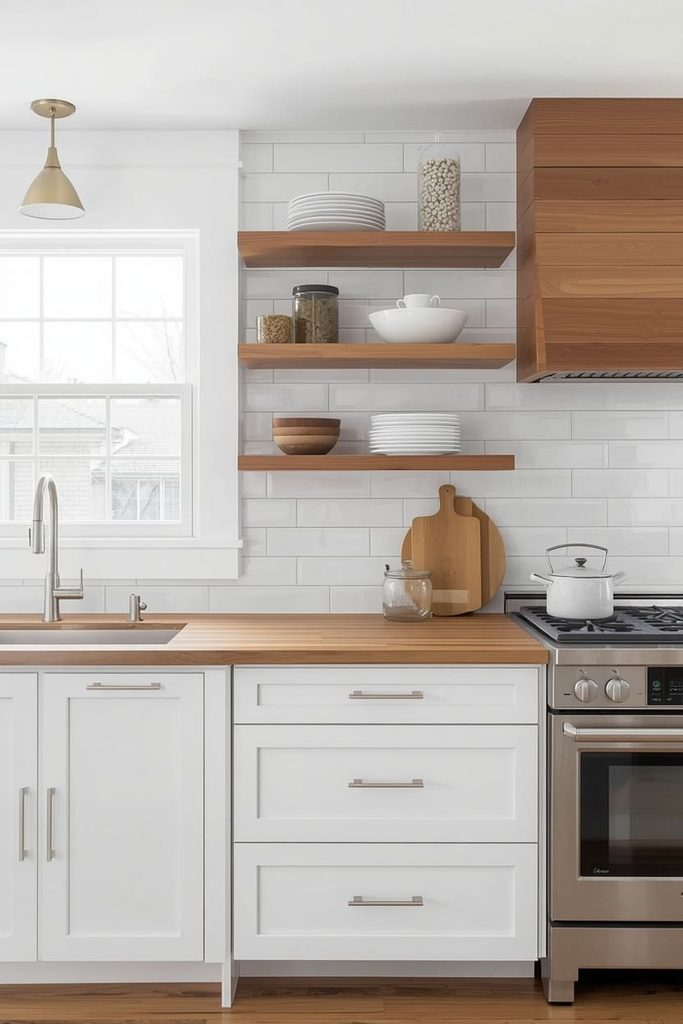
If your cabinets are painted white or a cool gray, bring in one warm wood element — a butcher block island top, a wood range hood cover, or open wood shelves.
This is the move that keeps modern farmhouse from tipping into cold and clinical. All-white kitchens can feel like a showroom. One warm wood surface adds the texture that makes a room feel like someone actually cooks there.
Butcher block runs $150–$400 for a standard island-sized piece, depending on wood species. Oil it every few months with food-safe mineral oil to prevent water rings — I skipped this for two months once and paid for it with a permanent stain near my sink.
Choose one wood tone and repeat it elsewhere in the room, even in a small way, like a cutting board or stools. Random wood tones scattered around read as mismatched, not curated.
Replace a Standard Range Hood With a Vented Wood or Shiplap-Wrapped Hood
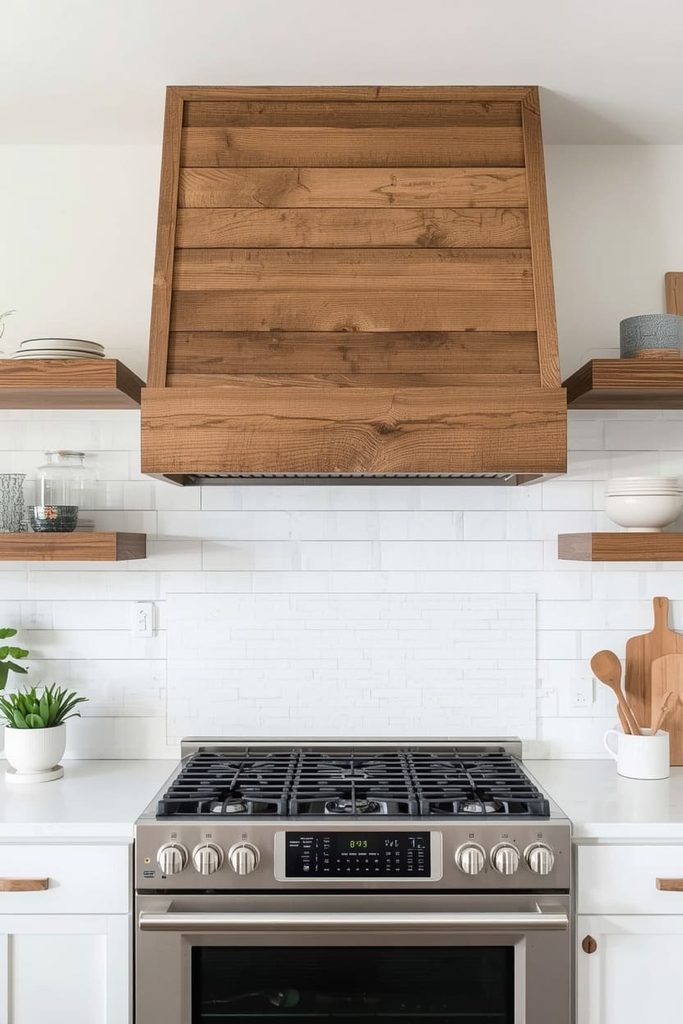
Build a simple wood or shiplap surround around your existing range hood insert to turn a builder-basic vent into a design feature.
A stock metal hood disappears into the room. A wrapped hood becomes a focal point above your stove, and it’s one of the most-repinned details in modern farmhouse kitchens for a reason — it looks custom even when it’s a weekend project.
You’ll need your existing hood insert’s dimensions, primed MDF or real wood boards, liquid nails or construction adhesive, and paint or stain to match your cabinetry. Make sure your insert still has proper clearance and ventilation before boxing it in — check your manufacturer’s spec sheet.
Materials cost $100–$250 if you’re building the surround yourself. A carpenter will charge $400–$900 for a custom build. This project took me a full Saturday, working alone, with basic tools.
Update Your Lighting With Black or Bronze Fixtures at Two Different Heights
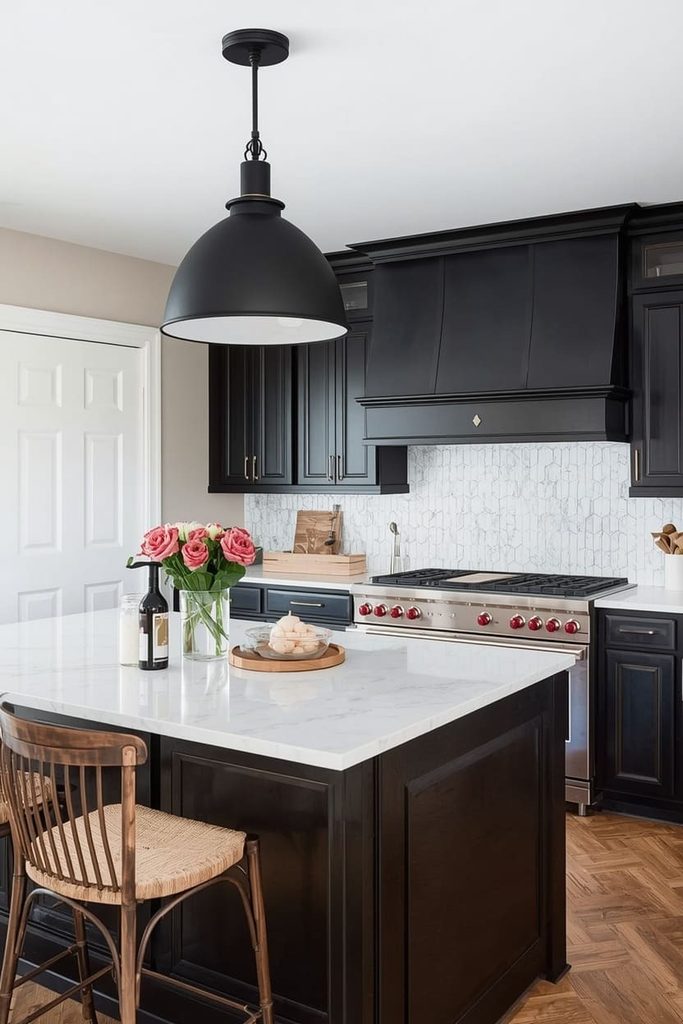
Layer your lighting with a statement pendant over the island and smaller sconces or a flush mount elsewhere, all in a matching black or bronze finish.
One overhead light flattens a room. Layered lighting adds depth and makes your kitchen feel finished rather than half-renovated. Matching finishes across fixtures ties the whole space together even if the fixture styles differ slightly.
You’ll need to check your junction box locations before buying — moving them requires an electrician and adds real cost. Choose fixtures in the same finish family (matte black, aged bronze, or oil-rubbed bronze) even if the shapes vary.
Budget $150–$400 for two to three fixtures if your electrical is already in place. If you need new wiring or box relocation, add $300–$700 for an electrician. I swapped mine without moving a single box, and the change alone made my kitchen photos look like a different room.
Frequently Asked Questions
How much does a modern farmhouse kitchen renovation actually cost? A full renovation typically runs $15,000–$40,000, depending on whether you’re keeping your existing layout or moving plumbing and electrical. Cosmetic updates alone — paint, hardware, lighting, a hood surround — can transform a kitchen for $1,000–$3,000.
Is modern farmhouse still trending, or is it dated now? The heavy, rustic version (barn doors, distressed everything) has faded. The cleaner version — simple lines, warm wood accents, black hardware — has held steady because it’s really just a warmer take on transitional style, not a passing trend.
Can I mix modern farmhouse with other styles I already have? Yes, and you probably should. Pure farmhouse can feel like a theme park if you go all in. Mixing in modern lighting, minimalist stools, or industrial accents keeps the look from feeling costume-y.
Does this style actually help with resale value? Real estate agents consistently point to updated kitchens as one of the highest-return renovations, and the neutral, timeless nature of modern farmhouse — white or muted cabinets, black hardware, natural wood — tends to appeal to a broad range of buyers rather than a narrow taste.
Which of these projects should I DIY versus hire out? Hardware swaps, open shelving, and hood surrounds are realistic weekend DIY projects with basic tools. Anything touching plumbing (the apron sink) or electrical (moved light fixtures) is worth hiring a licensed pro — the cost of fixing a DIY plumbing mistake usually exceeds what you would’ve paid to have it done right the first time.

Emily Harper is a kitchen decor expert and interior designer with a passion for creating stylish, functional spaces. As a busy mom, she understands the importance of a kitchen that works for both family life and design. With 6 years of experience, Emily specializes in transforming kitchens into inviting, practical spaces. She’s known for her ability to blend trends with everyday needs, helping families create kitchens that feel like the heart of the home.