
7 Blue and Green Curtain Ideas That Actually Work Together
I had a navy blue sofa I loved and no idea what to do with my windows. Every green curtain I considered felt like a gamble.
Would it clash with the blue? Would the room feel like two different color schemes fighting for attention instead of one cohesive space?
I almost played it safe with beige, again. Then I found a soft teal-green panel that pulled from both colors at once, and the moment it went up, the room finally felt pulled together instead of pieced together.
Blue and green, it turns out, were never fighting each other. They just needed the right introduction. Here are 7 ideas that helped me make it work.
5 Blue and Green Curtain Essentials Worth Adding to Your Living Room
- Botanical Leaf-Print Curtains in Blue and Green — This pattern blends both colors naturally in one fabric, making coordination effortless right out of the box.
- Teal Curtain Panels — A true blue-green hybrid shade that bridges both colors at once, ideal if you don’t want to choose between the two.
- Ombre Blue-to-Green Curtains — These panels transition gradually from blue to green, creating a soft, artistic gradient that ties both colors together in a single piece.
- Coastal-Inspired Patterned Curtains — Featuring wave or nature-inspired motifs in blue and green tones, these panels lean fully into a relaxed, beach-house aesthetic.
- Solid Green Curtains in a Cool Undertone — A cool-toned green, rather than a warm olive, pairs seamlessly with existing blue furniture or walls without any visual tension.
Choose a Botanical Print to Blend Blue and Green in One Fabric
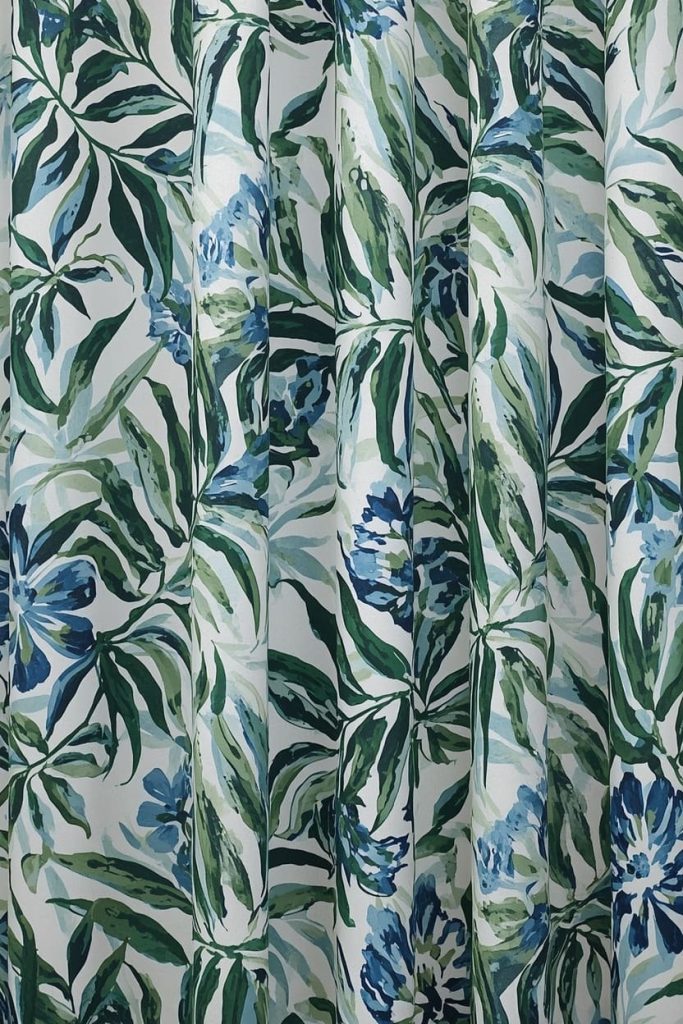
If you want blue and green without the guesswork of coordinating two separate elements, a botanical or leaf print does the work for you. These patterns naturally combine both colors within the same fabric, so instead of matching two different pieces, you’re simply hanging one curtain that already has the pairing built in.
This approach works particularly well because botanical prints pull directly from nature, where blue and green already coexist constantly, sky above, leaves and grass below, water reflecting both. That natural association is exactly why this combination feels so intuitive once you see it in fabric form, rather than risky or experimental.
My tip: look for prints where one color clearly leads and the other supports, rather than a pattern where both colors compete equally for attention. A predominantly green leaf print with blue floral accents, for example, reads as more sophisticated than a fabric where the two colors are in constant, equal competition. This is one of the easiest entry points into this color combination, since the hardest coordination decision has already been made for you within the fabric itself.
Pair Solid Green Curtains with Existing Blue Furniture
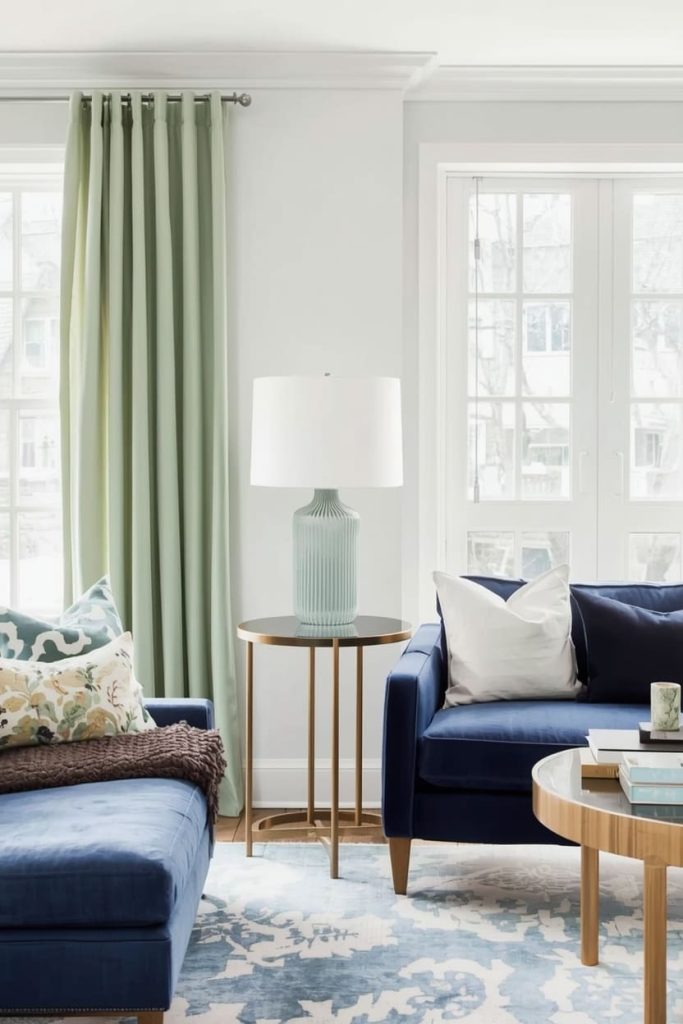
If you already have a blue sofa, rug, or accent wall, you don’t need a curtain that contains both colors. A solid green curtain, chosen thoughtfully, can complement your existing blue elements just as effectively as a blended pattern, while giving your room a cleaner, more intentional look.
This works because blue and green sit next to each other on the color wheel, making them naturally harmonious rather than competing. The key is choosing a green with the right undertone. A cool-toned green, leaning slightly blue itself, will feel far more cohesive against navy or teal furniture than a warm, yellow-based green like olive.
My tip: bring a fabric swatch or paint chip of your blue furniture with you when shopping for curtains, and hold it directly against green fabric options in natural light. Cooler greens like sage or a muted seafoam tend to pair most seamlessly with blue, while warmer greens can create unwanted visual tension. This approach lets your existing blue pieces stay exactly as they are while your curtains do the work of tying the room together.
Coordinate Blue Curtains with Existing Green Furniture
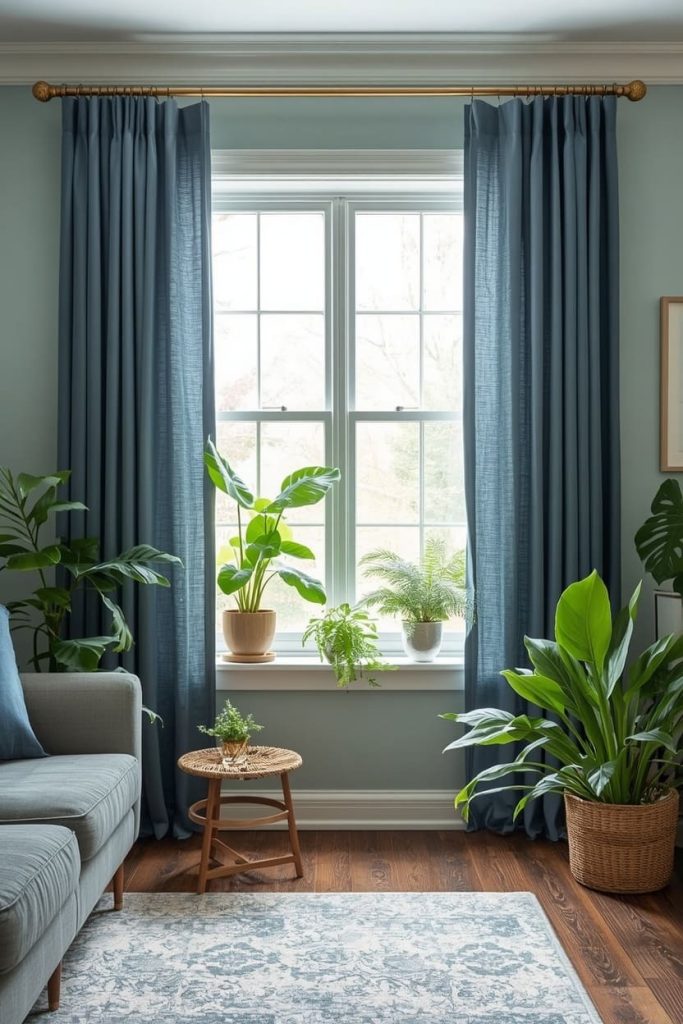
The reverse situation works just as well. If your living room already has green furniture, a green accent wall, or an abundance of plants, blue curtains can be the color that completes the pairing rather than the other way around. This is a common scenario for plant lovers whose living rooms are already green-heavy and want to introduce blue through their windows instead.
This works for the same reason the green-curtain approach does: blue and green are neighboring colors, so introducing blue against an already-green room creates a natural, calming transition rather than a jarring contrast. Blue curtains also bring a slightly cooler, calmer energy into a room that leans heavily green and warm.
My tip: choose a blue with some depth, like a soft navy or a muted teal, rather than a very pale or icy blue, which can feel disconnected from a warm, plant-filled green room. A slightly dustier or more muted blue tends to blend more naturally with greenery than a bright, saturated blue would. This direction works particularly well if your living room already has a strong biophilic, plant-forward feel and you want your curtains to extend that calming, nature-inspired palette.
Lean Into a Coastal Aesthetic for an Effortless Pairing
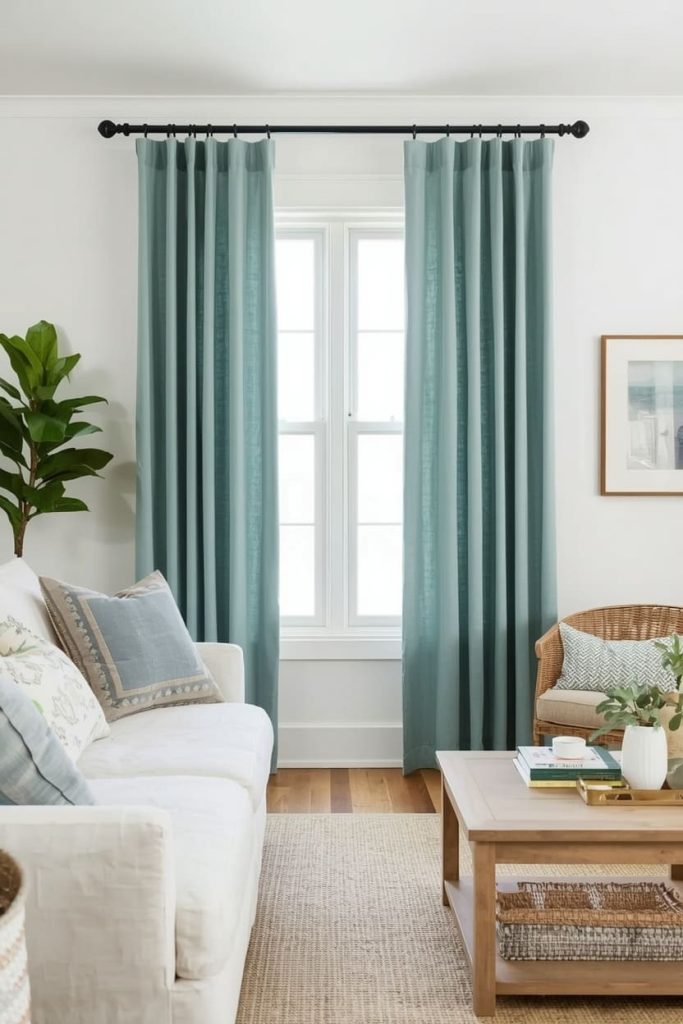
Few aesthetics embrace blue and green as naturally as coastal styling. This look draws directly from the beach, sky-blue tones, sea-glass greens, sandy neutrals, and weathered wood, making the blue-green curtain pairing feel less like a bold choice and more like an obvious, relaxed one.
This aesthetic works because it doesn’t ask blue and green to compete for the spotlight. Instead, both colors sit within a broader, softer palette that includes plenty of white, cream, and natural texture, letting the blue-green combination feel breezy rather than intense. It’s one of the most forgiving directions for this color pairing, since coastal styling is inherently relaxed and doesn’t require precision matching.
My tip: pair your blue-green curtains with natural materials like a jute rug, a light wood coffee table, and woven baskets to fully commit to the coastal feeling. Keep your walls in a soft white or warm cream to let the curtains stand out as the room’s clearest nod to the color scheme. This direction is especially popular for a reason: it’s nearly impossible to get wrong, since the whole aesthetic is built around effortless, low-pressure color harmony.
Try Teal as the Ultimate Blue-Green Bridge Color
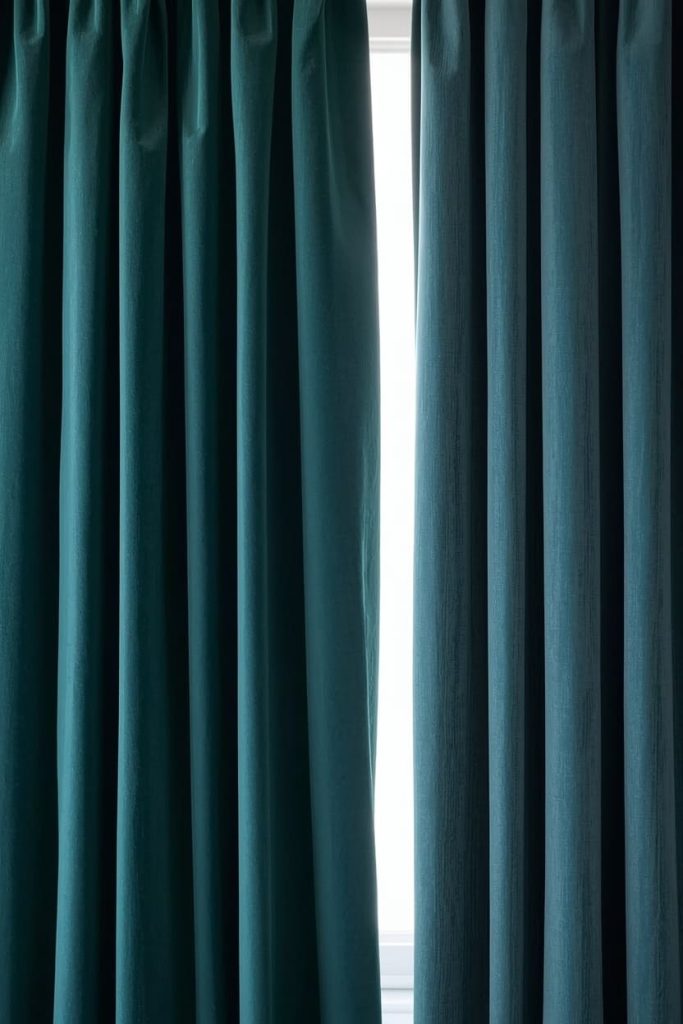
If you genuinely can’t decide between blue and green, or you want a single curtain color that captures both at once, teal is the answer. This shade sits directly between blue and green on the color wheel, meaning it naturally reads as both colors simultaneously, depending on the light and what’s around it.
This makes teal an incredibly versatile choice for a room where you’re not entirely sure which direction, more blue or more green, you eventually want to lean. It also pairs beautifully with either color individually, so if you later add a green accent chair or a blue throw pillow, your teal curtains will complement both without any adjustment needed.
My tip: choose a teal with some richness and depth rather than a very pale or washed-out version, since a deeper teal reads as a confident, intentional jewel tone rather than an uncertain in-between color. Teal also works beautifully in both velvet, for a richer, more dramatic look, and lighter linen or cotton, for a softer, more casual feel, so you can adjust the mood of the room through fabric choice while keeping the color constant.
Use Warm White or Cream Walls to Let Blue and Green Shine
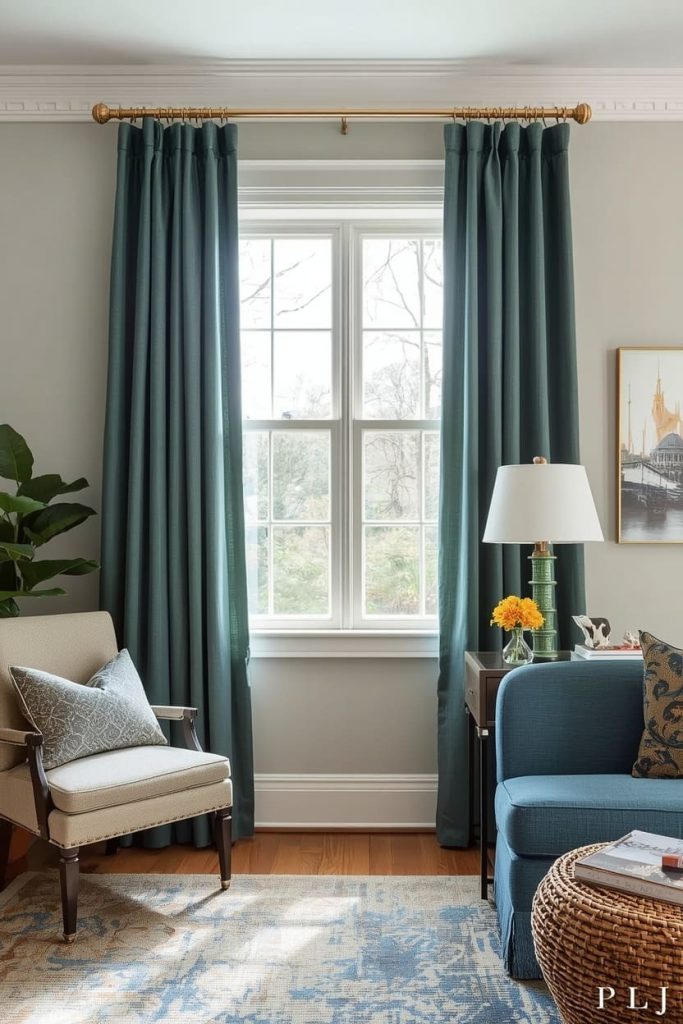
Wall color plays a quiet but important role in how well blue and green work together in your space. Cool gray or stark white walls can sometimes amplify the coolness of both colors, making the combination feel slightly clinical or flat. Warm white or cream walls, by contrast, add just enough warmth to balance the coolness of blue and green, letting both colors feel rich and inviting rather than cold.
This works because warm neutrals act as a buffer, softening the overall temperature of the room. Without that warmth somewhere, an entirely blue-and-green room can start to feel a little sterile, especially in spaces that don’t get much natural light.
My tip: if your walls are already a cool white or gray, you don’t necessarily need to repaint. Introducing warmth through wood furniture, brass hardware, or cream textiles can achieve a similar balancing effect. If you are considering a wall color change, a warm white or soft oat tone will do the most to make your blue and green curtains feel cohesive and lived-in rather than cold or overly matched.
Layer Textures to Keep the Combination from Feeling Too Busy
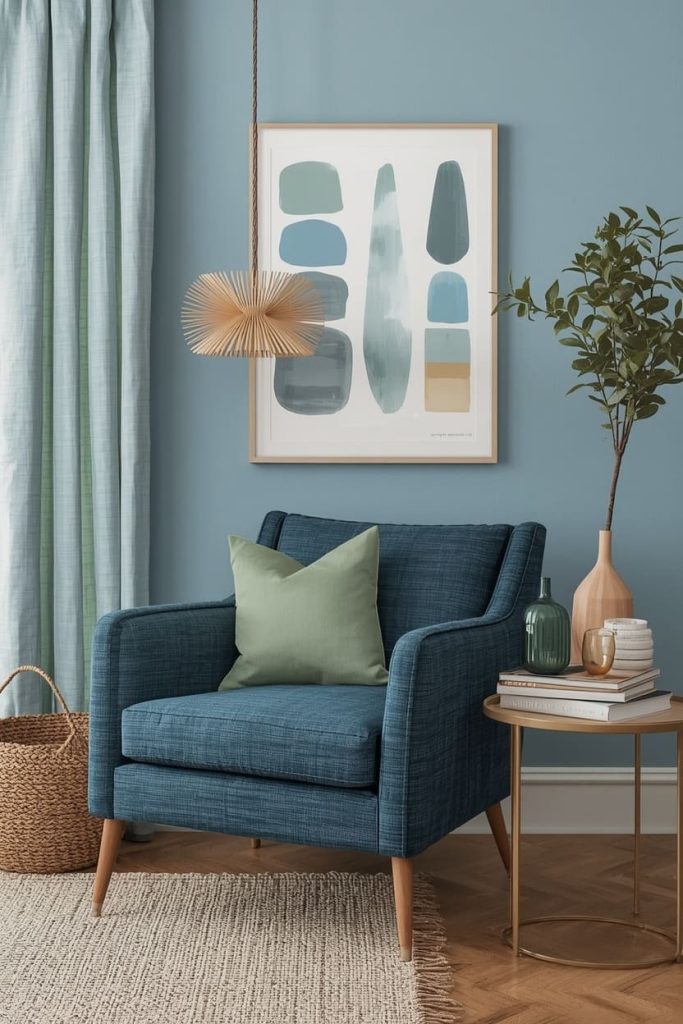
When you’re working with two colors instead of one, texture becomes even more important in keeping the room from feeling overwhelming or mismatched. Relying on flat, smooth fabrics throughout can make a blue-green room start to feel busy, especially if you’re also incorporating a pattern. Layering different textures helps organize the space visually, even when the color palette is doing a lot of work.
This matters because texture creates a sense of hierarchy. A smooth linen curtain, a chunky knit throw, and a woven jute rug all read as distinct elements, even within the same blue-green color family, which keeps the eye moving comfortably around the room instead of feeling stuck on competing colors.
My tip: if your curtains are patterned, keep your other blue and green elements solid and simple, like a plain teal throw pillow or a solid sage accent chair, rather than adding more pattern elsewhere. This creates breathing room within the color scheme. Texture, rather than additional pattern, is what keeps a two-color room feeling curated and calm instead of visually overwhelming.
Frequently Asked Questions
Do blue and green actually complement each other, or do they clash?
Blue and green are neighboring colors on the color wheel, which means they naturally complement each other rather than clash. The key to making them work well together is choosing shades with similar undertones, either both cool or both warm, so they feel harmonious rather than competing.
What shades of blue and green pair best together?
Navy or teal blue pairs beautifully with sage or seafoam green, since both combinations share a similar cool, muted undertone. Brighter, more saturated blues and greens can also work well together for a bolder, coastal-inspired look, as long as they’re balanced with plenty of neutral space elsewhere in the room.
How do I coordinate green curtains with a blue sofa, or the reverse?
Bring a fabric swatch of your existing piece with you when shopping, and compare it directly against curtain options in natural light to check the undertones match. A cool-toned green pairs most seamlessly with blue furniture, while a slightly muted or dusty blue works best against green furniture or an existing green accent wall.
What wall color works best with a blue and green color palette?
Warm white or soft cream walls work best, since they add balancing warmth to the natural coolness of both blue and green. Cool gray or stark white walls can sometimes make the combination feel slightly flat or clinical by comparison.
How do I keep blue and green curtains from feeling too busy or mismatched?
Choose one color to lead and let the other play a supporting role, rather than giving both colors equal visual weight throughout the room. Layering different textures, rather than adding more pattern or additional colors, also helps keep a blue-green room feeling calm, curated, and intentional.
Final Thoughts
You don’t need to choose between blue and green, and you definitely don’t need to worry they’ll clash. Start with one idea from this list, whether it’s a botanical print that blends both colors or a solid green curtain chosen to complement furniture you already love, and build the rest of the room from there.
Blue and green are two of the most naturally complementary colors you can bring into a living room, and once you find the right balance, they’ll feel like they were always meant to be together.

Emily Harper is a kitchen decor expert and interior designer with a passion for creating stylish, functional spaces. As a busy mom, she understands the importance of a kitchen that works for both family life and design. With 6 years of experience, Emily specializes in transforming kitchens into inviting, practical spaces. She’s known for her ability to blend trends with everyday needs, helping families create kitchens that feel like the heart of the home.