9 Linoleum Kitchen Flooring Ideas for Stylish Kitchens
When clients ask me for a kitchen flooring option that’s practical, stylish, and eco-conscious, I often surprise them with one answer: linoleum kitchen flooring. For years, linoleum was misunderstood and confused with vinyl, but today it’s making a strong comeback—and for good reason.
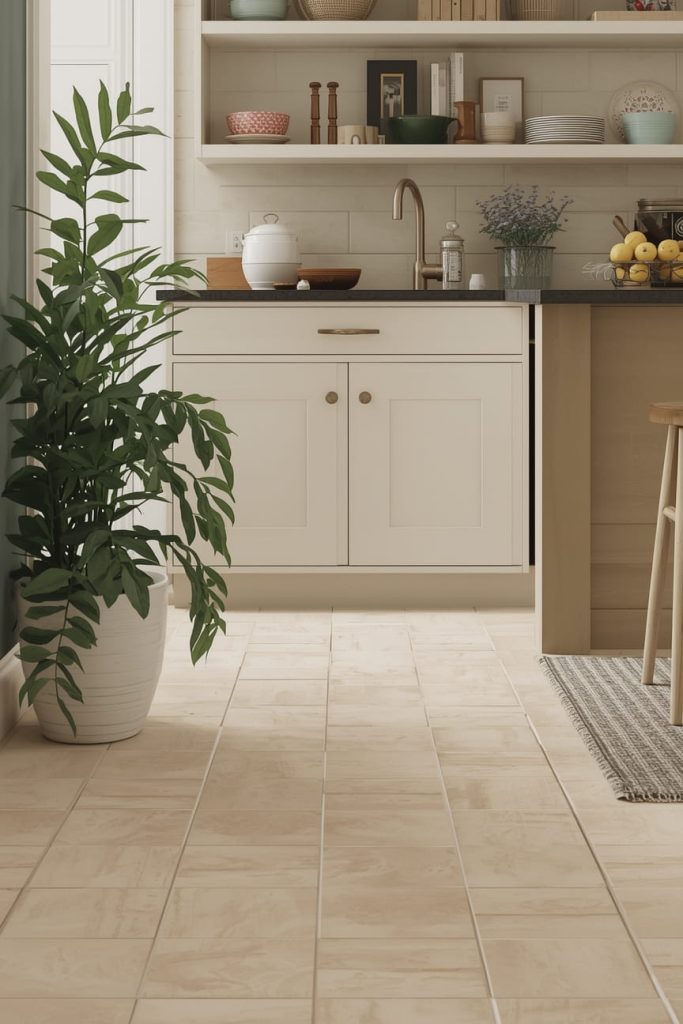
Linoleum kitchen flooring ideas offer durability, comfort underfoot, and a beautiful range of colors and patterns that suit both modern and retro kitchens. Made from natural materials like linseed oil, cork dust, and wood flour, linoleum is also one of the most eco-friendly kitchen flooring options available.
In this guide, I’ll walk you through 9 linoleum kitchen flooring ideas I genuinely recommend, based on real design experience and long-term performance in busy kitchens.
Table of Contents
- 1. Marmoleum Kitchen Flooring for Sustainable and Stylish Design
- 2. Sheet Linoleum Kitchen Floor for a Seamless, Easy-to-Clean Look
- 3. Linoleum Tile Kitchen Flooring for Flexible Design Patterns
- 4. Checkerboard Linoleum Kitchen Flooring for Retro Charm
- 5. Retro Linoleum Kitchen Floor Inspired by Mid-Century Design
- 6. Waterproof Linoleum Kitchen Flooring for Busy Households
- 7. Linoleum Flooring Patterns for Creative Kitchen Design
- 8. Linoleum Flooring for Small Kitchens That Need Visual Space
- 9. Budget Friendly Linoleum Kitchen Flooring That Lasts
- Why I Recommend Linoleum Kitchen Flooring
1. Marmoleum Kitchen Flooring for Sustainable and Stylish Design
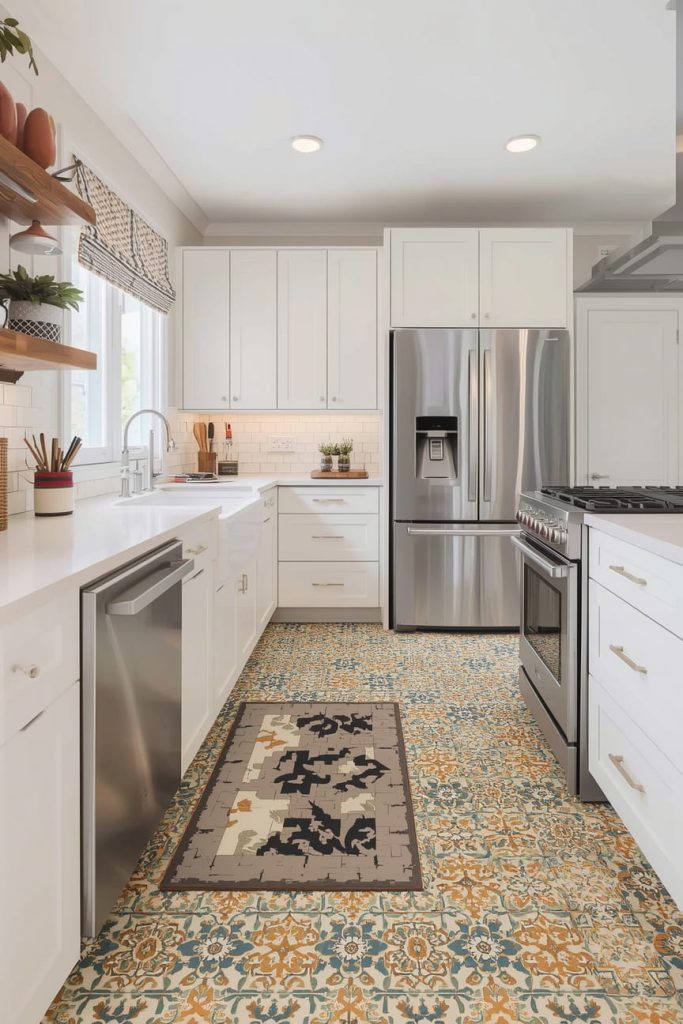
Marmoleum kitchen flooring is one of the best-known and highest-quality forms of natural linoleum, and it’s often my top recommendation for homeowners who value sustainability.
I love using marmoleum in kitchens because it’s made from renewable materials and offers incredible durability. It resists scratches, dents, and stains better than many people expect, making it perfect for high-traffic cooking spaces. From a design standpoint, marmoleum comes in soft neutrals, earthy tones, and bold modern colors.
If you’re planning an eco friendly kitchen flooring upgrade that doesn’t sacrifice style, marmoleum kitchen flooring is a smart investment.
2. Sheet Linoleum Kitchen Floor for a Seamless, Easy-to-Clean Look

A sheet linoleum kitchen floor is ideal for homeowners who want a clean, uninterrupted surface. I often recommend sheet linoleum for busy households because fewer seams mean fewer places for dirt and moisture to hide.
This option works beautifully in small kitchens, galley layouts, and open-concept spaces. Sheet linoleum kitchen flooring also feels softer and warmer underfoot than tile, which makes long cooking sessions more comfortable.
From minimalist kitchens to classic layouts, sheet linoleum provides a smooth, polished foundation that’s easy to maintain.
3. Linoleum Tile Kitchen Flooring for Flexible Design Patterns
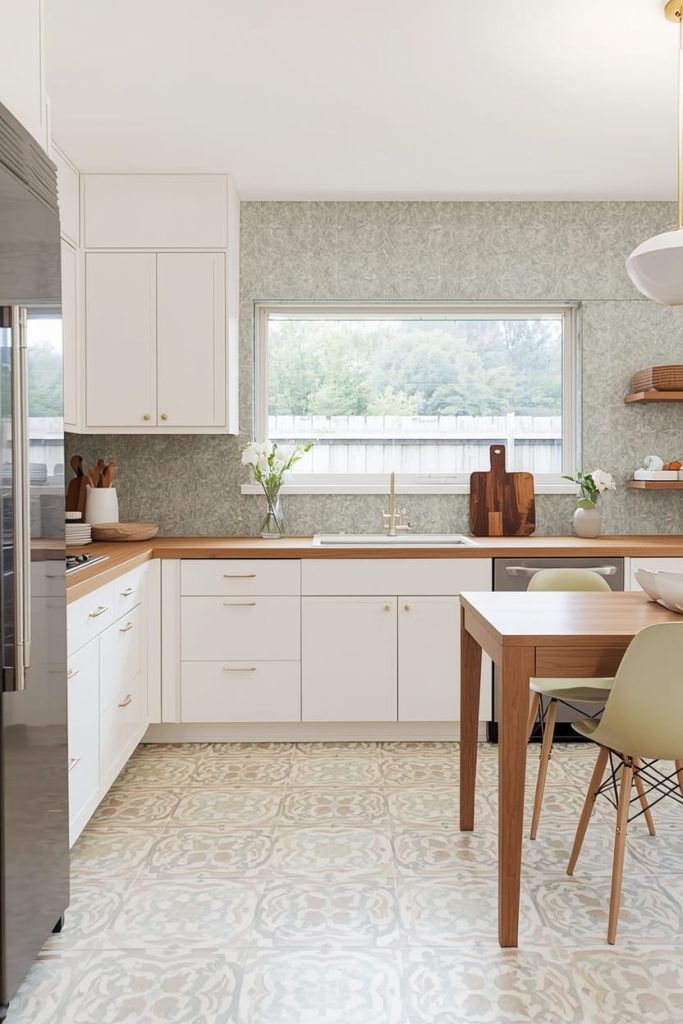
Linoleum tile kitchen flooring gives you more creative freedom than sheet flooring, which is why I often use it in custom kitchen designs. Linoleum tiles come in square and rectangular formats, allowing you to create borders, patterns, or color-blocked layouts.
I especially love this option for homeowners who want visual interest without overwhelming the space. You can mix neutral linoleum tiles with subtle accent colors or create a simple grid layout for a modern look.
Linoleum tile flooring also makes repairs easier, since individual tiles can be replaced without redoing the entire floor.
4. Checkerboard Linoleum Kitchen Flooring for Retro Charm
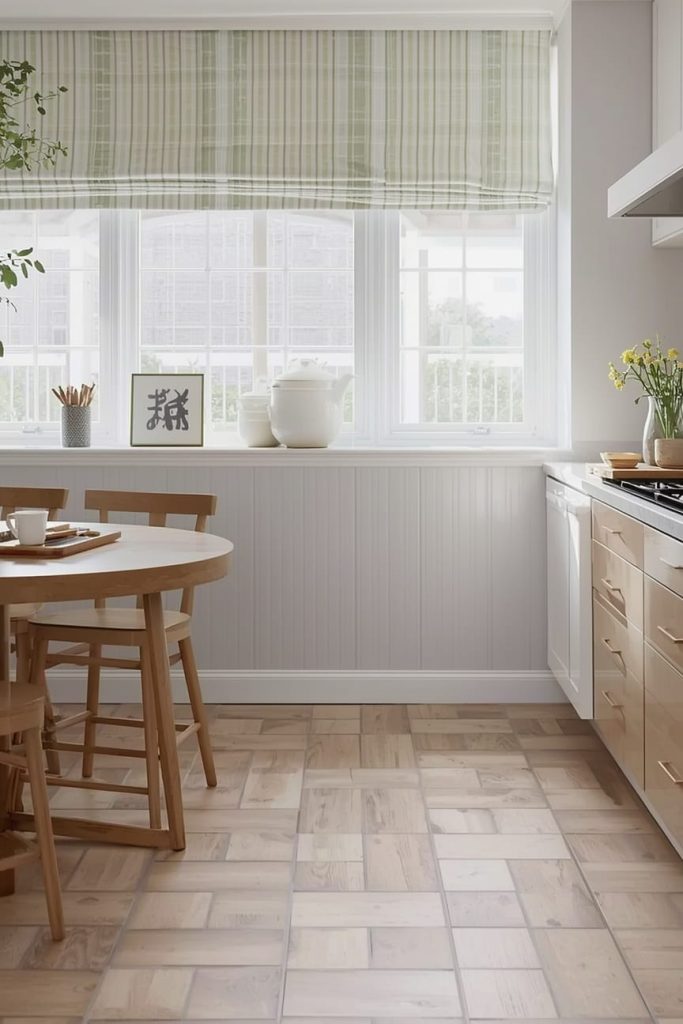
Checkerboard linoleum kitchen flooring is a timeless classic that never truly goes out of style. I frequently suggest this look for vintage, farmhouse, or retro-inspired kitchens.
Black-and-white checkerboard linoleum creates instant personality, while softer color combinations—like cream and gray or beige and white—feel more subtle and modern. This flooring style pairs beautifully with shaker cabinets, open shelving, and vintage-inspired hardware.
If you love nostalgic design with a practical twist, checkerboard linoleum kitchen flooring delivers charm and durability in equal measure.
5. Retro Linoleum Kitchen Floor Inspired by Mid-Century Design
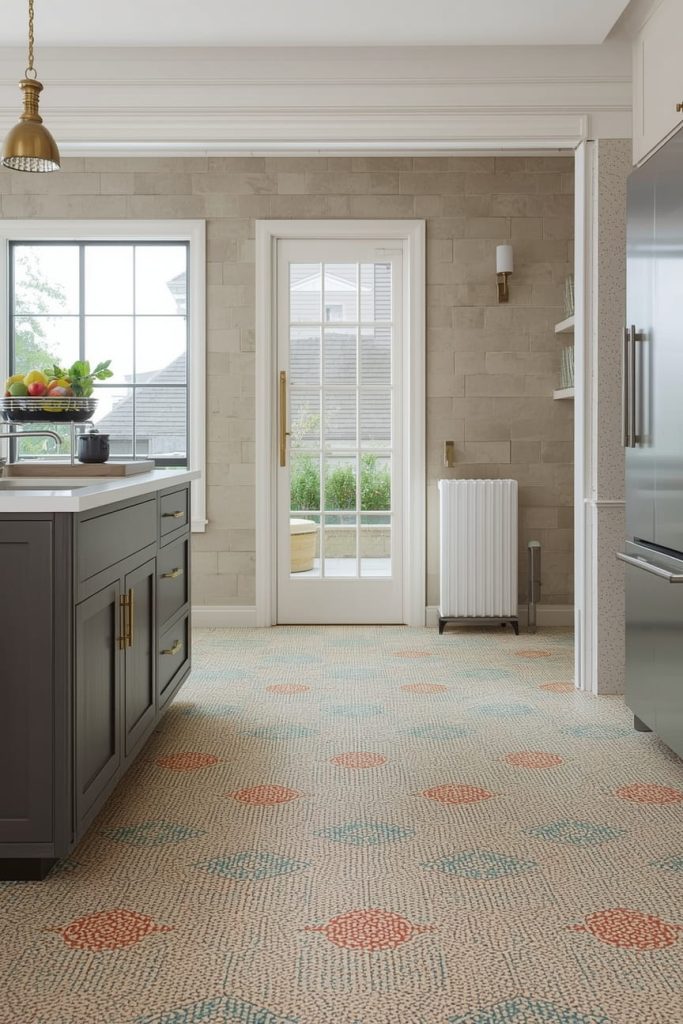
A retro linoleum kitchen floor is perfect for homeowners who want to celebrate color and pattern. I’ve used retro-inspired linoleum in several mid-century modern kitchens, and it always becomes a conversation starter.
From speckled designs to muted pastels and atomic-era patterns, retro linoleum flooring brings personality without sacrificing function. Modern linoleum products are far more durable and stain-resistant than older versions, so you get the look of the past with today’s performance standards.
This idea works especially well with flat-panel cabinets, bold backsplashes, and vintage-style appliances.
6. Waterproof Linoleum Kitchen Flooring for Busy Households
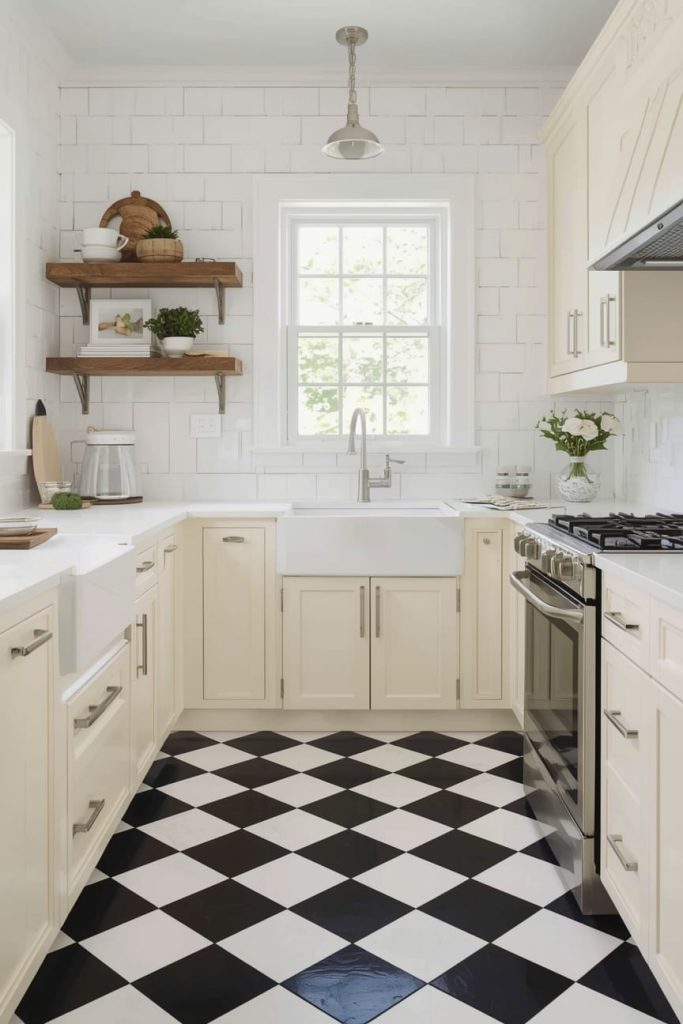
One of the biggest myths I still hear is that linoleum can’t handle moisture. In reality, waterproof linoleum kitchen flooring performs exceptionally well when installed and sealed properly.
I often recommend waterproof linoleum flooring for family kitchens, rental properties, and homes with pets. It handles spills, splashes, and daily wear far better than many people expect. Plus, it’s naturally antimicrobial, which is a huge bonus in food prep areas.
If you want durable kitchen flooring linoleum that stands up to real life, this option deserves serious consideration.
7. Linoleum Flooring Patterns for Creative Kitchen Design
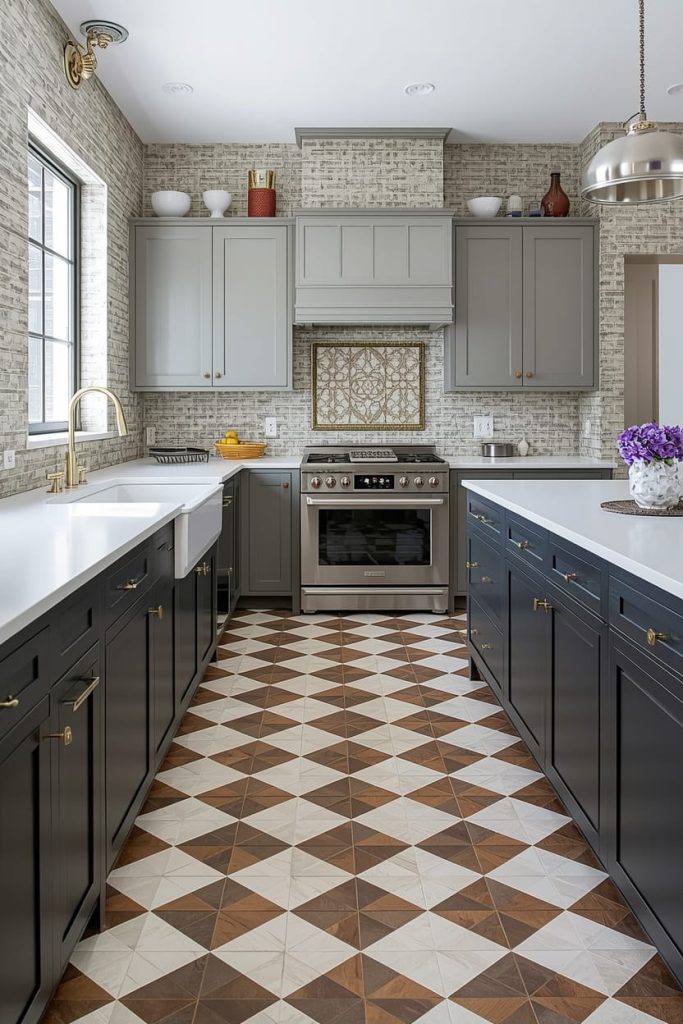
Linoleum flooring patterns offer endless design possibilities, which is why I enjoy working with them so much. From subtle marbling effects to geometric designs, patterned linoleum adds visual texture without overpowering the kitchen.
I often use patterned linoleum in neutral kitchens to introduce interest while keeping the overall palette calm. It works beautifully with white cabinets, wood countertops, and minimalist décor.
Patterned linoleum flooring is also great for defining zones in open kitchens, helping visually separate cooking and dining areas.
8. Linoleum Flooring for Small Kitchens That Need Visual Space
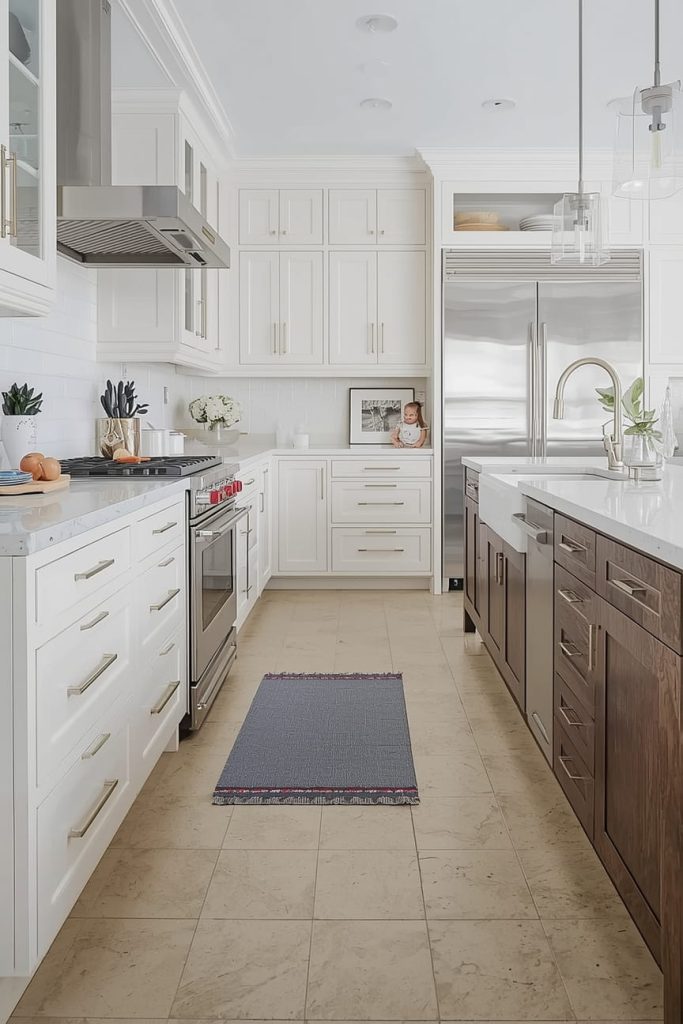
Linoleum flooring for small kitchens is one of my favorite problem-solving tools. Light-colored linoleum with minimal patterns helps visually expand compact spaces, making them feel more open and airy.
I usually recommend sheet linoleum or large-format linoleum tiles for small kitchens, as fewer seams create a more spacious look. Soft neutrals like cream, light gray, and warm beige work especially well.
For homeowners working with limited square footage, linoleum offers comfort, flexibility, and style without visual clutter.
9. Budget Friendly Linoleum Kitchen Flooring That Lasts
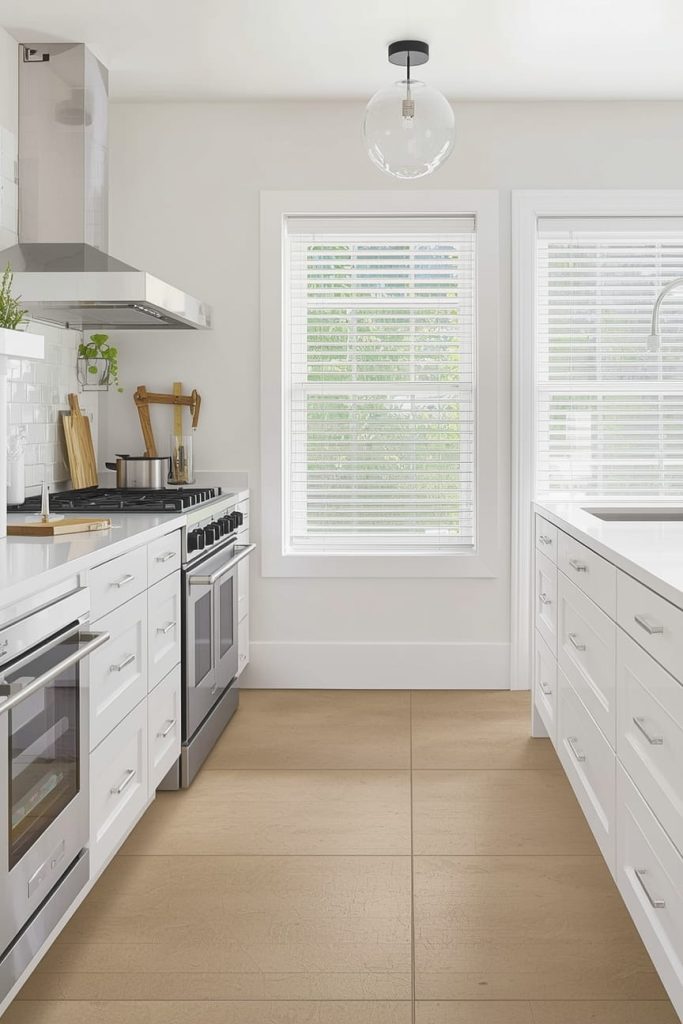
Budget friendly kitchen flooring doesn’t have to look cheap, and linoleum proves that. I often recommend linoleum to homeowners who want long-lasting performance without the price tag of stone or hardwood.
Compared to many alternatives, linoleum offers excellent value over time due to its durability and low maintenance needs. It’s easy to clean, resists wear, and maintains its color beautifully for years.
If you’re choosing between vinyl vs linoleum kitchen flooring, linoleum often wins for homeowners who value sustainability, comfort, and timeless appeal.
Why I Recommend Linoleum Kitchen Flooring
After years of working in kitchen decoration and makeover projects, I can confidently say that linoleum kitchen flooring ideas deserve more attention. Linoleum is comfortable underfoot, naturally antimicrobial, and incredibly versatile in design.
Whether you love the charm of a retro linoleum kitchen floor, the seamless look of sheet linoleum, or the creativity of linoleum tile kitchen flooring, there’s an option to match every style and budget.
When installed properly and cared for correctly, linoleum floors can last decades—making them one of the smartest long-term flooring investments for any kitchen.

Emily Harper is a kitchen decor expert and interior designer with a passion for creating stylish, functional spaces. As a busy mom, she understands the importance of a kitchen that works for both family life and design. With 6 years of experience, Emily specializes in transforming kitchens into inviting, practical spaces. She’s known for her ability to blend trends with everyday needs, helping families create kitchens that feel like the heart of the home.