11 Cream Kitchen Ideas: Timeless, Modern & Cosy Designs
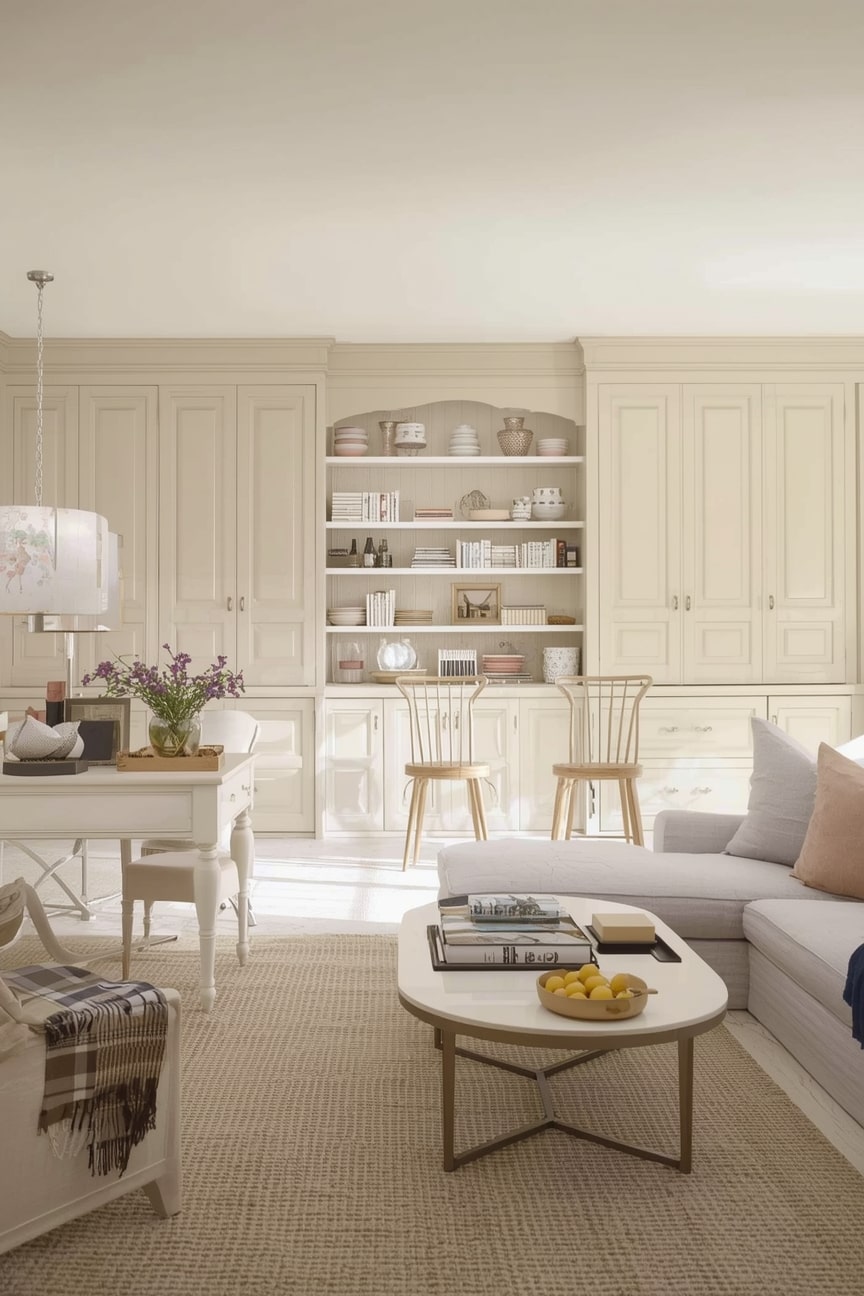
A cream kitchen is one of those design choices that never truly dates. Soft, warm, and endlessly versatile, cream offers a calming alternative to stark white while remaining light enough to keep a space feeling open and fresh.
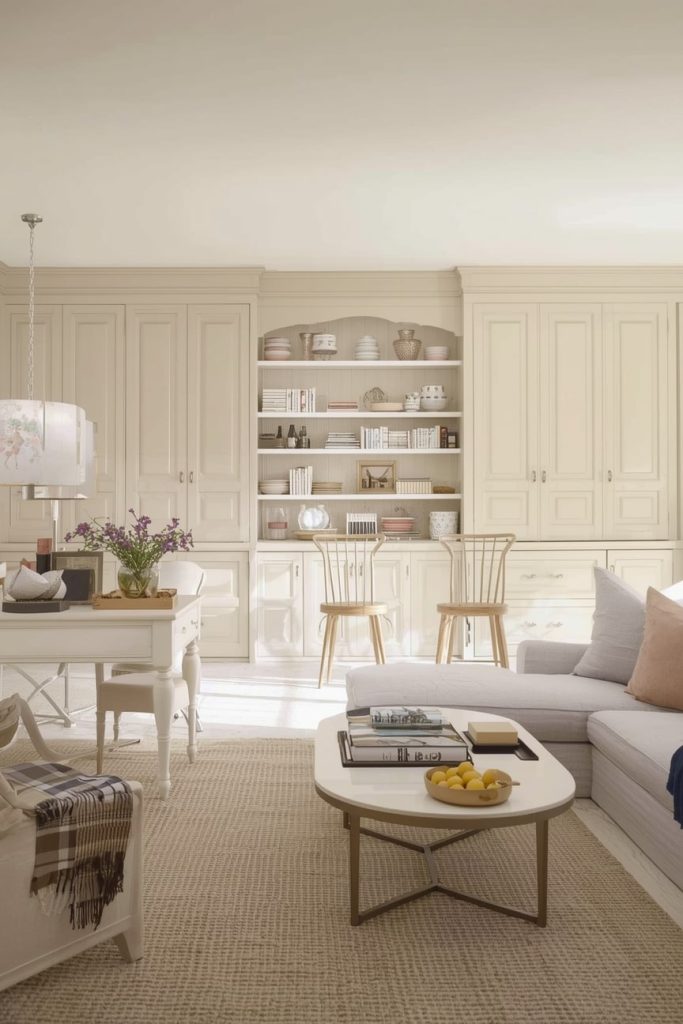
Whether you lean toward modern minimalism or classic country charm, cream provides a neutral foundation that adapts beautifully to a wide range of interiors. Today’s cream kitchens go far beyond a single shade, embracing new neutrals like Pebble, Parchment, and Fresh Linen to create depth and personality.
From compact layouts to expansive open-plan designs, cream kitchen ideas can be tailored to suit every home, lifestyle, and aesthetic while maintaining an elegant and welcoming atmosphere.
Table of Contents
- 1. Small Cream Kitchen Ideas
- 2. Modern Cream Kitchen Ideas
- 3. Cream Matt Kitchen Ideas
- 4. Cream Gloss Kitchen Ideas
- 5. Cream Shaker Kitchen Ideas
- 6. Two-Tone Cream Kitchen Ideas
- 7. Slab and Handleless Cream Kitchen Designs
- 8. In-Frame and Ornate Cream Kitchen Styles
- 9. Cream Kitchens in Open-Plan Spaces
- 10. Styling a Cream Kitchen for Warmth and Character
- 11. Hardware, Fixtures, and Finishing Touches
- Conclusion: Designing Your Perfect Cream Kitchen
1. Small Cream Kitchen Ideas
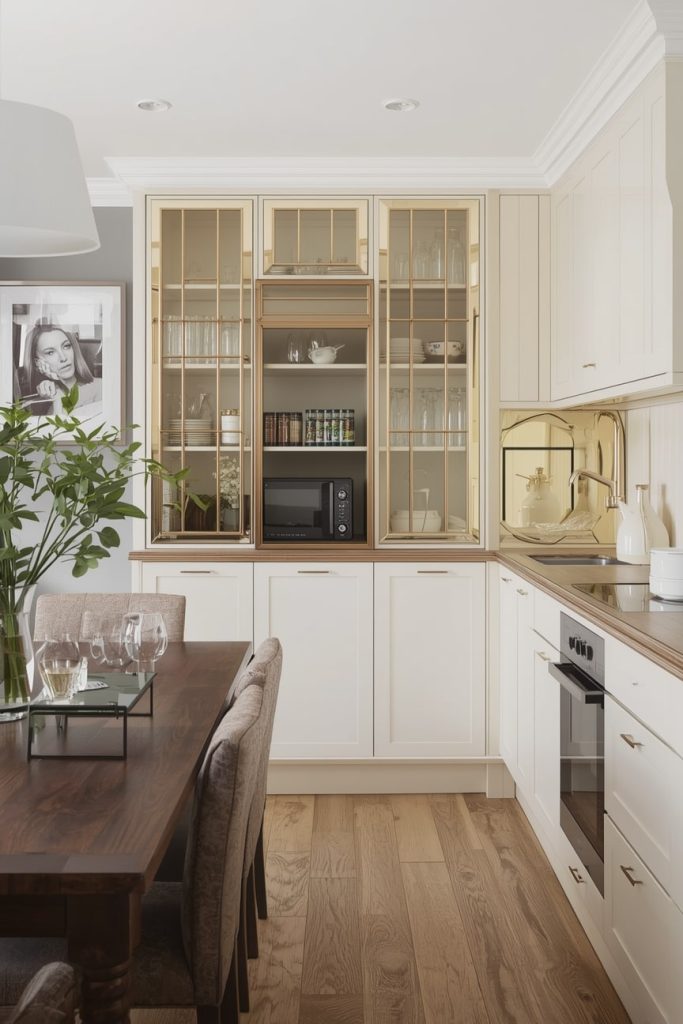
Designing a small cream kitchen is all about making the space work harder without compromising on style. Cream is particularly effective in compact kitchens because it reflects light and creates the illusion of a larger, airier room. When paired with clever layout choices and multifunctional elements, it can completely transform a smaller footprint.
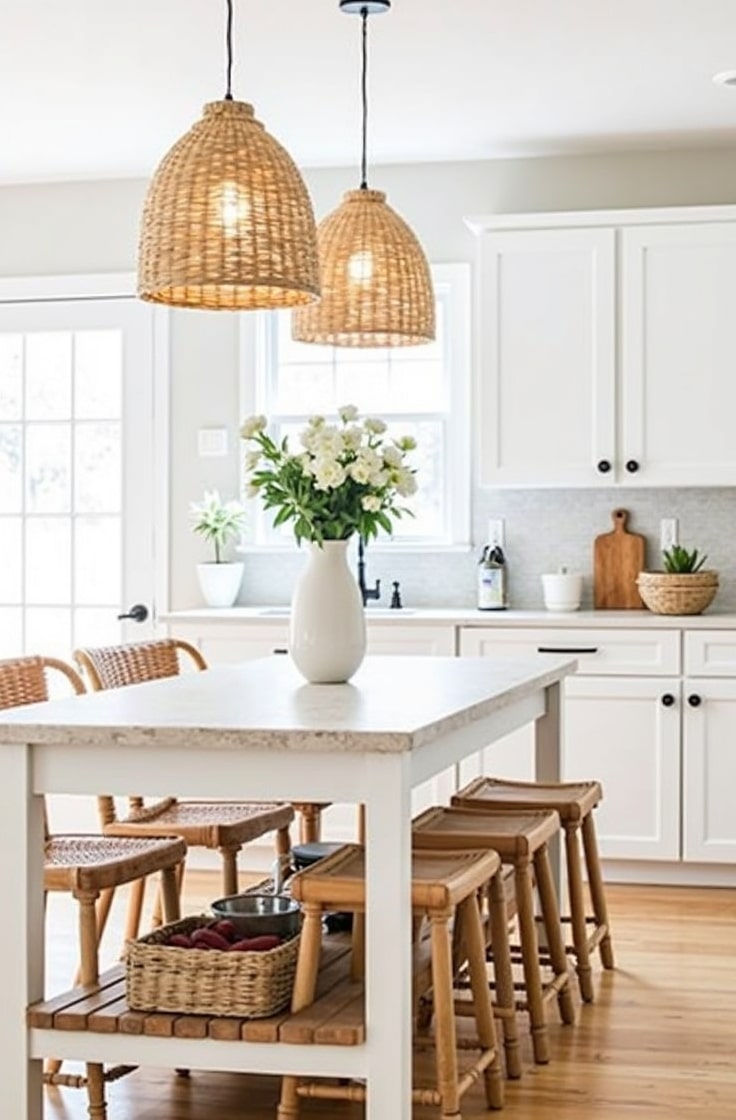
Maximising storage is key. Incorporating multifunctional furniture, such as kitchen islands with built-in shelves or drawers, helps keep surfaces clear while offering valuable storage for cookware and utensils. In tighter spaces, slimline islands or peninsula units can provide additional prep space without overwhelming the room. Seating should be flexible, with stools or chairs that tuck neatly underneath when not in use to preserve floor space.
Dual-purpose features also work beautifully in small cream kitchens. A dining table that doubles as a preparation area or a fold-out cutting board hidden within cabinetry allows the room to adapt to different needs throughout the day. Every element should earn its place while contributing to a calm, cohesive look.
Mirrors are another powerful tool in small cream kitchens. By reflecting both natural and artificial light, mirrors instantly make the room feel brighter and more open. Mirrored splashbacks, cabinet panels, or subtle reflective accents can be introduced without overpowering the design, enhancing the sense of space while maintaining a refined finish.
2. Modern Cream Kitchen Ideas
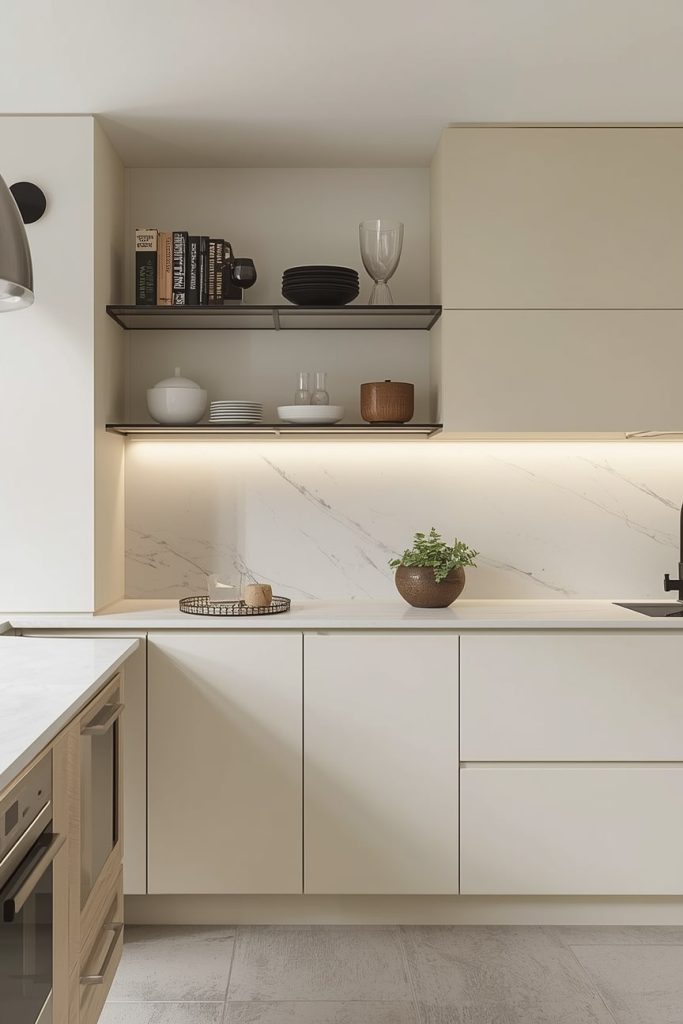
Modern cream kitchens strike a perfect balance between warmth and contemporary design. Instead of relying on a single shade, modern schemes often embrace a monochromatic palette, layering different tones of cream across cabinetry, walls, splashbacks, and worktops. This creates a cohesive, sophisticated look that feels intentional and polished rather than flat.
To add contrast and depth, cream can be paired with complementary neutrals such as soft whites, warm greys, or gentle beiges. These subtle variations prevent the space from feeling one-dimensional while preserving a clean, modern aesthetic. Minimalist finishes, streamlined cabinetry, and uncluttered surfaces help reinforce the contemporary feel.
Open shelving is a popular feature in modern cream kitchens, offering both functionality and visual interest. Floating shelves made from metal or glass introduce a light, architectural element that works beautifully with cream cabinetry. Styled thoughtfully with sleek dinnerware, glassware, or curated cookbooks, open shelving enhances the overall design while keeping the space practical.
Lighting also plays an important role in modern cream kitchens. Integrated LED strips under cabinets or shelves highlight textures and finishes, while statement pendant lights add character without overwhelming the calm palette. The result is a space that feels modern, elegant, and effortlessly inviting.
3. Cream Matt Kitchen Ideas
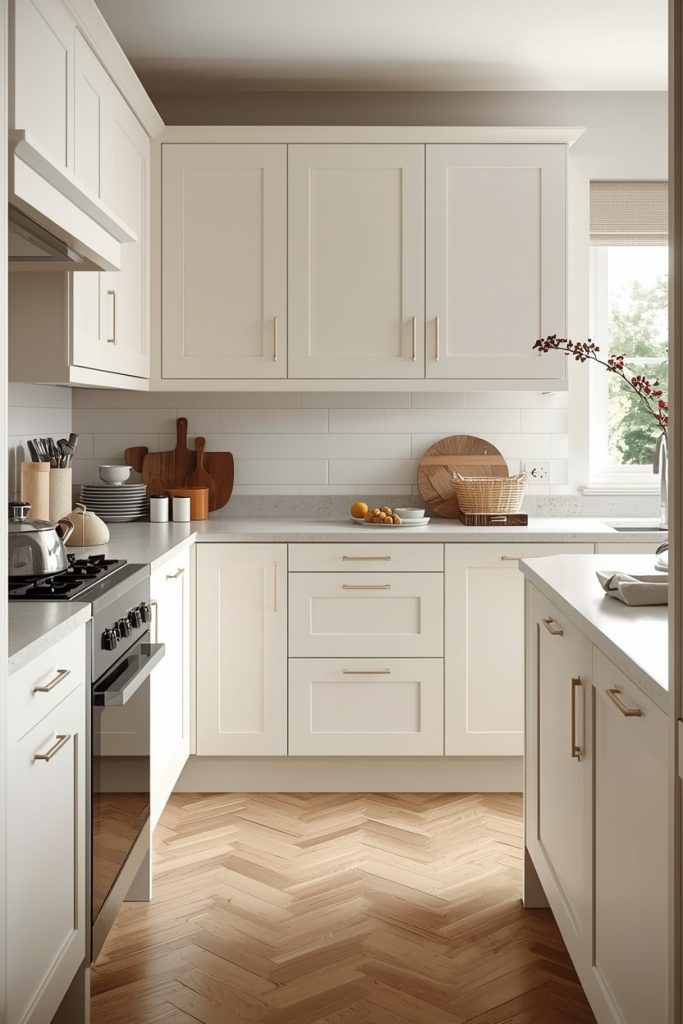
Matt finishes are a natural partner for cream kitchens, enhancing the colour’s inherent softness and tranquillity. A cream matt kitchen creates a velvety, tactile appearance that feels calming and understated, making it ideal for homeowners seeking a relaxed and serene cooking environment.
Unlike high-shine surfaces, matt cabinetry reduces visual distractions by absorbing light rather than reflecting it. This quality makes cream matt kitchens particularly appealing in busy households, where a more subdued aesthetic can bring a sense of balance and ease. The finish also allows other design elements, such as textures and materials, to take centre stage.
Cream matt kitchens work well in both modern and transitional interiors. In contemporary settings, they pair beautifully with handleless or slab-front cabinets, delivering a clean and minimalist look. In more traditional homes, matt finishes soften classic details and create a timeless appeal that feels warm rather than formal.
When styling a cream matt kitchen, natural materials such as wood, stone, or linen textiles help reinforce the calming atmosphere. Subtle contrasts in worktops or flooring add depth while preserving the overall sense of harmony. The result is a kitchen that feels restful, elegant, and thoughtfully designed.
4. Cream Gloss Kitchen Ideas
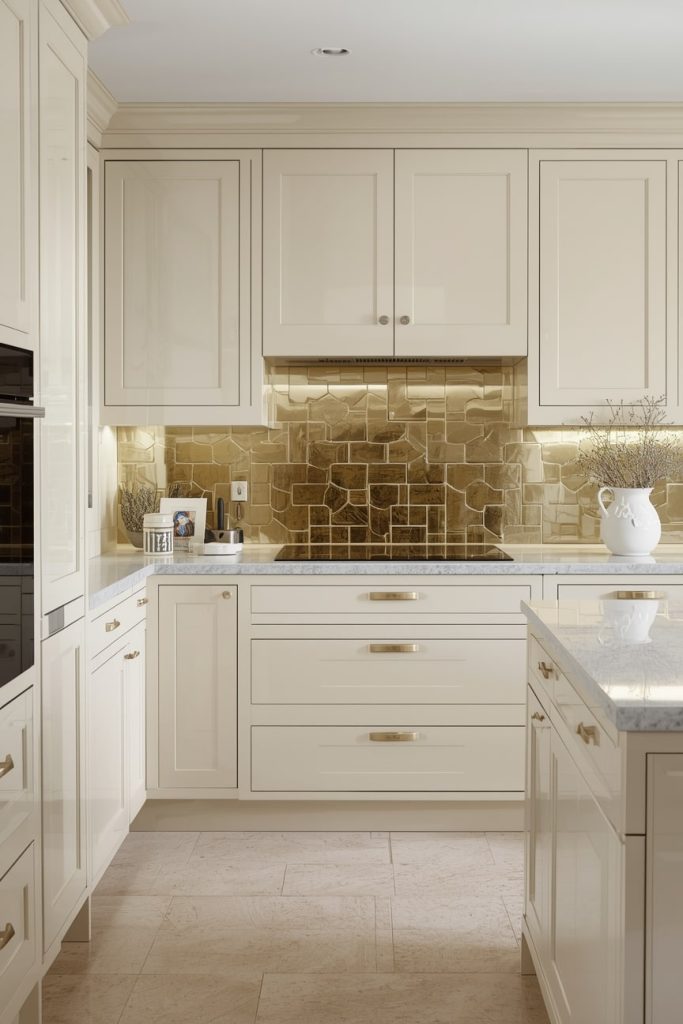
For those who love light-filled, polished interiors, cream gloss kitchen ideas offer a striking yet timeless solution. Glossy finishes reflect both natural and artificial light, making kitchens appear larger, brighter, and more dynamic. This quality is especially beneficial in smaller layouts or spaces with limited daylight.
In a cream gloss kitchen, the splashback becomes an opportunity to introduce personality. Bold materials such as geometric tiles, metallic finishes, or patterned designs create a focal point while complementing the sleek cabinetry. The reflective nature of these surfaces enhances the sense of luxury without overwhelming the room.
Worktops play an equally important role in gloss kitchens. Quartz and quartz-effect surfaces are a popular choice thanks to their durability, low maintenance, and refined appearance. Opting for cream-toned worktops with minimal veining maintains a seamless, contemporary look that pairs effortlessly with glossy cabinets.
Despite their modern feel, cream gloss kitchens remain timeless when styled thoughtfully. Balanced with understated hardware, neutral flooring, and soft lighting, they offer a sophisticated environment that feels fresh year after year.
5. Cream Shaker Kitchen Ideas
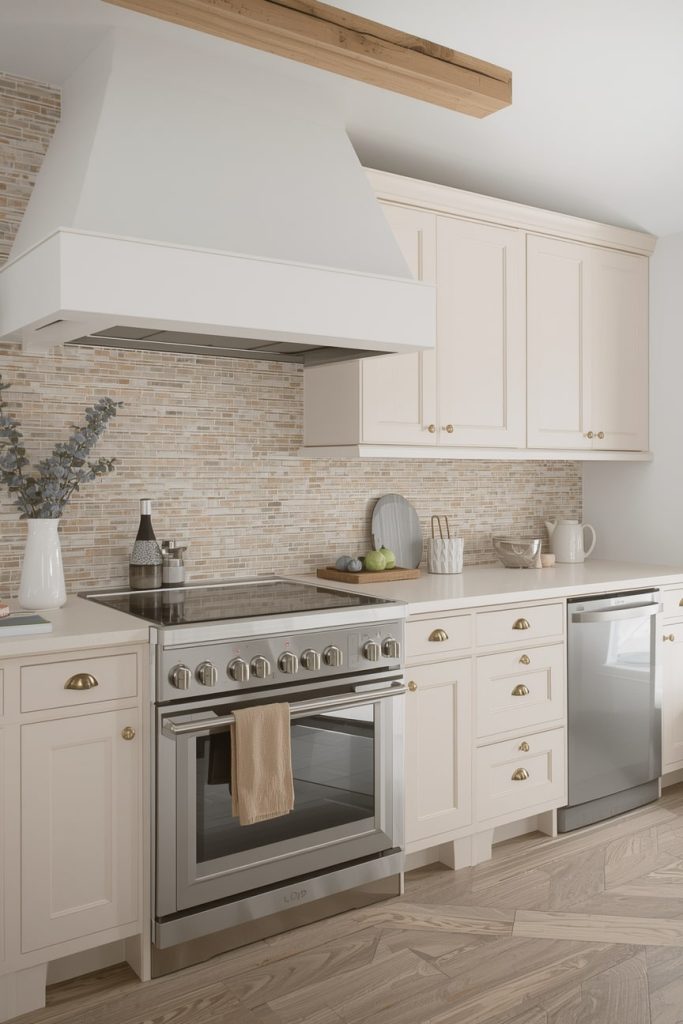
Cream Shaker kitchens are a celebration of classic design with enduring appeal. Defined by framed doors and clean, recessed panels, Shaker cabinetry brings structure and elegance to cream colour palettes. The result is a kitchen that feels both traditional and adaptable to modern living.
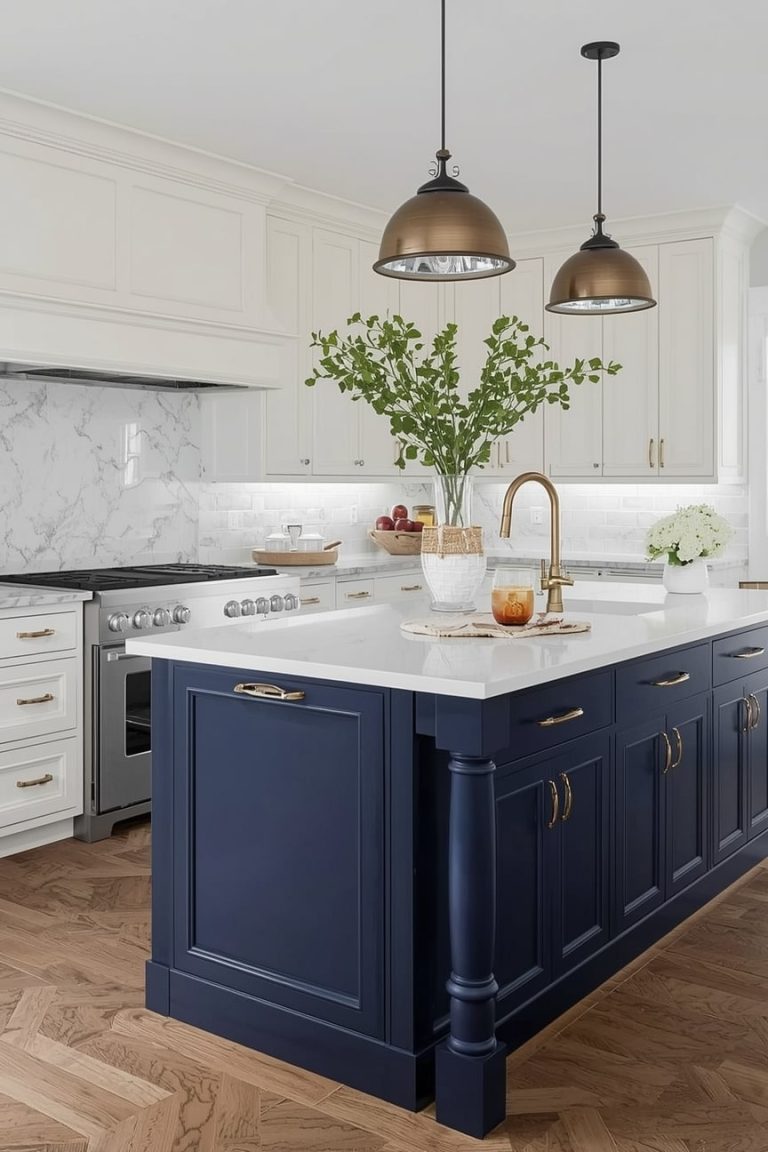
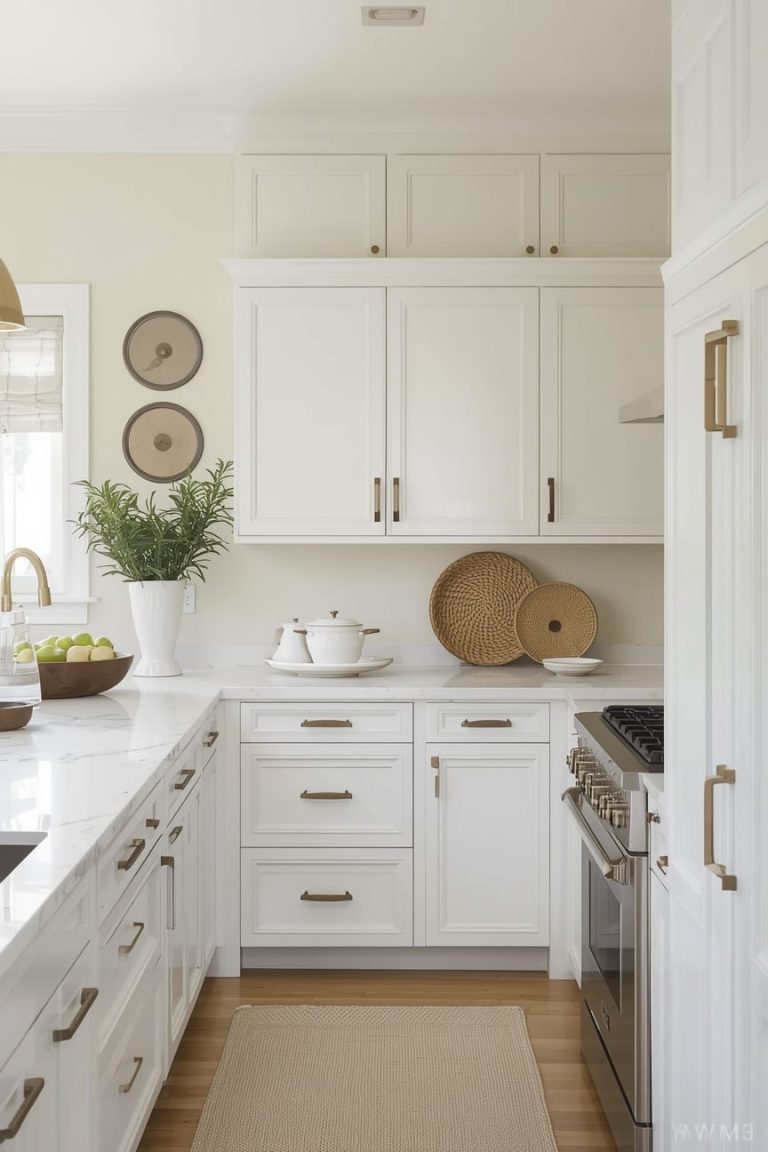
Cream and off-white tones enhance the simplicity of Shaker design, allowing details such as handles and worktops to stand out. Brass cup handles, knobs, or traditional pulls introduce warmth and a subtle sense of heritage, while darker accents can add contrast for a more contemporary twist.
One of the most appealing aspects of cream Shaker kitchens is their ability to create cosy, welcoming spaces. They are particularly well-suited to family homes, where the kitchen often serves as a central gathering place. Built-in banquette seating, rustic wooden tables, and soft furnishings transform the kitchen into a multifunctional hub for dining, working, and relaxing.
By blending classic cabinetry with modern appliances and thoughtful layout choices, cream Shaker kitchens offer timeless charm without sacrificing practicality.
6. Two-Tone Cream Kitchen Ideas
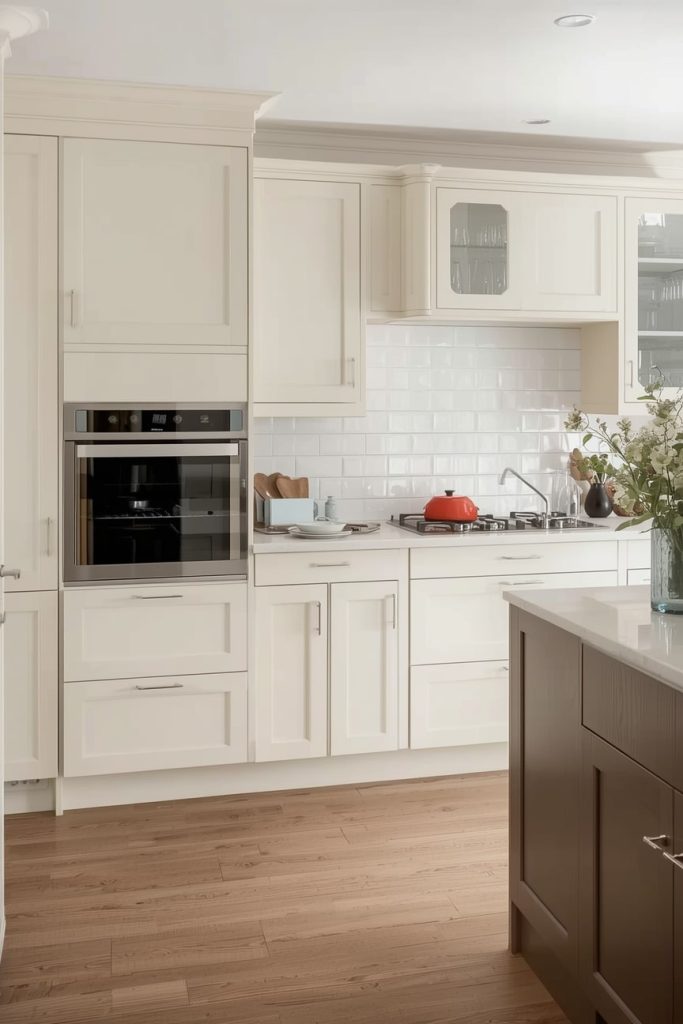
Introducing two tones into a cream kitchen is an effective way to add interest while maintaining a cohesive look. Tonal palettes offer a modern update, allowing homeowners to experiment with subtle contrasts rather than bold colour shifts.
Two-tone cream kitchens often combine lighter and deeper neutral shades across upper and lower cabinets, islands, or feature walls. This layering adds visual depth and helps define different zones within the space, particularly in open-plan layouts.
Minimalist hardware, such as j-pull or handleless designs, keeps the focus on the colour palette rather than the fittings. This approach ensures the kitchen remains sleek and contemporary, even when incorporating multiple tones.
The key to success with two-tone cream kitchens is balance. Keeping finishes consistent and limiting the palette to complementary shades ensures the design feels intentional and harmonious rather than busy.
7. Slab and Handleless Cream Kitchen Designs
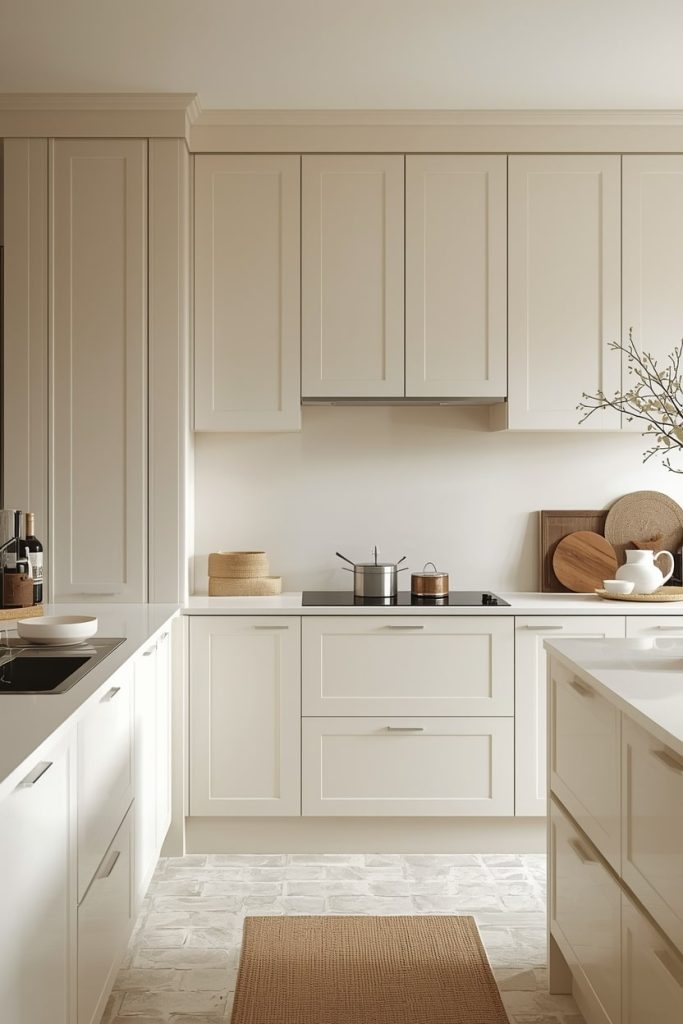
Slab-front and handleless cabinets are a natural fit for cream kitchens with a modern edge. Their smooth, uninterrupted surfaces create a clean canvas that allows the colour and proportions of the kitchen to shine.
In cream slab kitchens, simplicity is the defining feature. The absence of decorative detailing makes them easy to style, whether the goal is ultra-minimalist or softly contemporary. Handleless designs further enhance this effect, creating a streamlined look that emphasises architectural lines.
Cream tones soften the potentially stark nature of slab and handleless kitchens, ensuring the space remains welcoming rather than clinical. Paired with subtle textures, warm lighting, and carefully chosen accessories, these designs feel refined and livable.
8. In-Frame and Ornate Cream Kitchen Styles
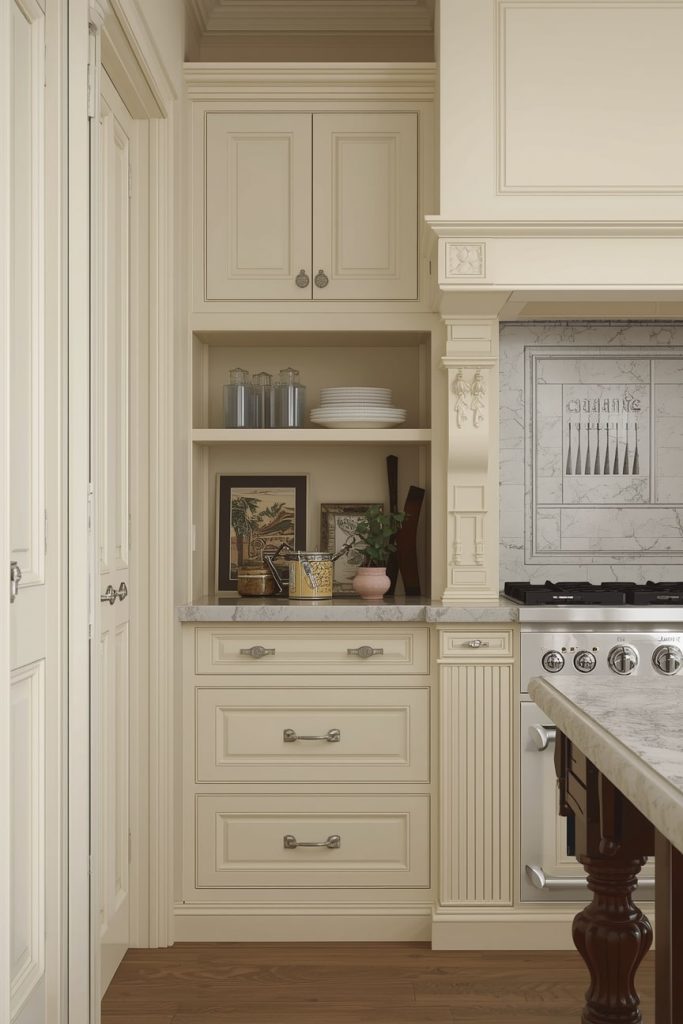
In-frame cabinetry brings a sense of craftsmanship and detail to cream kitchens. With doors set neatly within a visible frame, this style adds depth and structure, making it ideal for those who appreciate tailored, timeless design.
Cream works beautifully with in-frame and ornate styles, highlighting decorative elements without overpowering them. Subtle detailing, traditional mouldings, and classic proportions combine to create kitchens inspired by period homes while remaining practical for modern use.
These styles are particularly effective when paired with natural materials, such as stone worktops or timber flooring, which enhance the sense of heritage and warmth.
9. Cream Kitchens in Open-Plan Spaces
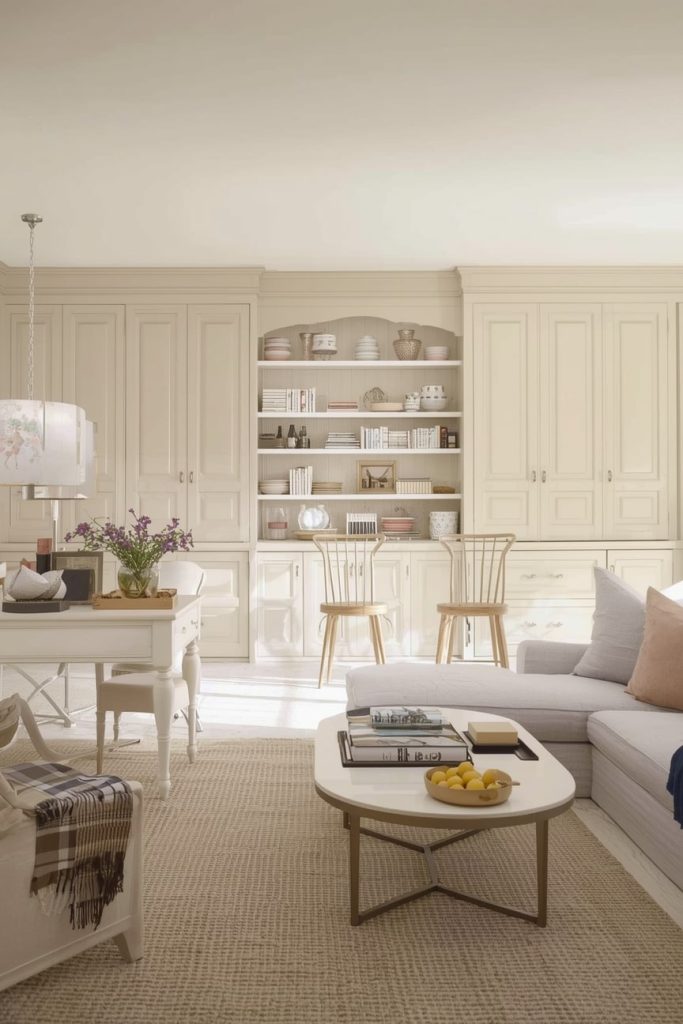
Open-plan living demands a kitchen design that flows seamlessly into surrounding areas, and cream is perfectly suited to this role. Its neutral warmth creates continuity between cooking, dining, and living zones without dominating the space.
In open-plan layouts, cream kitchens help establish a serene, cohesive environment. By repeating tones across cabinetry, walls, and furnishings, the kitchen becomes an integral part of the wider living area rather than a separate zone.
Thoughtful lighting and subtle contrasts define different functions while preserving an overall sense of calm and openness.
10. Styling a Cream Kitchen for Warmth and Character
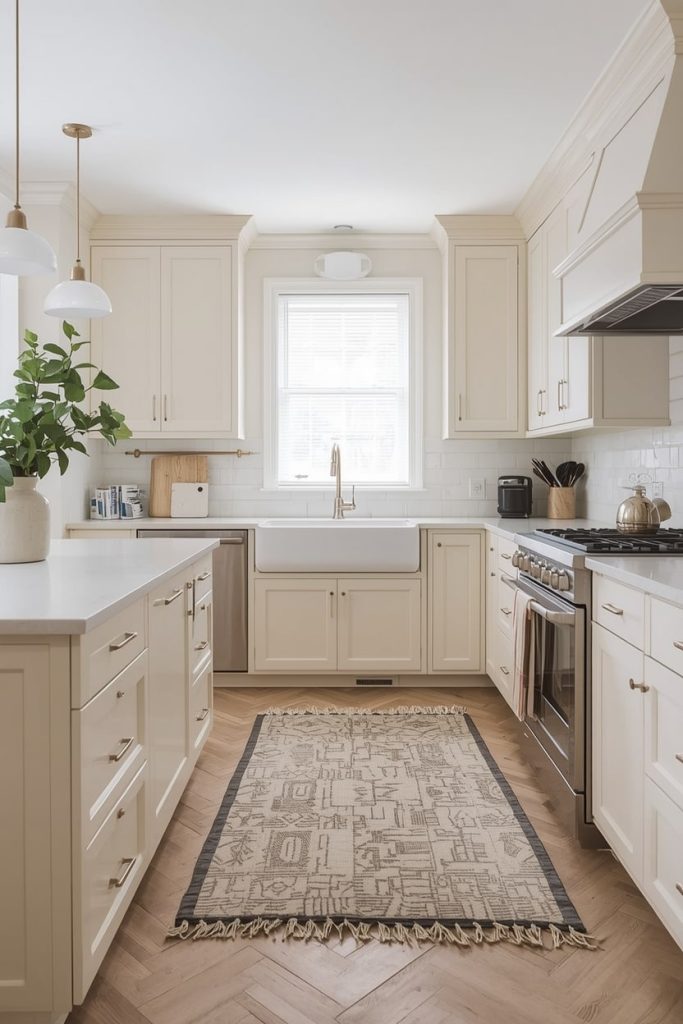
Styling is where cream kitchens truly come to life. Pairing cream cabinetry with natural wood textures, herringbone or chevron flooring, and soft textiles adds warmth and personality.
Accessories such as rugs, cushions, and foliage introduce colour and texture without overwhelming the neutral base. These elements can be updated easily, allowing the kitchen to evolve over time while maintaining its timeless foundation.
11. Hardware, Fixtures, and Finishing Touches
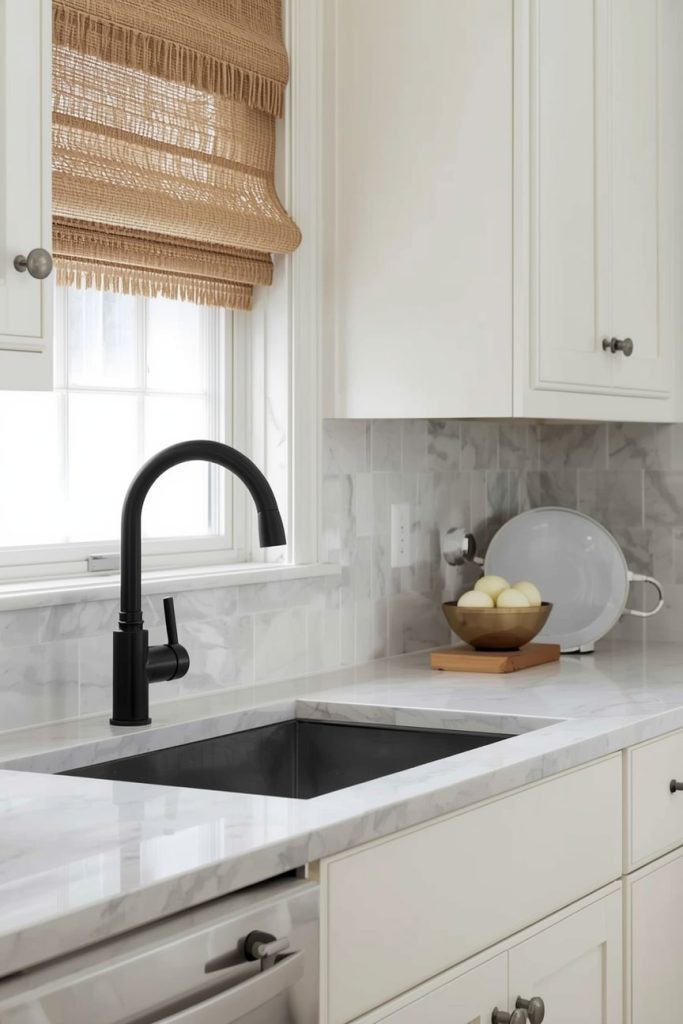
Hardware choices can dramatically influence the final look of a cream kitchen. Brass fixtures add warmth and a golden glow, while black taps and handles provide striking contrast for a more modern feel.
Mixing metals thoughtfully creates a layered, considered aesthetic. The key is consistency, ensuring finishes complement rather than compete with the cream palette.
Conclusion: Designing Your Perfect Cream Kitchen
A cream kitchen offers the perfect balance of elegance, warmth, and versatility. Whether styled in a sleek modern format, a cosy Shaker design, or a refined in-frame layout, cream provides a timeless foundation that adapts to changing tastes and lifestyles.
By layering tones, choosing the right finishes, and incorporating thoughtful details, a cream kitchen can feel both fresh and familiar. From compact spaces to open-plan living, this adaptable hue enhances light, creates calm, and invites personal expression.
With careful planning and inspired styling, a cream kitchen becomes more than just a practical space—it becomes the heart of the home, designed to be enjoyed for years to come.

Emily Harper is a kitchen decor expert and interior designer with a passion for creating stylish, functional spaces. As a busy mom, she understands the importance of a kitchen that works for both family life and design. With 6 years of experience, Emily specializes in transforming kitchens into inviting, practical spaces. She’s known for her ability to blend trends with everyday needs, helping families create kitchens that feel like the heart of the home.