The Floating Shelf Mistakes That Make Kitchens Look Cluttered (Not Curated)
My first floating shelf took me three tries to get straight. I drilled one hole too high. Then I hung it crooked. Then I filled it with everything I owned — mugs, cookbooks, a plant, a candle, my keys. It looked like a garage sale shelf, not a Pinterest one.
I almost gave up on open shelving completely.
Then I started studying the kitchens I kept saving. I noticed a pattern. The pretty ones had less stuff, better spacing, and wood that matched the room. That’s it. That’s the whole secret.
This guide gives you that same clarity. No guesswork. Just steps that work.
Top 5 Products You’ll Actually Need
- Heavy-duty concealed shelf brackets — these hide inside the wall, so your shelf looks like it’s floating with zero visible hardware.
- Solid wood floating shelf kit (walnut or oak) — pre-cut and pre-drilled shelves save you hours and give you a clean, furniture-grade finish.
- Stud finder with wall scanner — this tool stops you from drilling into drywall alone, which is the #1 reason shelves fall.
- Torpedo level (small, magnetic) — a level this size fits in tight kitchen corners where a full-size level won’t.
- Matte wood sealant spray — this protects raw wood from kitchen grease and steam without changing its natural color.
Why Some Floating Shelves Look Expensive and Others Look Cheap
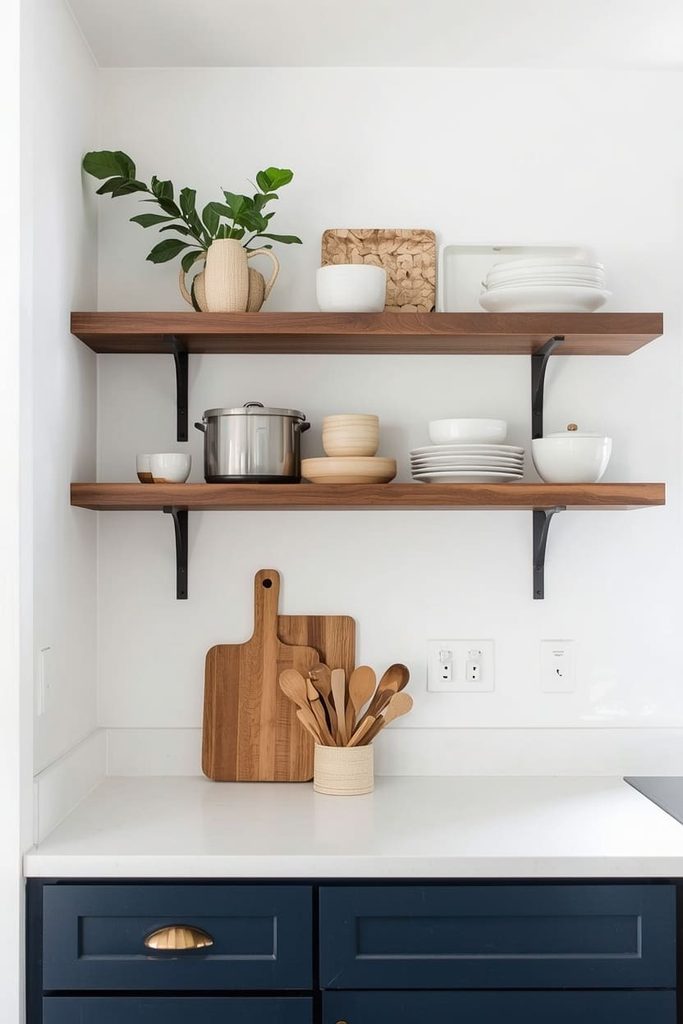
Wood tone and wall color need to work together, not fight each other.
This is the mistake I made first. I bought a dark walnut shelf for a kitchen with warm white walls and gold hardware. It looked like a random piece dropped in from another house.
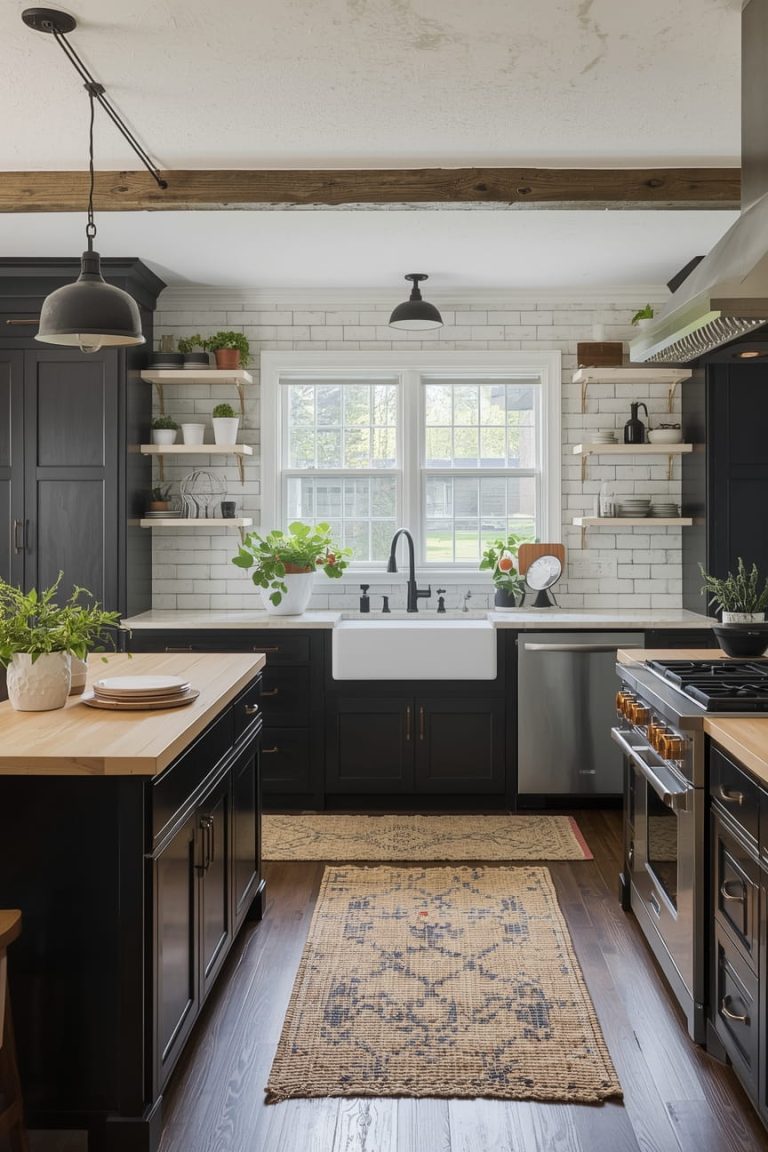
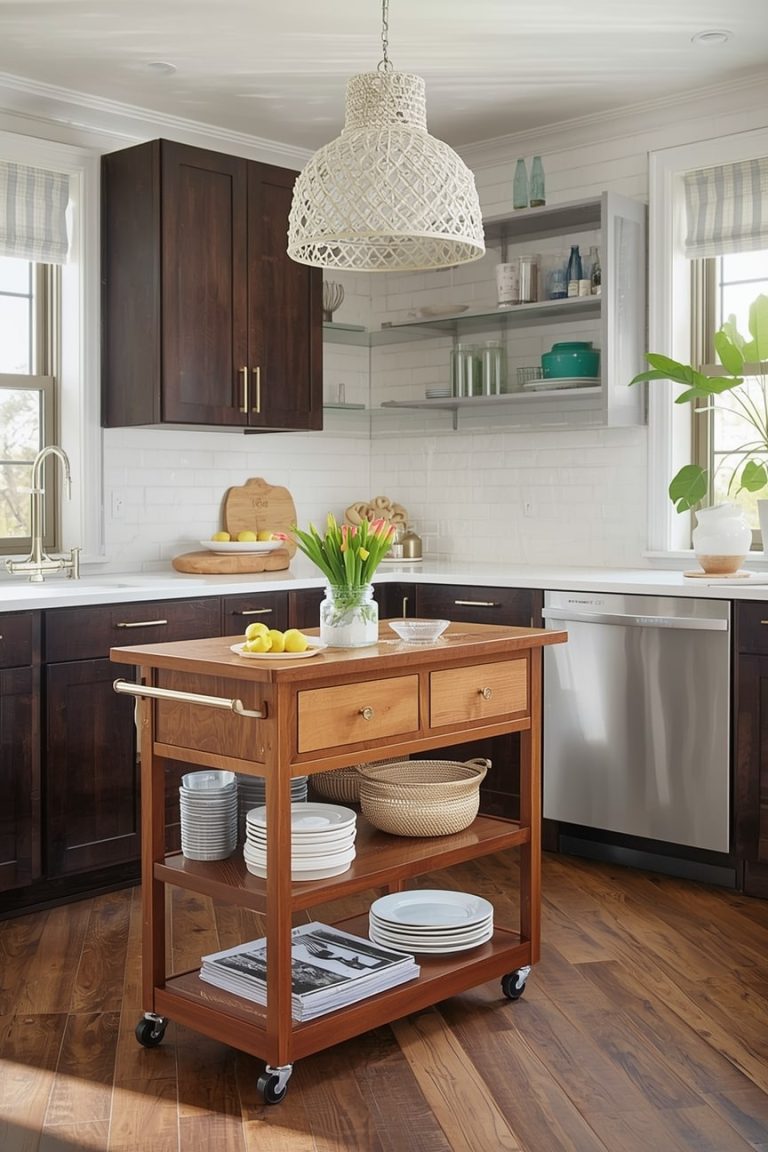
Curated kitchens repeat their wood tone somewhere else in the room. Think cutting boards, stool legs, or a wood spoon holder. Your eye reads that repetition as “planned,” even if you didn’t plan it much at all.
Steps to get this right:
- Hold a wood sample against your wall in daylight.
- Check if it matches or complements your cabinets — not your countertop.
- Pick warm tones (oak, walnut) for farmhouse and cool tones (ash, birch) for Scandinavian style.
How Much Space You Need Between Each Shelf
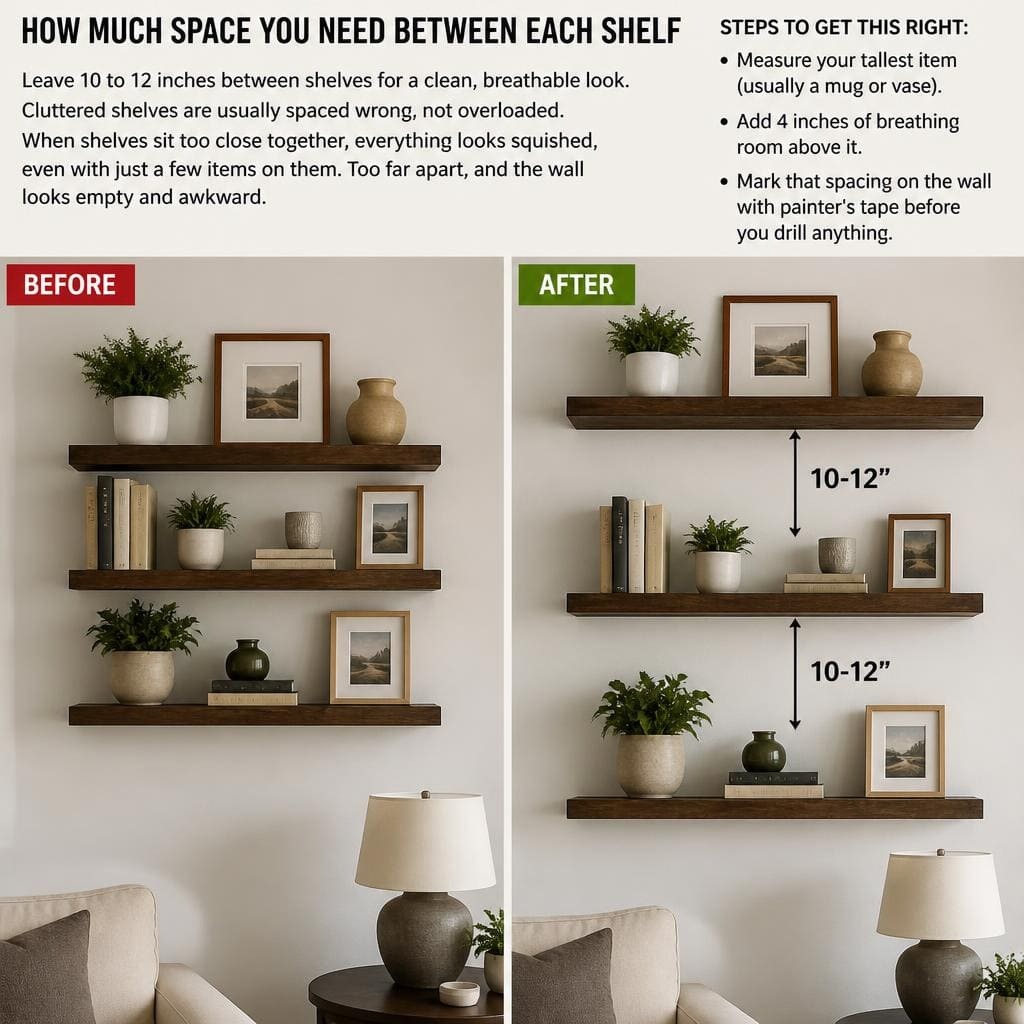
Leave 10 to 12 inches between shelves for a clean, breathable look.
Cluttered shelves are usually spaced wrong, not overloaded. When shelves sit too close together, everything looks squished, even with just a few items on them. Too far apart, and the wall looks empty and awkward.
Steps to get this right:
- Measure your tallest item (usually a mug or vase).
- Add 4 inches of breathing room above it.
- Mark that spacing on the wall with painter’s tape before you drill anything.
The Bracket Mistake That Ruins the “Floating” Look
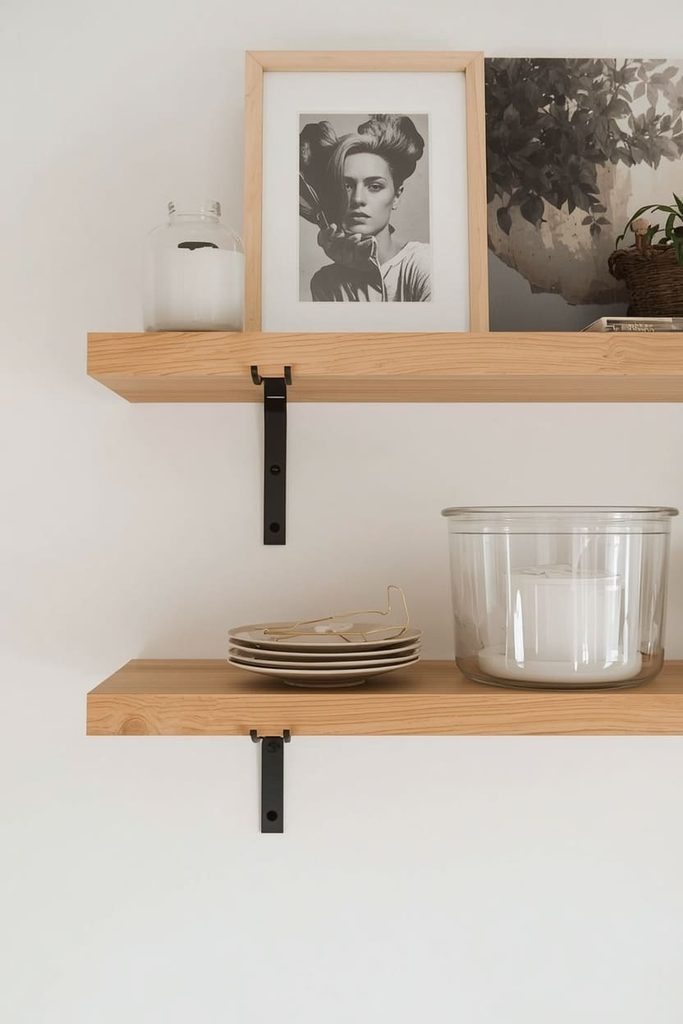
Visible brackets kill the floating illusion. Use concealed rod brackets instead.
A shelf with a chunky metal bracket underneath doesn’t look modern. It looks like a shelf that’s trying too hard. Concealed brackets slide into a hollow channel in the wood, so the shelf appears to hover on the wall with nothing holding it up.
Steps to get this right:
- Buy a shelf pre-drilled for concealed rods, or drill your own channel with a flat-bit drill.
- Find your studs first with a stud finder.
- Anchor the rod into the stud, not just the drywall, for real weight support.
How to Style a Shelf So It Looks Curated, Not Crowded
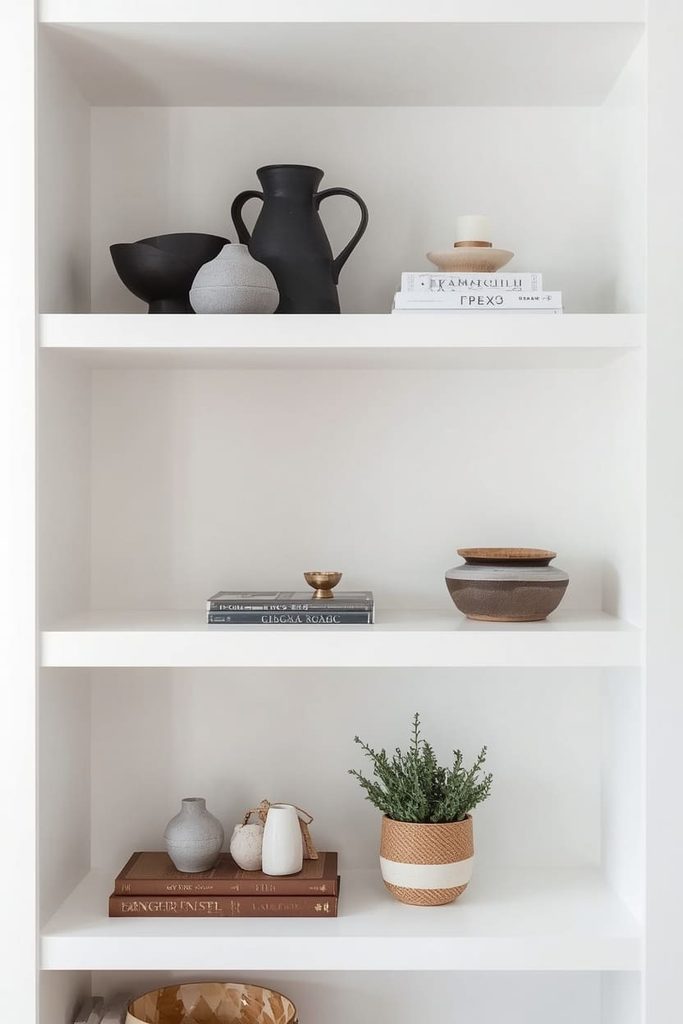
Follow the rule of three: group items in odd numbers, not rows.
Straight, even rows read as “storage.” Odd-numbered clusters read as “styled.” This is the actual difference between a Pinterest shelf and a junk drawer on display.
Steps to get this right:
- Pick one tall item (vase, pitcher, or plant).
- Add one medium item (stack of bowls, small book).
- Add one small item (candle, tiny bowl, or trinket).
- Leave the rest of the shelf empty. Empty space is part of the design.
What NOT to Store on a Kitchen Floating Shelf
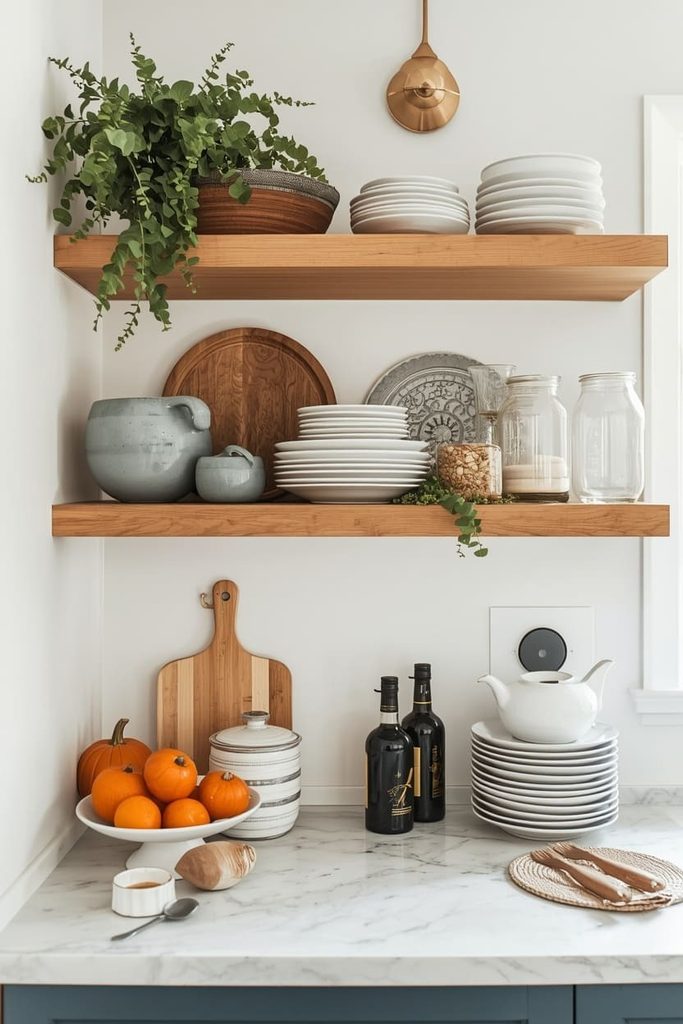
Skip daily-use items like cutting boards, oils, and utensils you touch every meal.
Floating shelves aren’t meant to replace your cabinets. They’re meant to display, not organize. When you use them for daily tools, grease and clutter build up fast, and the “curated” look disappears within a week.
Steps to get this right:
- Move daily-use tools back into drawers or closed cabinets.
- Reserve shelves for items you touch once a week or less.
- Rotate seasonal items (like a pumpkin in fall) instead of adding permanently.
How to Pick the Right Wood for Your Kitchen Style
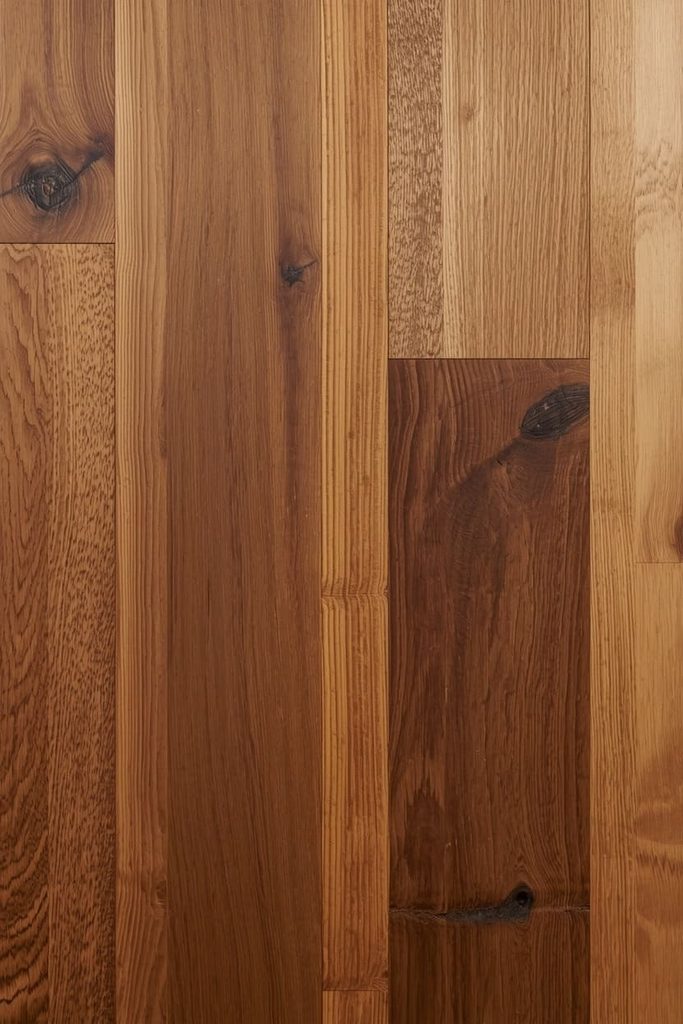
Match your wood grain to your kitchen’s existing personality, not a trend.
A heavy, rustic wood grain works in a farmhouse kitchen with visible beams or brick. That same wood can overwhelm a sleek, minimalist space. Scandinavian kitchens usually look best with lighter, smoother grains like birch or maple.
Steps to get this right:
- Look at your cabinet doors. Are they smooth or textured?
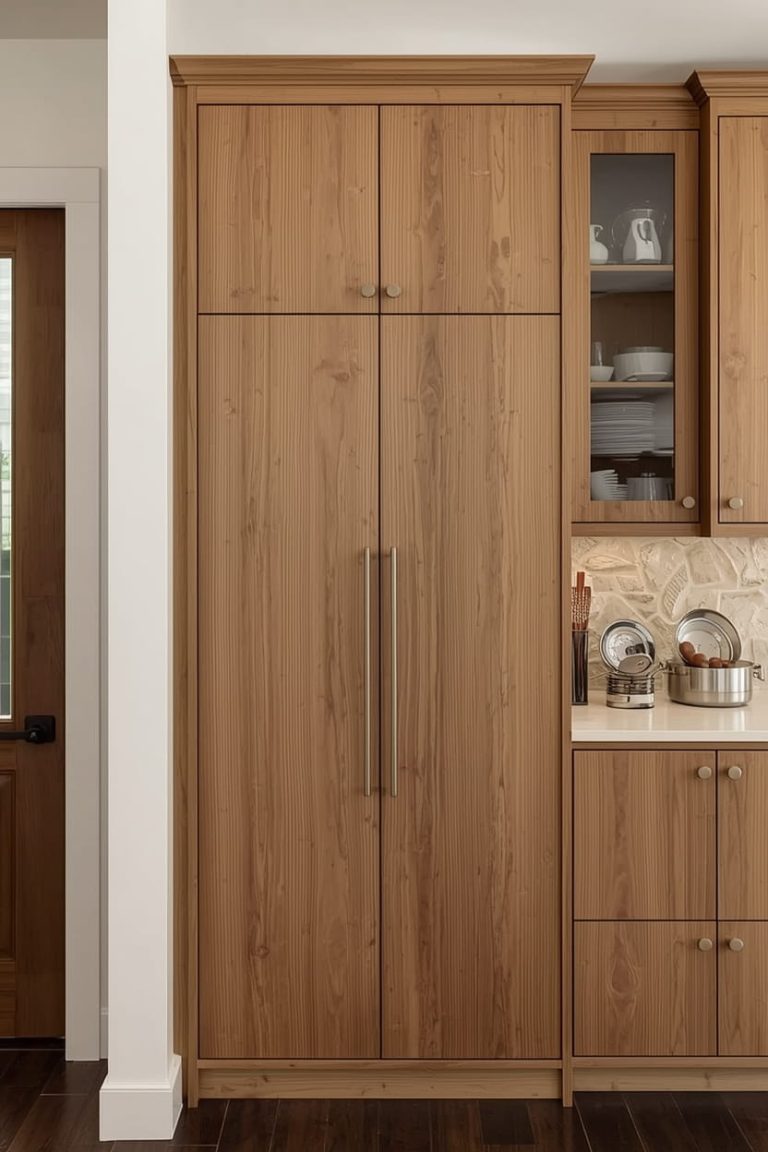
- Match smooth cabinets with smooth-grain wood shelves.
- Match textured or shaker-style cabinets with a heavier wood grain.
How to Add Lighting Without It Looking Like an Afterthought
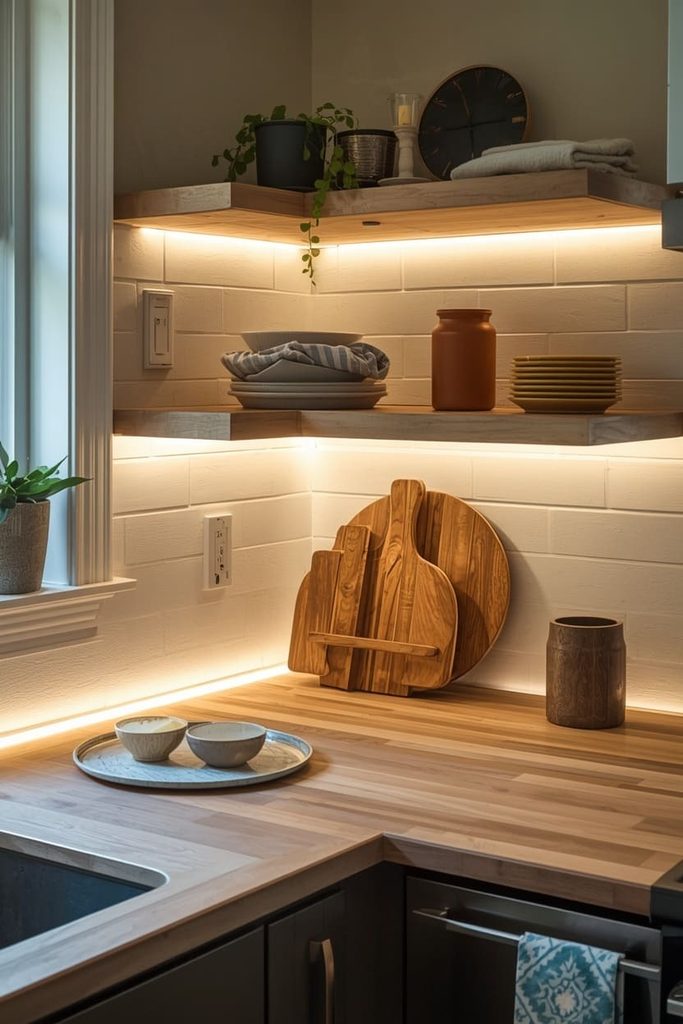
Use warm LED strip lighting tucked under the shelf edge, not on top.
Lighting on top of a shelf glares into your eyes. Lighting underneath creates a soft glow on your countertop and highlights the shelf’s edge, which makes the wood grain pop at night.
Steps to get this right:
- Buy battery-powered LED strips (no wiring needed).
- Stick the strip along the underside edge, not the middle.
- Set it to warm white, not cool white, for a cozy farmhouse feel.
Frequently Asked Questions
How much weight can a wood floating shelf hold? Most floating shelves hold 25 to 50 pounds when anchored into a stud. Weight drops significantly if you only anchor into drywall. Always check your bracket’s weight rating before loading it up.
Do I need to hire someone to install floating shelves? No, most people can install one in under an hour with a stud finder, drill, and level. It only gets tricky if your wall has plumbing or electrical behind it. If you’re unsure, a quick stud scan will tell you what’s safe.
What’s the best wood for a kitchen with steam and grease? Sealed oak or walnut holds up best against kitchen moisture. Avoid raw, unsealed wood since it absorbs grease and stains over time. A matte sealant spray adds protection without changing the wood’s natural look.
How do I keep my shelf from looking cluttered over time? Set a rule for yourself: one thing in, one thing out. If you add a new item, remove an old one. This keeps your shelf from slowly filling up the way a junk drawer does.
Can I install floating shelves without drilling into studs? You can, but it limits how much weight the shelf can hold safely. Heavy-duty drywall anchors work for light decor only. For anything holding dishes or books, studs are the safer choice.
How far above the counter should a floating shelf sit? Most kitchens look best with shelves 15 to 18 inches above the counter. This gives enough room to use the counter space below without hitting your head or blocking your view.
Floating shelves aren’t hard to get right. They just need a little more intention than people expect. Match your wood tone, space things out, and let empty space do some of the work. That’s really the whole formula.

Emily Harper is a kitchen decor expert and interior designer with a passion for creating stylish, functional spaces. As a busy mom, she understands the importance of a kitchen that works for both family life and design. With 6 years of experience, Emily specializes in transforming kitchens into inviting, practical spaces. She’s known for her ability to blend trends with everyday needs, helping families create kitchens that feel like the heart of the home.