5 French Farmhouse Kitchen Ideas That Feel Timeless, Not Trendy
I found the photo on a rainy Tuesday, deep in a design magazine I’d already read twice. A kitchen in Provence. Soft plaster walls. Brass fixtures gone soft with age.
A stone floor worn smooth by decades of footsteps. I sat with that photo for a long time. My own kitchen felt young by comparison, almost too new. That’s when I understood what I actually wanted.
Not trendy. Not matched. Just quietly beautiful, the kind of kitchen that looks like it’s always been there.
Here are the five ideas that took my kitchen from ordinary to old-world, one thoughtful choice at a time.
Shop the Look: 5 Products That Set the Tone
- Unlacquered brass cabinet hardware — This ages naturally over time, developing a soft patina that reads as authentically French rather than freshly installed.
- Farmhouse apron-front sink — A deep, exposed-front sink is the anchor piece of French country kitchens, both functional and quietly elegant.
- Plaster-look range hood cover — This single feature instantly elevates a kitchen, mimicking the hand-troweled plaster found in real French farmhouses.
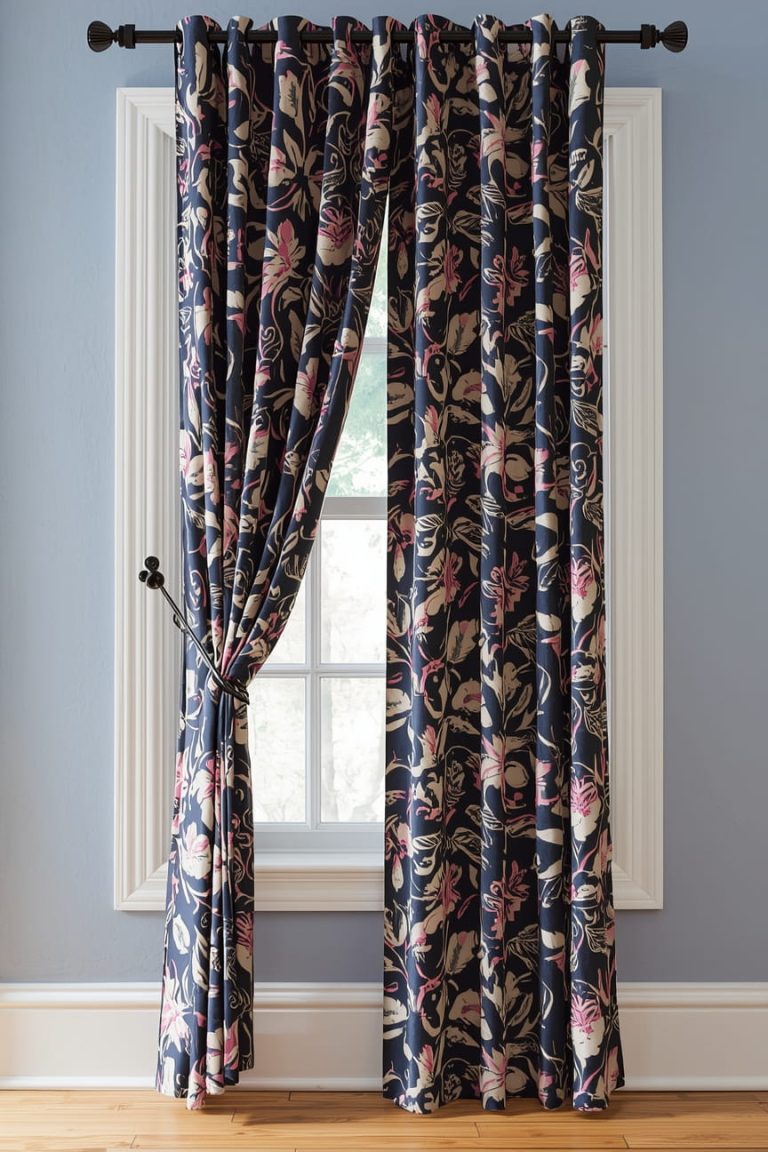
- Ticking-stripe linen textiles — Classic French ticking stripe on towels or curtains adds pattern without pulling focus from your architecture.
- Vintage-style glass apothecary jars — These replace plastic pantry storage with a collected, old-world look perfect for flour, sugar, and dried herbs.
Choose a Soft, Warm White Palette Over Stark White
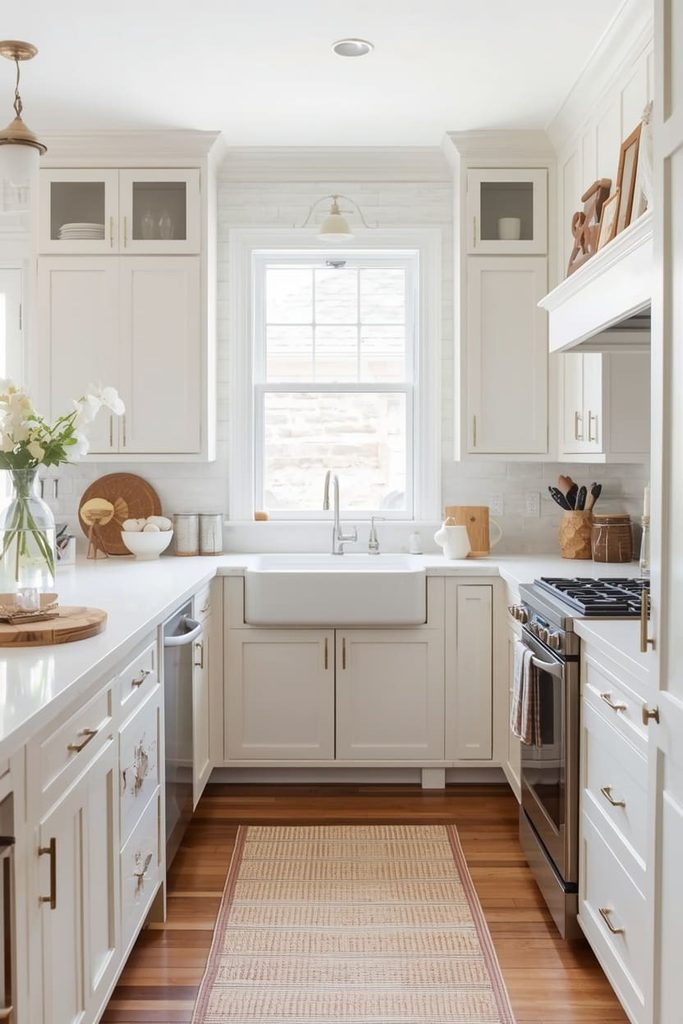
Direct answer: A true French farmhouse kitchen leans on warm, creamy whites rather than the cool, stark whites common in modern kitchens.
I made this mistake myself the first time around. I painted my cabinets a bright, blue-based white, and the room felt clinical instead of comforting. Warm whites carry more yellow or gray undertones, which catch light softly instead of reflecting it harshly.
Look for paint names like “Alabaster,” “Swiss Coffee,” or “Simply White” as a starting point, then test samples on your actual walls before committing. Light changes everything, and a color that looks perfect in the store can shift completely once it’s on your walls at different times of day.
Apply this palette to cabinets, walls, and trim consistently rather than mixing multiple whites throughout the room. Consistency is what makes the space feel calm and cohesive instead of patchwork. If you want contrast, save it for your hardware and lighting instead of your paint choices.
This single decision sets the tone for everything else in your kitchen. Get the white right, and every other element becomes easier to layer in.
Install a Plaster-Style Range Hood as Your Focal Point
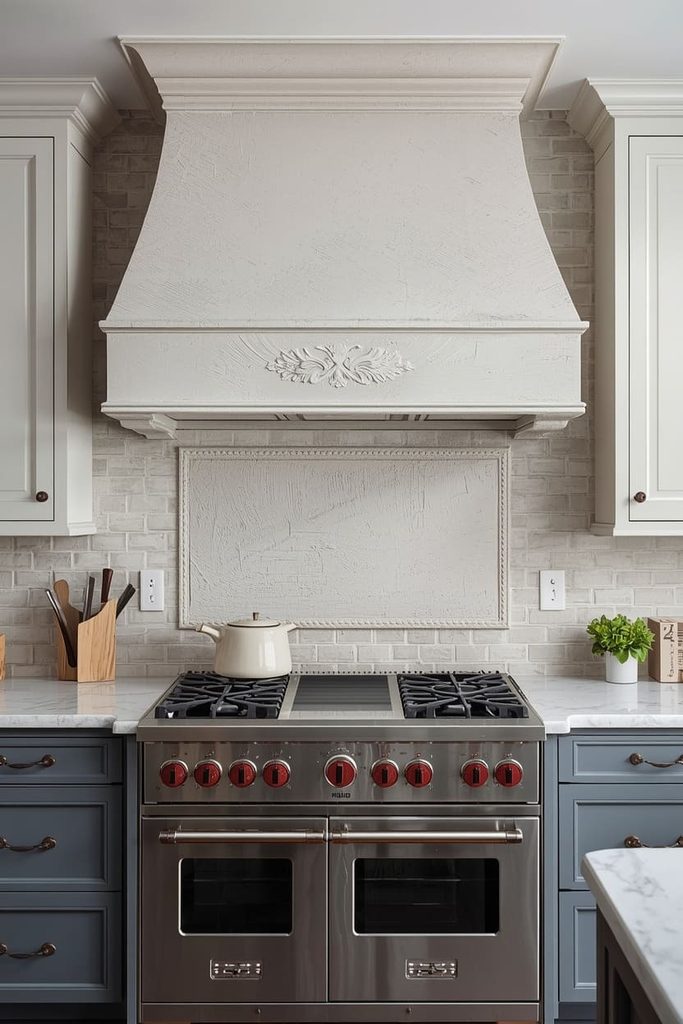
Direct answer: A hand-plastered or plaster-look range hood is one of the most recognizable signatures of French farmhouse style, and it works as the room’s natural centerpiece.
If you’re working with a contractor, ask specifically about Venetian plaster or a plaster-finish product designed for range hoods. Many companies now sell pre-shaped hood inserts that get skim-coated on-site, which is far more affordable than a fully custom masonry hood.
For a lighter-touch version, some homeowners apply a plaster-effect paint or joint compound technique directly over an existing hood shape. This requires patience and a few practice passes on scrap material, but it’s achievable without hiring a specialist if you’re comfortable with hands-on projects.
Keep the surrounding tile or backsplash simple when your hood is this dramatic. A plain stone or subtle zellige tile lets the plaster texture stay the visual star instead of competing with a busy pattern.
Lighting matters here too. A single sconce or small pendant near the hood highlights its texture in the evening, creating shadow and depth that flat overhead lighting can’t achieve.
Bring In Natural Stone or Stone-Look Countertops
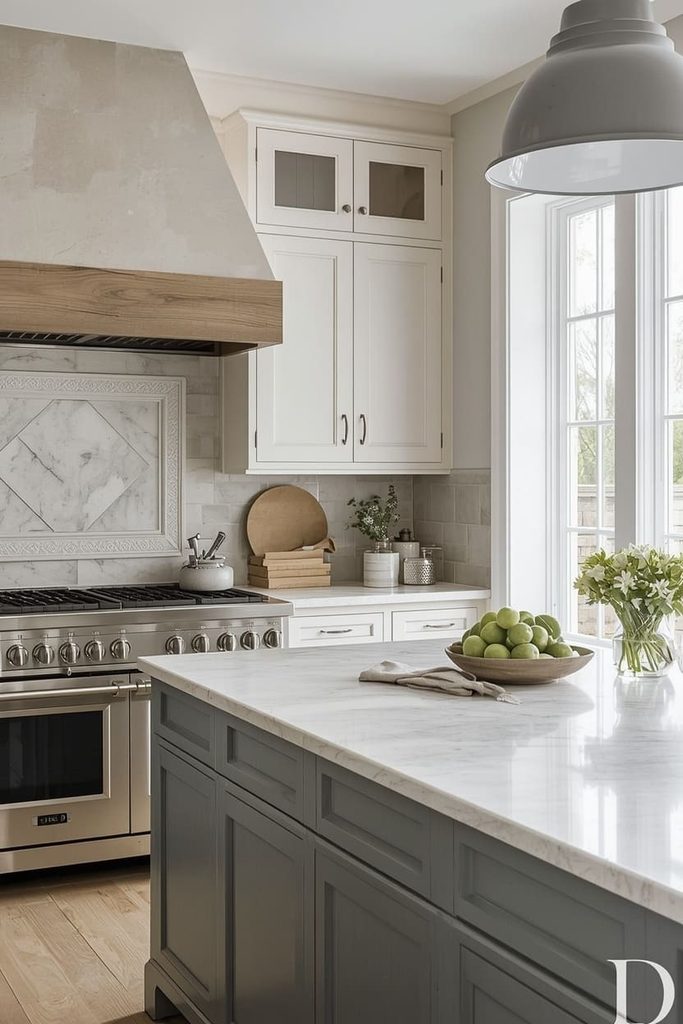
Direct answer: Honed natural stone, or a quality stone-look quartz, gives you the soft, matte texture that defines authentic French farmhouse counters.
Real limestone or honed marble delivers the most authentic look, but both require sealing and some maintenance since they’re softer, more porous stones. If you love the aesthetic but want lower upkeep, a honed quartz in a warm, veined pattern gets you close without the extra care.
When selecting your slab, prioritize a honed finish over polished. Polished stone reflects light and reads as modern and glossy, while honed stone absorbs light and feels aged and quiet, exactly the effect you’re chasing.
Pair your countertop with simple, understated edges. A basic eased or bullnose edge keeps the attention on the stone’s natural veining rather than an elaborate profile that pulls focus.
Budget accordingly, since natural stone is a genuine investment. If a full slab isn’t realistic right now, consider stone only on your island as a first phase, then expand to perimeter counters later.
Layer In Aged Brass Fixtures and Hardware
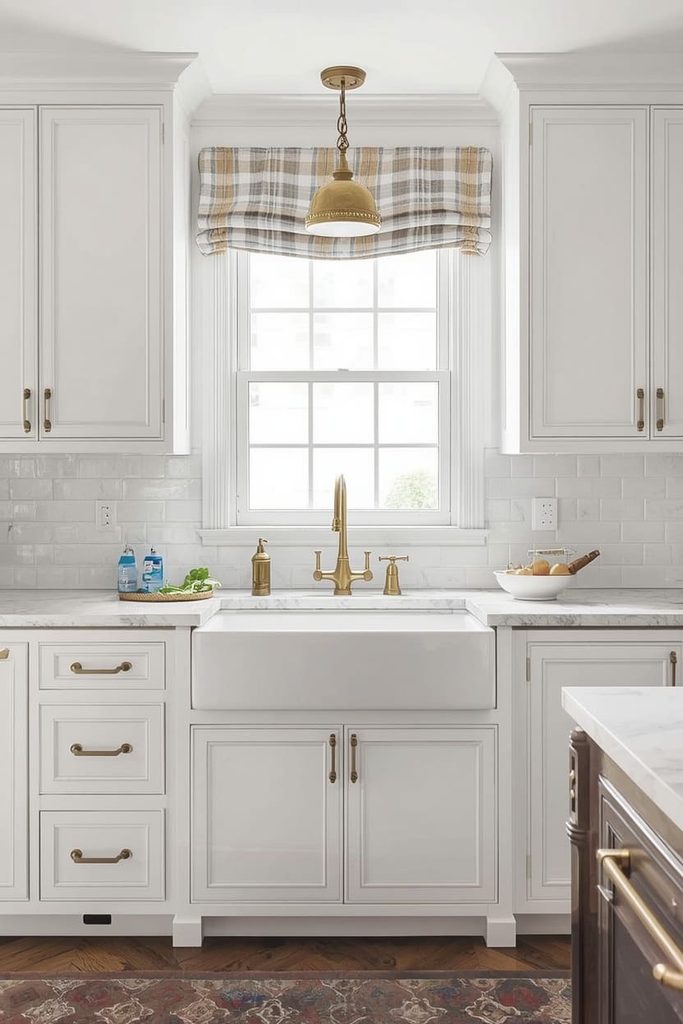
Direct answer: Aged or unlacquered brass across your faucet, cabinet pulls, and lighting ties every element of a French farmhouse kitchen together.
Start with your faucet, since it’s used daily and sets the tone for every other metal finish in the room. Look specifically for “unlacquered” or “living finish” brass, which means the metal hasn’t been coated to prevent tarnishing. This is intentional. You want it to age.
Move to your cabinet hardware next. Choose simple, classic shapes: bin pulls, cup pulls, and round knobs in the same aged brass finish. Avoid anything too modern or angular, since French farmhouse hardware tends toward soft curves and traditional silhouettes.
Finish with lighting. A brass pendant or sconce with a similarly aged finish completes the look. If your budget only allows one lighting upgrade, prioritize the fixture over your island or sink since it’s the most visible.
Over months and years, your brass will darken and develop spots and variation naturally. Resist the urge to polish it. That variation is exactly what makes it look inherited rather than installed last month.
Add Vintage French Details Through Accessories
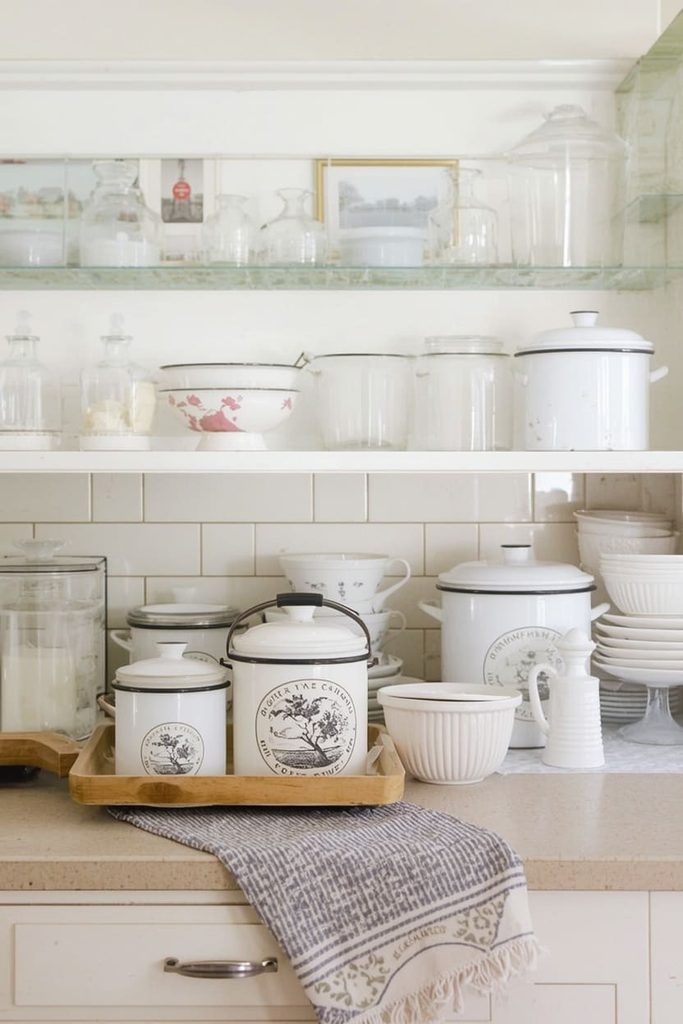
Direct answer: Small, considered vintage touches, like enamelware, glass canisters, and antique linens, are what make a French farmhouse kitchen feel collected instead of purchased all at once.
Start hunting at estate sales, antique markets, and online vintage marketplaces rather than big-box stores. Look specifically for French enamelware in cream or soft colors, vintage glass canisters, and any pieces with visible age like chips, patina, or worn edges. These imperfections are part of the charm.
Display your finds with restraint. A few well-chosen pieces on open shelving or your counter will read as curated. Too many at once starts to feel cluttered rather than collected, which works against the elegant simplicity this style depends on.
Incorporate ticking-stripe or toile textiles through simple items: a table runner, dish towels, or a window valance. These patterns are historically tied to French countryside textiles and add warmth without overwhelming your neutral palette.
Rotate your accessories occasionally rather than setting them once and forgetting them. Swapping in a new find every few months keeps the kitchen feeling alive and personal, the way a real collection builds over years rather than a single shopping trip.
Frequently Asked Questions
How much does a French farmhouse kitchen renovation typically cost? It varies widely based on scope, but expect a mid-range remodel with stone counters, a custom hood, and brass fixtures to start around $25,000 to $40,000. Phasing the project over time can make it more manageable.
Can I mix modern elements into a French farmhouse kitchen? Yes, and many of the best kitchens do. Pair the warm palette and vintage details with clean-lined modern appliances or simple black hardware for contrast. The key is keeping your base neutral so modern pieces feel intentional, not out of place.
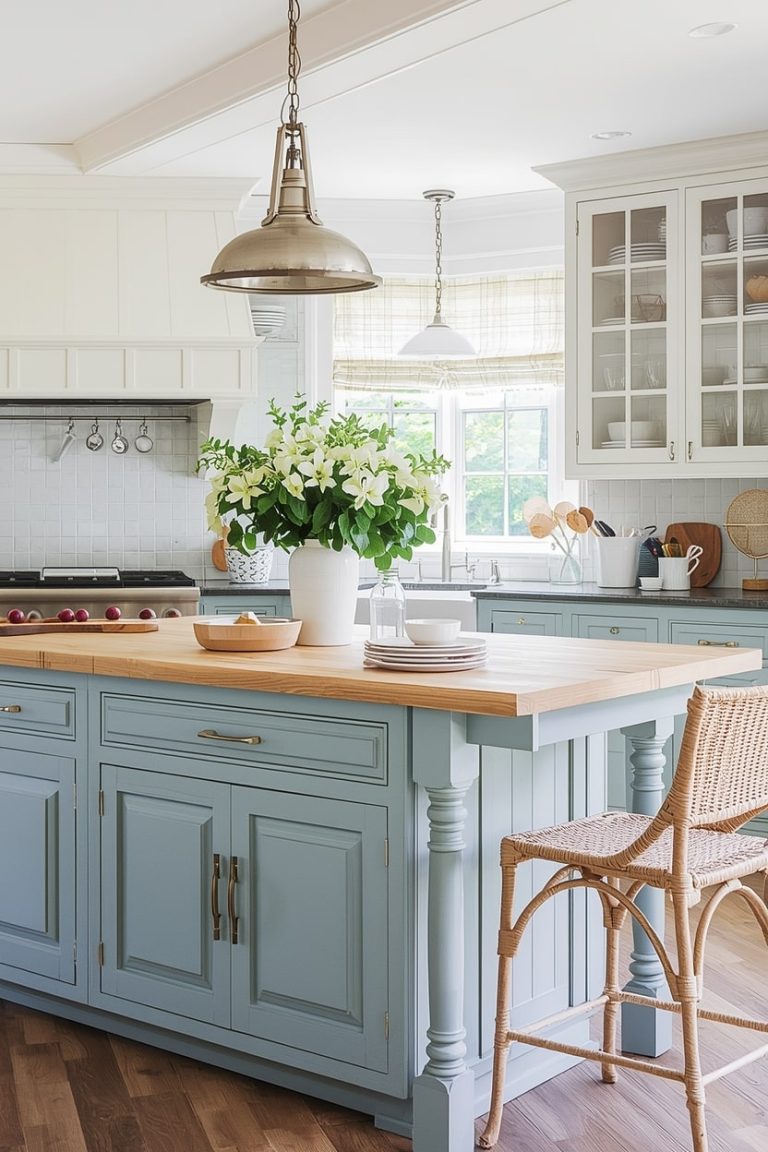
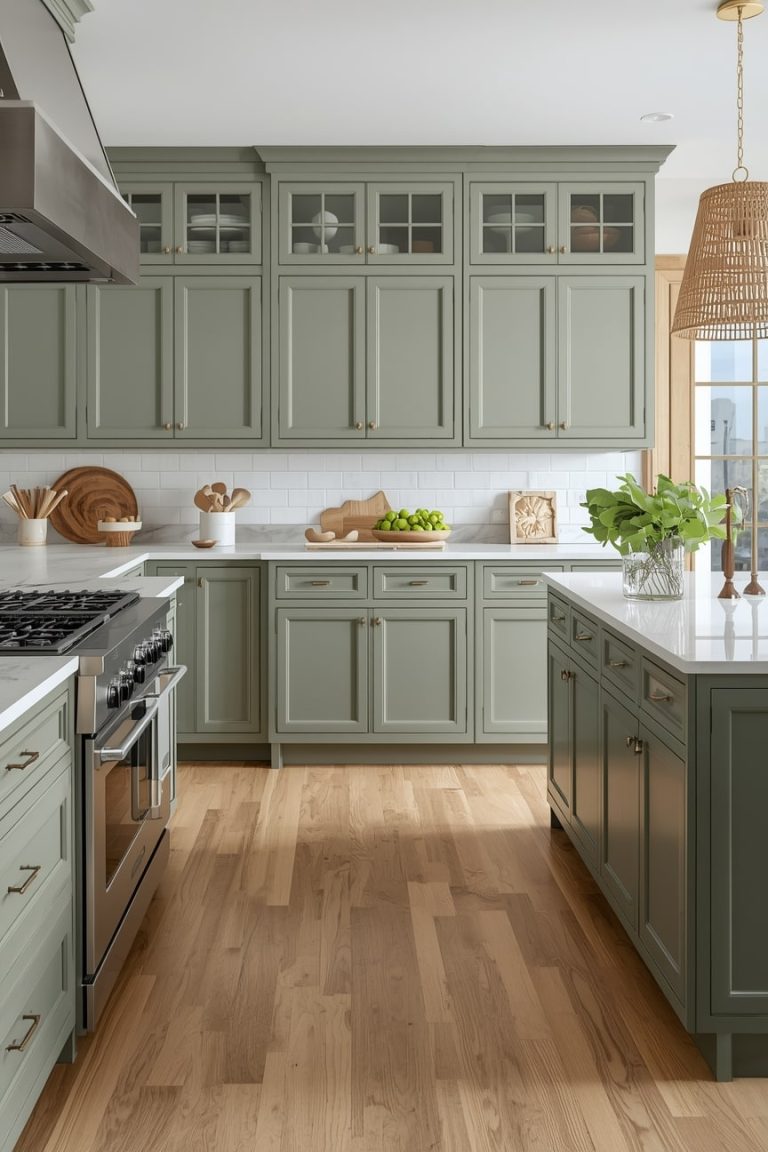
What colors work best for this style beyond white? Soft sage green, dusty blue, and warm gray all pair beautifully with warm white as accent colors, especially on an island or lower cabinets. Keep upper cabinets and walls in your neutral base for balance.
Which materials should I prioritize if I’m on a tighter budget? Start with hardware and lighting, since aged brass makes an outsized visual impact for a relatively low cost. Save stone counters and a custom hood for a later phase if your budget requires phasing.
Where should I start if I’m overwhelmed by the whole project? Begin with your palette. Choose your white, your brass tone, and one accent color before buying anything else. That decision guides every material and accessory choice that follows, and it keeps the whole renovation cohesive from day one.
Your kitchen doesn’t need to be in Provence to feel like it belongs there. Start with your palette, add one investment piece at a time, and let the collected details build slowly. That’s how mine came together, and every year it looks a little more like it’s always been mine.

Emily Harper is a kitchen decor expert and interior designer with a passion for creating stylish, functional spaces. As a busy mom, she understands the importance of a kitchen that works for both family life and design. With 6 years of experience, Emily specializes in transforming kitchens into inviting, practical spaces. She’s known for her ability to blend trends with everyday needs, helping families create kitchens that feel like the heart of the home.